German Workplace Culture: What Indian Professionals Should Expect

Receiving a job offer from an employer in Germany is a significant milestone for any Indian professional. Whether you are an experienced software engineer, a registered nurse, a doctor, a skilled technician, or an apprentice beginning an Ausbildung, reaching this stage represents years of education, qualification recognition, and language study. Yet, once the initial excitement settles, a natural question often arises: “I know my technical work, but what will everyday life inside a German workplace actually look like?”
At Europe Careers, our counsellors speak daily with Indian professionals who feel completely confident in their technical knowledge but want to understand the unwritten rules of German working environments. Moving from an Indian workplace to a German one involves more than just changing cities; it introduces different daily expectations around communication, punctuality, planning, decision-making, and professional boundaries.
Germany is home to a wide range of working environments. A fast-moving tech company in Berlin operates differently from a century-old engineering firm in Baden-Württemberg, a municipal hospital in Bavaria, or a family-owned Mittelstand manufacturing facility in North Rhine-Westphalia. There is no single workplace culture that applies universally to every employer. However, there are consistent professional values and operational patterns across German workplaces that can make your integration smooth, positive, and rewarding when understood early.

What Does German Workplace Culture Mean?
Workplace culture refers to the shared expectations, communication styles, problem-solving methods, and everyday social norms that shape how people collaborate on the job. It is not a set of rigid legal statutes, but rather the collective rhythm and etiquette of an organisation.
In Germany, workplace culture varies substantially across different sectors and organisations:
- Large Multinational Corporations (DAX Companies): Often bilingual (English and German), with established international teams, formal reporting matrixes, and structured human resources frameworks.
- Small and Medium Enterprises (The Mittelstand): Often German-speaking, family-owned or regional, deeply value-driven, highly focused on engineering precision, and prioritising long-term employee stability.
- Hospitals and Healthcare Facilities: Highly regulated, shift-dependent environments where clinical protocols, detailed medical handovers (Übergabe), and strict hygiene guidelines guide every interaction.
- Technology Startups and Digital Hubs: Frequently operate in English, adopt flatter hierarchies, and encourage agile communication, while still respecting statutory working hours.
- Skilled Trades, Construction, and Craft Sectors (Handwerk): Grounded in formal apprenticeship standards, direct instruction, workshop safety, and rigorous craftsmanship.
- Public Institutions and Academic Universities: Characterised by formal administrative procedures, documented legal responsibilities, and clear statutory hierarchies.
Recognising this diversity prevents overgeneralisations. Adapting to a German workplace does not mean giving up your personal identity; it means understanding the operational rhythm of your team so that your talent, dedication, and expertise can shine.
Punctuality Is Taken Seriously: The Meaning of Time
One of the most noticeable aspects of professional life in Germany is the cultural attitude toward time. In many German workplaces, punctuality is viewed as a direct reflection of reliability, professionalism, and mutual respect.
In everyday Indian office environments, meetings frequently have flexible start windows of five to ten minutes to accommodate traffic congestion or overlapping discussions. In Germany, however, arriving at 9:00 AM generally means being seated, prepared, and ready to begin at 9:00 AM. Arriving at 9:05 AM is often considered late, particularly for formal client discussions, clinical handovers, or factory shifts.
Practical Travel and Time Management Tips:
- Plan Around Public Transit Schedules: German trains (S-Bahn, U-Bahn, Regionalbahn) and buses run on published timetables. Use apps like DB Navigator or local transport apps (e.g., MVV, BVG, HVV) to check live updates and construction detours.
- Build a 10-to-15 Minute Buffer: Factor in winter weather, track maintenance, or bicycle parking so you arrive calm and unhurried.
- Communicate Delays Immediately: If an unforeseen delay occurs, notify your supervisor or team via message or call before the meeting or shift starts. Explaining a delay in advance is viewed far more positively than simply showing up late without notice.
Being a minute late will not instantly ruin your career, but consistent punctuality builds quiet trust and credibility with your colleagues faster than almost anything else.
Planning and Preparation Matter: Minimising Last-Minute Surprises
Many German organisations place high value on structure, foresight, and systematic planning. This approach is reflected in how projects are organised, deadlines are set, and discussions are conducted.
Indian professionals are often celebrated for their adaptability, resourcefulness, and ability to troubleshoot urgent challenges on short notice—a quality sometimes described in India as creative problem-solving. While German employers certainly value problem-solving, their preferred approach is usually to prevent crises through thorough advance planning rather than relying on heroic last-minute fixes.
In many workplaces, you will encounter:
- Structured Agendas: Meeting topics and supporting materials are commonly distributed 24 to 48 hours in advance so participants can prepare notes.
- Realistic Timelines: Deadlines are negotiated thoroughly at the beginning of a project. Once agreed upon, they are treated as firm commitments rather than optimistic estimates.
- Defined Responsibilities: Roles are clearly delineated. Each team member knows precisely which component of a process belongs to their area of responsibility (Zuständigkeitsbereich).
- Risk Mitigation: Potential complications, safety concerns, or regulatory compliance hurdles are documented and addressed early in the project lifecycle.
Communication Style: Direct, Factual, and Respectful
Perhaps the most frequent cultural adjustment Indian professionals describe is the difference in communication style. In many Indian professional settings, communication incorporates subtle politeness, indirect phrasing, relationship-building preludes, and a conscious effort to avoid uncomfortable confrontations or sounding negative.
In Germany, workplace communication is often more direct, factual, and task-focused (Sachorientiert). Colleagues typically state what they mean clearly, succinctly, and without extensive conversational padding. For an Indian professional unfamiliar with this style, direct statements can initially feel sharp or abrupt. In reality, it is simply an efficient, transparent way of working where honesty is equated with professional respect.
| Indirect / Conversational Style | Common German Workplace Style | Why the Clearer Phrasing Helps |
|---|---|---|
| “We could perhaps think about reviewing the report sometime soon if possible.” | “Please review the report and send your comments by Thursday at 2 PM.” | Eliminates ambiguity regarding who is responsible and when the deliverable is needed. |
| “Yes, I will definitely try my best to finish this task today.” | “I have two priority tasks today, so I can only finish this by tomorrow afternoon. Is that acceptable?” | Provides a realistic timeline rather than an over-promising commitment that cannot be met. |
| “I think everything looks okay, but maybe we can check one small thing later.” | “There is an error in calculation column 3. Here is the corrected figure.” | Focuses directly on correcting the data without making the error personal. |
How Indian Professionals Should Communicate With German Colleagues
Adapting your communication style does not mean becoming aggressive or impolite. It simply means communicating with clarity, precision, and transparency. Here are practical communication guidelines Europe Careers recommends to every candidate:
- Ask Questions When Instructions Are Unclear: In some traditional Indian workplace hierarchies, asking your manager multiple clarifying questions might be perceived as a lack of competence. In Germany, the opposite is true: asking precise questions is viewed as a sign of thoroughness and diligence. Employers would rather you ask three questions initially than proceed on assumptions and deliver incorrect work.
- Do Not Say “Yes” When You Mean “I Will Try”: If a deadline is unrealistic or you lack the tools to complete an assignment, communicate this candidly. German managers appreciate upfront honesty because it allows them to reallocate resources or adjust client commitments.
- Keep Work Communications Factual: When presenting updates, focus on data, progress metrics, completed milestones, and concrete bottlenecks. Keep emotions and lengthy defensive justifications out of status reports.
- Listen Actively and Take Notes: During project handovers or clinical briefings, carry a notebook. Documenting instructions demonstrates respect for the speaker’s time and ensures no vital details are forgotten.
- Use Professional Written Language: Whether in English or German, keep workplace messages structured and well-formatted, avoiding casual chat abbreviations (such as “u” for you or “thx” for thanks).
First Names and Formality: Understanding “Sie” and “Du”
Workplace formality in Germany is deeply connected to language nuances, specifically the distinction between the formal address (Sie) and the informal address (du).
In traditional German companies, public institutions, clinics, and legal environments, professionals frequently address one another using formal titles: Herr (Mr.) or Frau (Ms.) followed by their surname (e.g., Herr Müller, Frau Schmidt), using the formal pronoun Sie. This does not imply coldness; it is an established marker of mutual professional respect.
Conversely, many modern IT organisations, startups, international creative agencies, and progressive hospital teams use first names from day one and converse using the informal du. Even in traditional companies, team members who work closely together often transition to du over time.
The Golden Rule of Address: When in doubt, start with formal address (Herr/Frau + surname and Sie) unless your employer, manager, or colleagues explicitly invite you to use first names or say, “Wir duzen uns hier” (We use the informal ‘du’ here). Always let senior colleagues or managers initiate the transition to du.
Hierarchy and Personal Responsibility
Every German enterprise has an organisational hierarchy with department heads, team leads, and executive directors. However, how hierarchy operates on a day-to-day basis often differs from what many Indian professionals are accustomed to.
In many Indian organisations, decision-making is centralised at senior management levels, and junior team members may wait for direct instructions before taking action. In Germany, managers typically practice delegation and expect employees to exercise significant Eigenverantwortung (personal autonomy and initiative).
Once you are assigned a task or area of responsibility, your supervisor will expect you to:
- Execute your tasks independently without requiring daily micromanagement or constant step-by-step direction.
- Flag obstacles, technical roadblocks, or safety concerns proactively before they escalate into major disruptions.
- Contribute constructive feedback, suggestions for process improvement, or technical critiques during team discussions, regardless of your seniority level.
- Respect agreed standard operating procedures (SOPs) and safety rules without cutting corners.
Speaking up respectfully in a meeting is not seen as challenging authority; rather, staying silent when you spot an issue is what may puzzle a German manager.

How German Managers Give Feedback: Constructive, Not Personal
Receiving feedback in a German workplace can sometimes feel jarring if you are accustomed to praise-sandwich models or indirect hints. German managers tend to be direct, specific, and objective when reviewing performance.
If an error occurs or a deliverable does not meet technical standards, a German supervisor will typically point out the exact discrepancy directly: “This code failed the staging test because exception handling was missing,” or “This nursing chart was incomplete during the 7 AM shift handover.”
It is crucial to understand that professional critique in Germany is directed at the work product, not at your character or self-worth. Germans separate the task (die Sache) from the person (die Person). A manager can be sharply critical of an inaccurate document at 11 AM and have a completely pleasant, friendly conversation with you in the lunch cafeteria at 12:30 PM.
How to Handle Constructive Feedback Professionally:
- Listen without interrupting: Allow the manager to outline the issue completely before responding.
- Take notes: Document specific points, error codes, or policy references.
- Avoid emotional defensiveness: Resist the urge to give lengthy external excuses. Acknowledge the factual error calmly: “I understand the discrepancy. I will correct it immediately.”
- Ask for clarification or guidance: If you are unsure of the best solution, ask: “What specific format or standard would you prefer for this process moving forward?”
- Follow up: Send a quick confirmation once the correction has been implemented.
Meetings in Germany: Structured, Purposeful, and Focused
Workplace meetings in Germany are generally designed to reach decisions, align on responsibilities, and resolve technical issues rather than serve as casual brainstorming lounges. While practices vary between creative agencies and traditional firms, standard meeting expectations include:
- Clear Purpose and Agenda: Meetings usually have an established topic and predefined time slot. Participants are expected to have reviewed background documents before entering the room.
- Punctual Start and Finish: Meetings typically start on the minute and end promptly at the scheduled time to respect subsequent appointments.
- Focused Discussion: Digressions and unrelated side conversations are generally discouraged. If an off-topic question arises, the meeting lead will usually suggest: “Let us take that offline or schedule a separate discussion.”
- Active Contribution: If you are invited to a meeting, your presence is valued. Be prepared to share your professional perspective or updates when your agenda item comes up.
- Documented Minutes (Protokoll): Decisions, agreed action items, and appointed owners are usually recorded in writing and circulated following the meeting.
Emails and Written Communication: Clear, Concise, and Professional
Email communication in German professional environments prioritises clarity, accurate information, and brevity over elaborate courtesy phrases. A well-written email states its purpose immediately, highlights any requested action, and sets clear deadlines.
Example of a Professional Workplace Email:
Subject: Project Alpha: Updated QA Test Results and Next Steps
Dear Herr Weber / Dear Thomas,
I have completed the quality assurance testing for module 4 of Project Alpha. The test summary is attached for your review.
All core integration tests passed successfully. We identified two minor edge-case latency spikes, which are detailed on page 3 of the report.
Could you please provide your approval by Thursday, 15 October, at 3:00 PM so we can proceed with the staging deployment?
Please let me know if you would like to discuss any details in a brief call.
Best regards,
Rahul Sharma
Software Engineer | Europe Careers Placement Candidate
Notice that the email is polite, states the main deliverable in the first sentence, provides context without rambling, and clearly defines the needed action and deadline. For comprehensive advice on tailoring your application materials before landing the job, explore our guide on CV Format for European Employers and our preparation tips for Interviews with European Employers.
Work-Life Balance: Separation of Work and Personal Life
Germany is internationally recognised for its strong emphasis on work-life balance. However, this concept is often misunderstood by prospective applicants who assume that nobody works hard or that every office empties out at 4:30 PM sharp.
The true essence of German work-life balance is efficiency during working hours in exchange for genuine peace during off-hours. When employees are at work, they focus deeply on their tasks, minimising extended social media browsing or casual personal distractions. In return, their evenings, weekends, and vacation days are strongly protected by law, company policy, and social custom.
Key aspects of this balance include:
- Clear Boundaries After Work (Feierabend): The German concept of Feierabend refers to the end of the working day and the beginning of personal rest. In most companies, colleagues and managers will not expect you to check emails, answer phone calls, or reply to chat messages outside your contracted hours.
- Recharging Weekends: Sunday in Germany is legally designated as a day of rest (Sonntagsruhe). Retail stores and businesses are closed, and workplace communication is typically paused until Monday morning.
- Genuine Vacation Time: When employees take annual leave, they are expected to disconnect completely. Colleagues arrange formal handover delegates (Urlaubsvertretung) so that projects continue smoothly without disturbing the person on holiday.
Working Hours, Rest Periods, and Legal Frameworks
Working conditions in Germany are strictly governed by statutory employment legislation, collective bargaining agreements (Tarifverträge), and individual employment contracts. It is essential to understand the legal boundaries outlined in the German Working Hours Act (Arbeitszeitgesetz – ArbZG):
| Regulatory Topic | German Statutory Standard (ArbZG) | Practical Workplace Application |
|---|---|---|
| Standard Working Day | 8 hours per working day (Monday to Saturday basis) | Most full-time office and engineering contracts specify 38.5 to 40 hours per week across 5 days (Monday to Friday). |
| Maximum Daily Hours | Up to 10 hours per day maximum | Daily hours can only be extended to 10 hours if the 6-month or 24-week average does not exceed 8 hours per working day. |
| Mandatory Rest Breaks | 30 minutes for 6–9 hours of work; 45 minutes for >9 hours | Breaks can be taken in increments of at least 15 minutes. Working longer than 6 continuous hours without a break is legally prohibited. |
| Daily Rest Period | At least 11 consecutive hours uninterrupted | After completing your workday or hospital shift, you must have an 11-hour rest window before starting your next shift. |
| Overtime (Überstunden) | Must comply with ArbZG limits | Overtime handling depends on your contract. In many companies, extra hours are credited to a working-time account (Gleitzeitkonto) and redeemed as time off in lieu. |
Always review your specific employment contract (Arbeitsvertrag) carefully. It will specify your exact weekly hours, core working times, overtime policies, and shift differentials.
Annual Leave, Holidays, and Planning Time Off
Under the Federal Holidays Act (Bundesurlaubsgesetz – BUrlG), full-time employees are legally entitled to a statutory minimum of 20 working days of paid annual leave per year based on a 5-day working week (or 24 days based on a 6-day week). However, in practical reality, most German corporate, engineering, IT, and healthcare employers offer between 25 and 30 days of paid annual leave per calendar year in their standard employment contracts.
Taking leave in Germany follows a structured, planned process:
- Advance Planning: Employees typically submit their primary vacation requests weeks or even months ahead, particularly for peak summer holidays or Christmas periods.
- Team Coordination: In hospital wards, engineering project teams, or IT operations, team members coordinate their leave schedules to ensure adequate staffing coverage at all times.
- Public Holidays (Feiertage): Public holidays vary by German federal state (Bundesland), ranging from 9 days in northern states like Hamburg and Berlin up to 13 or 14 days in southern, predominantly Catholic states like Bavaria and Baden-Württemberg.
Sick Leave in Germany: Entitlement and Responsibilities
In Germany, sick leave is treated as a health necessity, not as a disciplinary concern or a loss of annual vacation days. Under the Continued Remuneration Act (Entgeltfortzahlungsgesetz – EFZG), employees who are incapacitated due to illness are entitled to receive 100% of their regular salary from their employer for up to six weeks for the same continuous illness.
However, taking sick leave comes with clear procedural responsibilities:
- Immediate Notification (Krankmeldung): If you wake up sick, you must notify your manager or HR department before your scheduled shift or workday begins, indicating that you are unwell and estimating your expected absence. You do not need to disclose your private medical diagnosis.
- Doctor’s Certificate (Arbeitsunfähigkeitsbescheinigung – AU): Under statutory regulations, if illness lasts longer than three calendar days, a medical certificate issued by a physician is required on the following working day. However, individual employment contracts may stipulate that a doctor’s note is required from the very first day of illness. Always confirm your company’s rule.
- The Electronic Medical Certificate (eAU): Today, German medical practices transmit your medical certificate directly and electronically to your statutory health insurance provider (e.g., TK, Barmer, AOK). Your employer retrieves the electronic confirmation directly from the insurance portal, so you no longer need to mail paper forms.
Professional Boundaries: Respecting Personal Space
In many Indian workplaces, colleagues often form close personal friendships quickly. It is common to discuss family matters, marital plans, personal finances, housing costs, and personal beliefs during casual tea breaks.
In Germany, the boundary between professional and personal life is maintained more carefully. While German colleagues are polite, collaborative, and friendly, they generally value personal privacy and may take time to open up about private topics. Here are helpful boundaries to keep in mind:
- Avoid Overly Personal Inquiries Early On: Refrain from asking colleagues about their political opinions, religious views, marital status, salary, or personal finances unless they volunteer the topic themselves.
- Safe Social Conversation Topics: Enjoyable, neutral lunchtime conversation topics include weekend hobbies, sports, travel plans, local food, cycling routes, and learning the German language.
- Friendships Develop Gradually: German workplace friendships are built on genuine mutual trust over time. Once formed, these friendships are often deep, lasting, and authentic.
Dress Code: Functional, Clean, and Sector-Specific
Dress codes in Germany depend heavily on the industry, company culture, and client-facing nature of your role. Over recent years, many German workplaces have moved toward smart casual or casual attire, but practical standards remain:
- Healthcare and Hospitals: Standardised clinical scrubs provided and laundered by the hospital. Wristwatches, rings, artificial nails, and dangling jewellery are strictly prohibited in patient areas for infection control.
- Corporate, Banking, and Legal: Traditional business attire (suits, blazers, formal trousers) remains common for client-facing consultations and boardrooms, though internal office days are often business casual.
- Engineering, Manufacturing, and Skilled Trades: Sturdy workwear, clean work trousers, and mandatory personal protective equipment (PPE) such as steel-toed safety boots (Sicherheitsschuhe) and protective glasses on factory floors.
- IT, Software, and Digital Agencies: Typically relaxed and informal (jeans, shirts, clean sneakers), provided clothing is tidy and professional.
Documentation, Standard Processes, and Workplace Safety
If there is one universal principle that spans every German workplace—from hospitals to automotive plants to software houses—it is the paramount importance of written documentation and statutory safety standards.
Verbal agreements or informal assumptions are rarely considered sufficient for important technical, legal, or medical matters. In Germany, standard practice is: “Wer schreibt, der bleibt” (What is written down endures). Detailed documentation ensures accountability, traceability, and continuity if a colleague takes sick leave or transitions off a project.
Key operational standards you will encounter include:
- Quality and Traceability: Documenting changes in software version control, recording exact medication dosages administered to hospital patients, and filing testing inspection logs on assembly lines.
- Workplace Health and Safety (Arbeitsschutz): Governed strictly by statutory accident insurance bodies (Berufsgenossenschaften). Safety instructions must be strictly followed, and reporting hazards promptly is mandatory.
- Data Protection (Datenschutz / DSGVO / GDPR): Germany enforces privacy laws with immense seriousness. Handling customer data, patient records, or internal employee information requires strict adherence to privacy protocols. Never store confidential files on unencrypted personal thumb drives or send sensitive information over unapproved messaging apps.
Sector-Specific Insights: German Workplace Culture for Indian Nurses
Healthcare is one of the most prominent career pathways for Indian professionals moving to Germany. Indian nurses bring outstanding clinical skills, compassion, and resilience. However, hospital workflow in Germany has distinct characteristics that candidates should anticipate:
- The Vital Shift Handover (Übergabe): At the beginning and end of every shift (morning, late, night), nurses conduct an intensive patient handover. Every detail regarding medication administration, vital signs, mobility changes, and doctor instructions is communicated verbally and cross-checked against electronic or physical nursing charts.
- Holistic Patient Care: In German hospitals, nursing staff handle comprehensive basic care (Grundpflege)—including personal hygiene, bed baths, mobilization, and nutrition—alongside advanced clinical treatments (Behandlungspflege). In India, family members or nursing assistants often perform basic care duties. In Germany, this is an integral part of professional nursing practice.
- Communication With Doctors: Indian nurses are sometimes accustomed to strict hierarchical boundaries between doctors and nursing staff. In German hospitals, while doctors make clinical diagnosis decisions, nurses are expected to speak up actively, voice observations regarding a patient’s deteriorating condition, and collaborate as respected healthcare partners.
- German Language Proficiency (B2 Level): Reaching solid B2 German and mastering clinical terminology (Pflegefachsprache) is non-negotiable. It ensures patient safety and smooth team communication. Learn more about qualification steps in our guides on Recognition of Indian Nursing Qualifications in Germany and GNM vs B.Sc Nursing in Germany.
Sector-Specific Insights: German Workplace Culture for Indian Doctors
Indian physicians transitioning into German hospitals as resident doctors (Assistenzärzte) enter a rigorous, highly structured clinical environment. Key expectations include:
- Detailed Patient Informed Consent (Patientenaufklärung): German law mandates extensive, documented discussions with patients prior to procedures. Doctors must explain risks, complications, alternatives, and recovery timelines in clear, empathetic German that laypeople can understand.
- Structured Ward Rounds (Visite): Morning ward rounds are rapid, structured, and focused. Junior doctors present case summaries concisely, reviewing lab trends and diagnostic imaging with senior consultants (Oberärzte) and department heads (Chefärzte).
- Medical Documentation (Arztbriefe): Discharge letters must be meticulously detailed, grammatically precise, and legally sound, synthesising hospital courses, therapeutic adjustments, and outpatient recommendations.
- Medical Language Exam (Fachsprachenprüfung – FSP): Passing the specialised medical language examination at C1 clinical level is a prerequisite for medical licensing (Berufserlaubnis / Approbation) across all German federal states.
Sector-Specific Insights: German Workplace Culture for IT and Engineers
Germany’s world-leading automotive, mechanical, electrical, and software sectors attract thousands of talented Indian engineers. While many tech teams use English for day-to-day coding, workplace culture remains deeply German in its operational mindset:
- Emphasis on Code Quality and Architectural Longevity: Fast, temporary fixes are generally viewed with scepticism. German engineering teams prefer robust, scalable architecture, automated testing pipelines, and clean technical documentation over rushed feature launches.
- Strict Quality Assurance Standards: Quality control (e.g., DIN standards, ISO certifications, automotive V-model frameworks) is ingrained in engineering processes. Adherence to testing protocols is strictly required.
- Sprint Discipline and Scope Management: In Agile software environments, sprint planning is treated with discipline. Engineers are expected to provide realistic story point estimations and defend technical debt cleanup.
- Cross-Departmental Collaboration: Engineers regularly collaborate with legal, compliance, and data privacy officers (Datenschutzbeauftragte) to ensure software systems comply with stringent European privacy regulations.
Sector-Specific Insights: German Workplace Culture for Skilled Trades
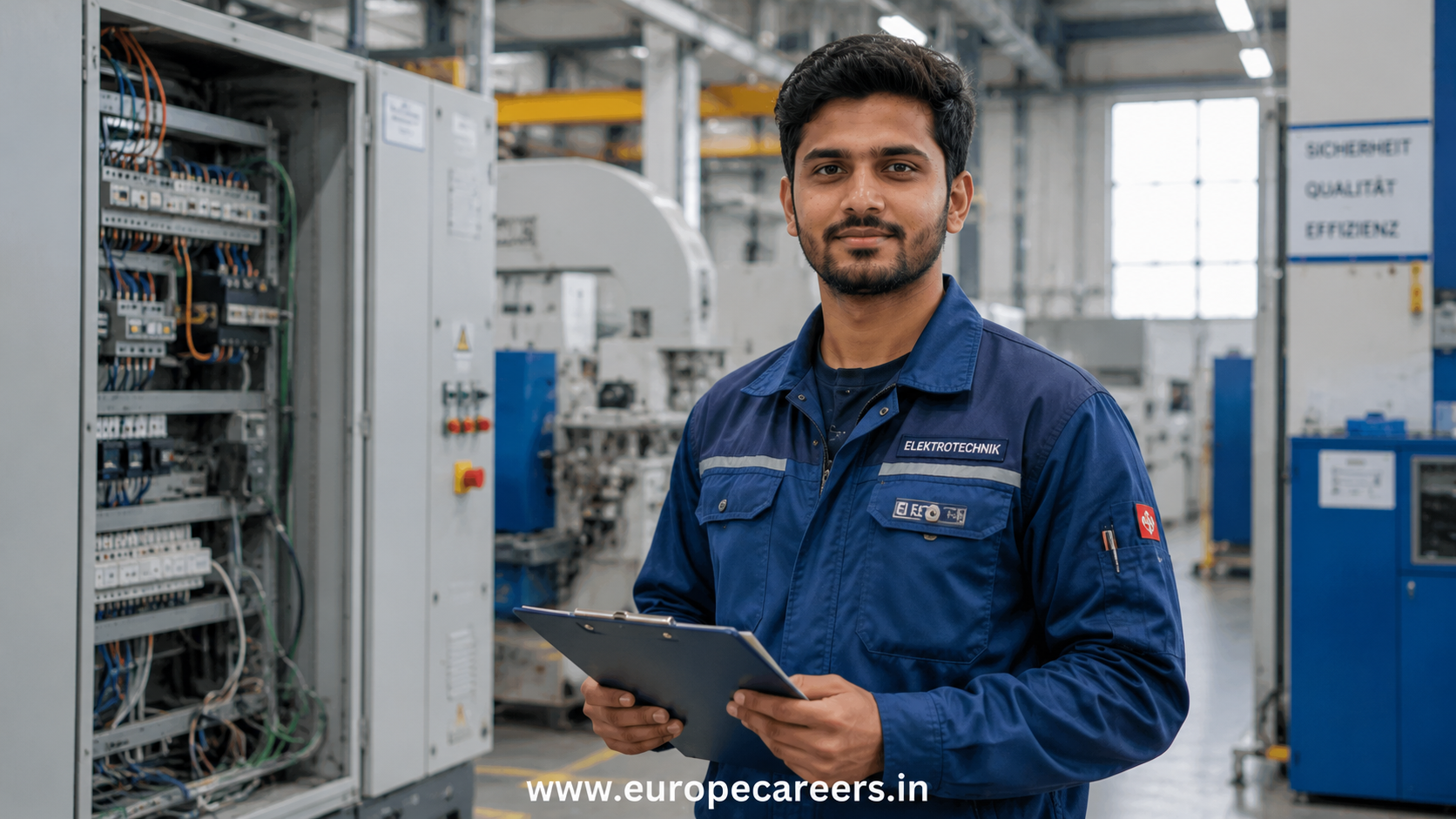
Skilled crafts and technical trades (Handwerk)—such as electricians, mechatronics technicians, welders, plumbers, and CNC machinists—hold immense social and economic prestige in Germany through the dual vocational training (Ausbildung) system. Expectations on technical sites include:
- Respect for Tools and Equipment: Tools are high-grade assets. Workers are expected to clean, inspect, and systematically organise workshop tools and equipment after every task.
- Precision Over Speed: Completing a technical installation correctly, precisely, and strictly within safety tolerances is valued far above finishing ten minutes faster with sloppy cabling or unfinished finishing work.
- Punctuality on Site: Construction and industrial shifts begin precisely on schedule. Arriving early to suit up in protective gear before the master technician (Meister) delivers the morning briefing is standard practice.
German Workplace Culture Compared With Indian Workplace Culture
To provide a clear, non-judgemental overview, the table below compares common workplace dynamics in Germany and India. Neither system is universally superior; each reflects historical, social, and economic developments in its respective country.
| Topic | Common Expectations in Germany | Common Expectations in India |
|---|---|---|
| Communication Style | Direct, factual, task-oriented (sachlich), and concise. | Polite, relationship-oriented, contextual, and often indirect. |
| Punctuality | Expected strictly on the minute for shifts, meetings, and deadlines. | Often flexible, with grace windows accommodating transit and schedule shifts. |
| Hierarchy & Authority | Clear structure, but strong expectation of independent responsibility and input. | Often hierarchical, with respect for seniority and centralised decision-making. |
| Meetings | Agenda-driven, tightly structured, focused on decisions with documented minutes. | Often collaborative, relationship-building, discussion-heavy, and exploratory. |
| Feedback & Critique | Direct and specific regarding work deliverables; separated from personal identity. | Often cushioned, indirect, or delivered privately to preserve personal harmony. |
| Work-Life Boundaries | Distinct separation between working hours and personal rest (Feierabend). | More fluid boundaries, with after-hours communication common in many industries. |
| Workplace Socialising | Professional friendliness; personal life shared gradually over time. | Warm, fast personal bonding; inquiries about family and personal matters are routine. |
| Documentation & Rules | Written processes, regulatory SOPs, and safety compliance are strictly followed. | Adaptable problem-solving and rapid improvisation are often praised. |
Common Challenges Indian Professionals May Experience
Recognising potential cultural adjustment hurdles in advance allows you to navigate them smoothly without unnecessary anxiety:
- Misinterpreting Directness as Rudeness: When a colleague says, “This analysis is incorrect,” an Indian professional might initially feel hurt. Remembering that the comment addresses the data, not your character, helps you maintain confidence.
- Hesitation to Ask Clarifying Questions: Worrying that asking for help signals incompetence can lead to delays. Remember that German teams expect proactive questions.
- Adjusting to Independent Working Styles: Waiting for daily managerial direction can be misinterpreted as a lack of initiative. Embracing ownership of your tasks is essential.
- Navigating the Language Barrier: Even in English-speaking offices, informal conversations at the coffee machine (Kaffeeküche) often switch to German. Gradually learning conversational German helps you feel connected.
- Understanding Workplace Humour: German workplace humour tends to be understated, dry, and situational. It takes a little time to tune into colleagues’ comedic nuances.
How Indian Professionals Can Adapt Successfully
Adapting successfully to a German working environment does not require you to change your personality or cast aside your Indian heritage. Many of the most respected professionals in Germany are Indians who combine technical brilliance and warmth with German standards of precision, punctuality, and structure.
- Invest in Language Early: Even if your job contract is in English, learning German to at least B1 level enriches your daily workplace interactions, builds rapport with local colleagues, and simplifies administrative life.
- Observe Team Dynamics: During your first two to three weeks, observe how your team communicates, how meetings are run, and what lunch customs exist before recommending major procedural changes.
- Be Consistently Reliable: Keep your commitments, deliver on agreed dates, and arrive on time. Reliability is the most respected currency in a German organisation.
- Communicate Difficulties Early: If a project encounters an unavoidable delay, inform your manager immediately with a clear explanation and a revised timeline.
- Embrace Constructive Feedback: View corrective feedback as a gift of clarity that accelerates your professional development.
What Indian Professionals Should Avoid in the Workplace
To avoid common pitfalls during your probation period and beyond, keep these practical “what not to do” guidelines in mind:
- Do Not Arrive Late Without Prior Notice: Being late without contacting your supervisor or team damages professional credibility.
- Do Not Make Promises You Cannot Keep: Avoid saying “yes” simply to appear accommodating if the workload or deadline is realistically unmanageable.
- Do Not Ignore Written Guidelines or Safety Rules: Bypassing safety equipment or skipping documentation steps is considered a severe violation in German industry.
- Do Not Take Critical Feedback Personally: Responding with emotional defensiveness or prolonged silence creates friction. Focus on the factual solution.
- Do Not Assume What Someone Means: If an email or verbal instruction is vague, seek clarification immediately rather than guessing.
- Do Not Send Casual, Unstructured Emails: Avoid emojis, text shorthand, or unstructured paragraphs in formal corporate correspondence.
How to Handle a Workplace Misunderstanding
Even with thorough preparation, misunderstandings can occasionally happen due to language nuances or differing communication styles. When an issue arises, resolve it using this structured four-step approach:
Step-by-Step Resolution Process:
- Stay Calm and Objective: Take a deep breath. Separate your emotional reaction from the factual topic being discussed.
- Clarify the Specific Discrepancy: Request a brief, private conversation with the colleague or supervisor: “May I clarify the expectations for this task? I want to ensure we are completely aligned.”
- Review the Agreed Facts: Restate your understanding of the instructions and ask what specific adjustments are required. Document the agreed next steps in writing.
- Consult the Works Council (Betriebsrat) or HR if Needed: If a persistent or unfair issue arises that cannot be resolved directly, most German companies have an employee-elected Works Council (Betriebsrat) and an HR team trained to provide confidential, impartial support.
How Europe Careers Helps Indian Professionals Prepare for Germany
At Europe Careers (www.europecareers.in), our mission extends far beyond submitting job applications. We prepare Indian healthcare workers, engineers, IT experts, and vocational trainees for long-term professional success in Germany through holistic guidance:
- Professional German Language Coaching: Intensive general and sector-specific German training (A1 through B2/C1), focusing on practical conversational fluency, clinical medical vocabulary, and workplace scenarios.
- European Standard CV and Portfolio Formatting: Restructuring Indian resumes into clean, ATS-compliant German tabular CVs (Tabellarischer Lebenslauf) that highlight key technical competences.
- Simulated German Interview Training: Mock interviews that help candidates answer direct technical questions confidently, articulate career motivations, and understand employer expectations.
- Cultural Orientation and Workplace Readiness: Practical workshops covering German communication etiquette, punctuality, contract analysis, and probation period navigation.
- Qualification Recognition Support (Anerkennung): Comprehensive guidance through German state licensing authorities (Behörden) for nurses, doctors, and engineers.
- Visa Documentation and Relocation Counselling: Guidance through German embassy appointments, health insurance onboarding, blocked accounts (where applicable), and city registration (Anmeldung).
Europe Careers Workplace Preparation Process
Our structured eight-stage journey ensures every candidate transitions into their German workplace with confidence, clarity, and competence:
- Comprehensive Profile Assessment: Evaluation of academic degrees, vocational diplomas, professional experience, and current language capabilities.
- German Language Training: Structured curriculum with native-certified trainers covering A1, A2, B1, and B2 professional language levels.
- Professional Communication Workshops: Interactive training on German office etiquette, email formulation, meeting decorum, and direct feedback handling.
- Employer Interview Preparation: Tailored mock interview sessions covering company research, technical case studies, and salary expectation norms.
- Employer Coordination & Offer Review: Assistance in reviewing draft employment contracts, working hour specifications, and probation terms.
- Official Document & Recognition Preparation: Managing certified translations, apostilles, and state recognition applications (Defizitbescheid / Anerkennungsbescheid).
- Pre-Departure Cultural Orientation: Briefings on German banking, public transit, statutory health insurance, housing etiquette, and emergency protocols.
- Arrival & Workplace Onboarding Support: Guidance during your initial weeks in Germany to ensure you settle into your new professional role smoothly.
30-Day Germany Workplace Preparation Plan
If you have already received a job offer or are preparing for your initial weeks in Germany, follow this practical four-week roadmap to build your workplace confidence:
| Timeline | Core Focus Area | Actionable Steps |
|---|---|---|
| Week 1 | Basic Workplace Vocabulary & Commute Planning | Learn 25 common office/hospital German terms. Download transport apps (DB Navigator) and map your exact daily commute routes. |
| Week 2 | Professional Introductions & Email Structure | Practice your 60-second professional self-introduction in German. Draft 3 sample business emails (status update, asking a question, sick notice). |
| Week 3 | Meeting Etiquette & Conversational Practice | Practice active listening techniques. Learn polite German phrases to ask for repetition (“Könnten Sie das bitte wiederholen?”). Review your contract terms. |
| Week 4 | Workplace Rules & First-Day Checklist | Organise your tax ID (Steuer-ID), social security number (Sozialversicherungsnummer), and health insurance certificate. Prepare your first-day questions. |
Practical German Workplace Vocabulary
Familiarity with common German workplace terminology will help you feel more comfortable from your very first day on the job:
| German Term | Pronunciation Guide | English Meaning | Workplace Context |
|---|---|---|---|
| der Termin | tehr-MEEN | Appointment / Fixed meeting | “Ich habe um 10 Uhr einen Termin.” (I have an appointment at 10 AM.) |
| die Besprechung | beh-SHPREH-khoong | Meeting / Conference | Team project discussion or departmental review. |
| die Frist | FRIHST | Deadline / Time limit | Firm date by which a deliverable or filing must be completed. |
| die Schicht | SHIHST | Work shift | Frühschicht (early shift), Spätschicht (late shift), Nachtschicht (night shift). |
| die Pause | POW-zeh | Rest break | Mittagspause (lunch break), Kaffeepause (coffee break). |
| der Kollege / die Kollegin | koh-LEH-geh / koh-LEH-gihn | Colleague (male / female) | Your workplace teammates. |
| der Vorgesetzte | FOR-geh-zeht-steh | Supervisor / Line manager | The person responsible for your team and evaluations. |
| der Arbeitsplatz | AHR-bayts-plahts | Workstation / Workplace | Your desk, clinical ward, lab, or workbench. |
| die Aufgabe | OWF-gah-beh | Task / Assignment | A specific responsibility assigned to you. |
| die Frage | FRAH-geh | Question | “Haben Sie eine Frage?” (Do you have a question?) |
| der Bericht | beh-RIHST | Report / Documentation | Written summary of results, shifts, or audits. |
| der Feierabend | FYE-er-ah-bent | End of workday / Free evening | “Schönen Feierabend!” (Have a great evening after work!) |
| die Gleitzeit | GLYTE-tsite | Flexible working hours | Core hours with flexible arrival and departure windows. |
| die Krankmeldung | KRAHNK-mehl-doong | Sick notice | Official notification to employer of medical incapacity. |
| die Übergabe | EW-ber-gah-beh | Handover | Passing patient or project status to the incoming shift. |
Frequently Asked Questions: German Workplace Culture
Here are detailed answers to the most common questions Indian professionals ask our counsellors about working in Germany:
1. What is German workplace culture like in general?
German workplace culture is generally characterised by punctuality, structured planning, direct communication, respect for agreed processes, and a clear distinction between working hours and personal life. However, specific team dynamics vary depending on whether you work in a tech startup, hospital, small family enterprise (Mittelstand), or multinational corporation.
2. Are German workplaces formal?
Formality depends on the sector and organisation. Traditional engineering companies, government agencies, and clinical institutions often use formal address (Sie and surnames). In contrast, software development teams, modern startups, and creative companies typically communicate using first names and the informal du. Always observe your team’s practice when you start.
3. Are German colleagues and managers direct at work?
Yes. Many German professionals communicate in a direct, factual manner. They state project needs, deadlines, and technical errors clearly and concisely. This directness is not intended as personal hostility; it is viewed as an efficient, transparent, and honest way to complete tasks successfully.
4. Why is punctuality so important in Germany?
Punctuality is viewed as a fundamental sign of respect for other people’s time and a measure of personal reliability. Arriving on time ensures meetings begin promptly, hospital shift handovers run smoothly, and production schedules stay on track.
5. How should Indian professionals communicate with German colleagues?
Speak clearly, state facts directly, keep written messages concise, and do not hesitate to ask clarifying questions when instructions are unclear. Avoid over-promising on deadlines, and notify colleagues promptly if an unexpected obstacle occurs.
6. How do German managers deliver feedback?
German managers usually give feedback that is specific, objective, and focused on the work deliverable. They will identify the exact discrepancy and explain what needs adjustment. Treat this critique as professional guidance rather than a personal judgment of your character.
7. Are workplace meetings structured in Germany?
Yes. Meetings generally have a predefined agenda, a firm start and finish time, and a specific objective. Participants are expected to have read the background documents in advance and contribute constructively to the discussion.
8. Do German workplaces use first names?
Some do, and some do not. Tech firms, international agencies, and younger companies frequently use first names immediately. Traditional institutions often start with formal surnames (Herr or Frau). Let your manager or team invite you to use first names before making the switch.
9. Should I use “Sie” or “du” when speaking German?
When starting a new role, use the formal Sie with supervisors and colleagues unless they explicitly offer the informal du. Senior colleagues or managers traditionally offer the “du” first (das Du anbieten).
10. How many hours per week do professionals work in Germany?
Standard full-time employment contracts in Germany typically specify between 38.5 and 40 hours per week across a five-day work week. Under the German Working Hours Act (Arbeitszeitgesetz), the statutory daily working time cannot exceed 10 hours.
11. How does sick leave work in Germany?
If you fall ill, you must inform your employer before your workday or shift begins. Under German law, your employer pays 100% of your regular salary for up to six weeks of continuous illness. A doctor’s medical certificate (Arbeitsunfähigkeitsbescheinigung) is required by law after three days, or from day one if specified in your contract. German doctors submit this certificate electronically (eAU) to your statutory health insurance.
12. How much annual leave do employees receive in Germany?
The statutory minimum under the Federal Holidays Act is 20 days per year for a five-day working week. In practice, however, most corporate, healthcare, and engineering employers provide between 25 and 30 days of paid annual leave per year in their standard employment contracts.
13. Do German employees work on weekends?
Sunday is legally protected as a day of rest (Sonntagsruhe) in Germany. Most office workers and engineers do not work on weekends. Essential sectors such as hospitals, public transport, hospitality, and emergency services do operate on weekends, and shift workers receive compensatory rest days and shift allowances.
14. What should Indian professionals wear to work in Germany?
Dress codes vary by sector. Healthcare workers wear hospital-provided clinical scrubs with zero jewellery. Corporate offices lean toward business casual or formal suits for client meetings. Software companies and startups are generally casual. Skilled trades require certified safety shoes and protective gear.
15. Do Indian nurses need German language skills for hospital work?
Yes. Professional recognition as a registered nurse (Pflegefachkraft) in Germany legally requires certified B2-level German. Clear communication is critical for conducting patient handovers, administering medications safely, and communicating with patients and physicians.
16. Do Indian doctors need specialized German language skills?
Yes. International doctors must pass the specialized Medical German Language Examination (Fachsprachenprüfung – FSP) at C1 clinical level before obtaining their medical practice permit (Berufserlaubnis) or full license (Approbation).
17. How can Indian professionals adapt to German workplace culture without losing their identity?
Adapting simply means mastering professional expectations like punctuality, direct communication, thorough documentation, and reliability. You do not need to alter your core values, cultural heritage, or personal warmth. German colleagues appreciate authentic diversity when paired with professional competence.
18. What are the most common mistakes Indian professionals should avoid?
The most common mistakes are arriving late without notice, saying “yes” to unachievable deadlines, hesitating to ask clarifying questions, bypassing safety or documentation rules, and taking constructive professional feedback personally.
19. Can Europe Careers help candidates prepare for German workplace culture?
Yes. Europe Careers provides targeted workplace communication workshops, CV modernisation, interview coaching, cultural orientation, and intensive German language courses (A1 to B2/C1) tailored specifically for Indian professionals moving to Germany.
20. Does Europe Careers guarantee jobs or visas?
No ethical agency can guarantee employment, salaries, or visa issuance. Hiring decisions rest solely with German employers, and visa approvals are strictly granted by the German Embassy or Consulate. Europe Careers supports candidates with professional preparation, document compliance, and career guidance to maximise their potential for success.
Conclusion: Building a Thriving Career in Germany
Succeeding in a German workplace is about more than having the right university degree, technical certificate, or nursing qualification. While your technical skills open the door to an interview, your ability to understand and embrace German workplace culture—its emphasis on punctuality, clear communication, structured planning, personal responsibility, and healthy work-life boundaries—is what ensures long-term career satisfaction and growth.
The goal is never to become someone else. The goal is simply to learn the operational language of your new environment so that your hard work, dedication, and professional excellence can achieve the recognition they deserve. With open-minded observation, consistent practice, and thorough preparation, Indian professionals across healthcare, engineering, IT, and skilled trades continue to thrive and make invaluable contributions across Germany.
Prepare for Your Career in Germany with Europe Careers
Are you an Indian healthcare worker, engineer, IT professional, or skilled trade specialist preparing to build your career in Germany? Europe Careers provides comprehensive, transparent support throughout your journey—including certified German language training, professional CV preparation, interview coaching, qualification recognition guidance, and workplace cultural orientation.
Europe Careers
Official Website: www.europecareers.in
Direct Email Support: support@europecareers.in