Interview Tips for European Employers: The Complete 2026 Guide for Indian Job Seekers

Introduction
 Securing a job in Europe is an exciting opportunity for Indian professionals seeking international work experience, higher salaries, career growth, and a better quality of life. However, receiving an interview invitation is only the beginning of the recruitment process. To turn that opportunity into a job offer, candidates must understand what European employers expect during an interview and how to present themselves professionally.
Unlike many interviews that focus mainly on technical knowledge, European employers usually evaluate the complete candidate. They assess technical expertise, communication skills, problem-solving ability, teamwork, professionalism, adaptability, and cultural fit. Employers want to know not only whether you can perform the job but also whether you can work effectively in a multicultural environment while following company policies and workplace safety standards.
For many Indian job seekers, European interviews may feel different from interviews conducted in India. The interview process is often more structured, behavioural questions are common, and employers expect candidates to provide practical examples from their previous work experience rather than giving short theoretical answers. Understanding these differences can significantly improve your confidence and increase your chances of receiving a job offer.
Another important change in recent years is the growing use of online interviews. Many European companies now conduct the first round of interviews through video conferencing platforms before inviting successful candidates for additional assessments. Candidates must therefore prepare both technically and professionally for virtual interviews.
At EuropeCareers, we understand that interview preparation plays a critical role in securing overseas employment. A well-prepared candidate not only answers questions confidently but also demonstrates professionalism, enthusiasm, and genuine interest in the position. This guide explains everything Indian professionals need to know about preparing for interviews with European employers, including common interview questions, employer expectations, communication tips, body language, online interview best practices, and common mistakes to avoid.
By following these practical interview tips, you can present yourself as a confident, capable, and reliable professional who is ready to contribute to an international workplace.
Why Interview Preparation Is Important for European Employers
 Many candidates believe that having the required qualifications and work experience is enough to secure a job in Europe. While technical skills are certainly important, employers often receive applications from many qualified candidates. The interview helps them identify the individual who is best suited to their organization.
European employers use interviews to evaluate much more than technical competence. They want to understand how candidates think, solve problems, communicate with colleagues, and respond to workplace challenges. For example, a maintenance technician may be asked to explain how they diagnosed a machine breakdown, while an engineer might be asked to describe a project where they improved productivity or reduced costs.
Preparation allows candidates to answer these questions clearly and confidently. Instead of struggling to remember examples during the interview, well-prepared applicants can describe real achievements using structured explanations that highlight their skills and experience.
Interview preparation also demonstrates professionalism. Candidates who research the company, understand the job description, and ask thoughtful questions leave a positive impression on recruiters. Employers appreciate applicants who show genuine interest in their organization rather than applying randomly to multiple companies.
Another reason preparation matters is confidence. Many talented professionals perform poorly simply because they become nervous or fail to communicate their abilities effectively. Practising common interview questions, reviewing previous work experience, and preparing examples of technical achievements can significantly reduce anxiety.
From an employer’s perspective, hiring the wrong candidate is expensive. Recruitment, training, and onboarding require time and resources. As a result, European employers carefully evaluate every applicant before making a final decision. Good preparation helps candidates demonstrate that they are reliable, motivated, and capable of contributing to the company’s long-term success.
How European Job Interviews Are Different from Indian Interviews
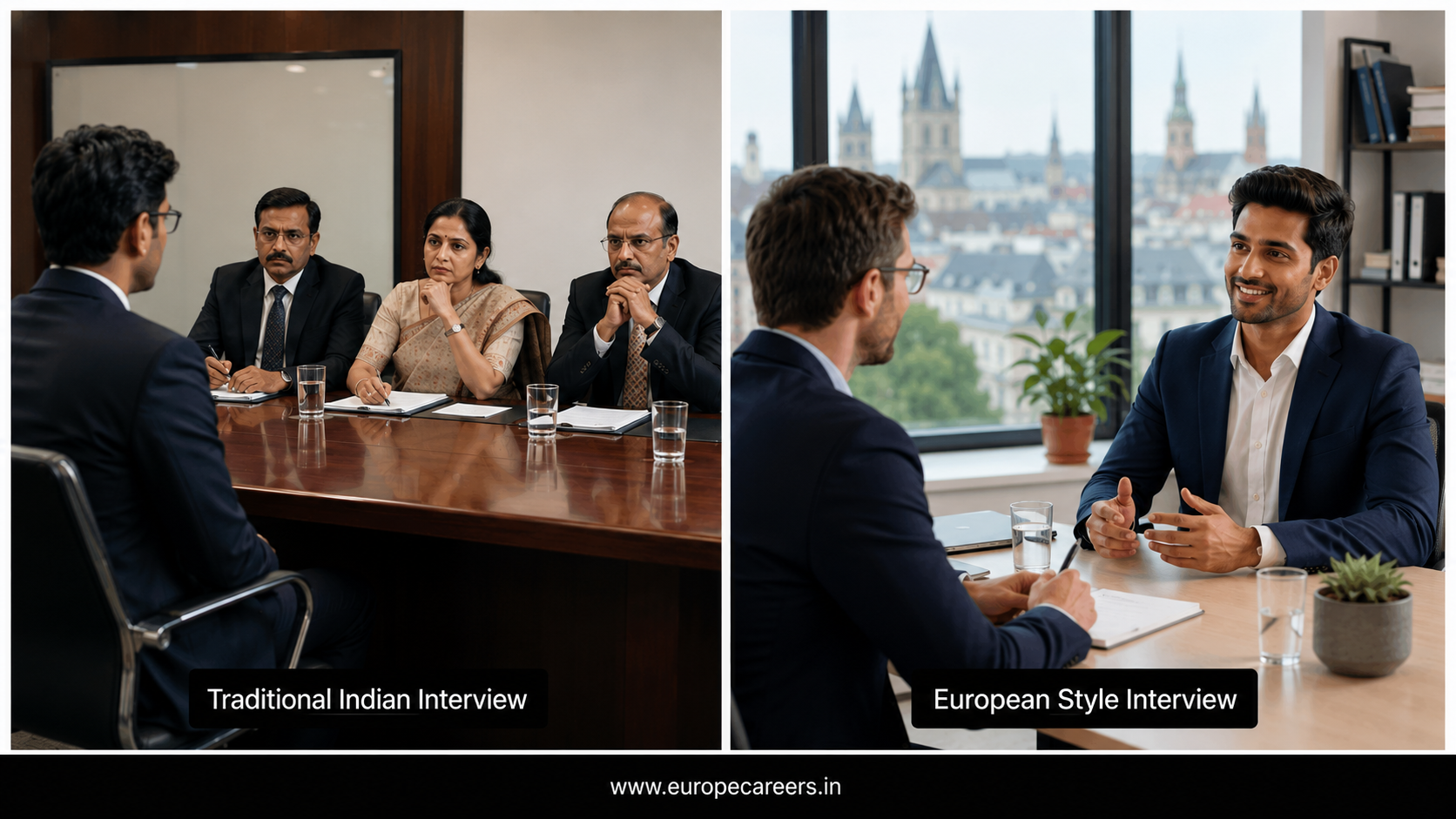 Although every company follows its own recruitment process, there are several differences between interviews conducted by European employers and those commonly experienced by Indian candidates. Understanding these differences helps applicants adjust their approach and avoid common mistakes.
One of the most noticeable differences is the interview style. European interviews are generally conversational rather than intimidating. Interviewers encourage candidates to explain their experiences, discuss previous projects, and describe how they solved real workplace problems. Instead of memorized answers, employers value honest, practical examples.
Another difference is the importance of behavioural questions. Employers frequently ask candidates to describe situations where they handled conflict, worked under pressure, improved productivity, or collaborated with colleagues. These questions help interviewers understand how candidates behave in real working environments.
Time management is another important factor. Punctuality is highly valued throughout Europe. Arriving late for an interview or joining an online meeting after the scheduled time creates a poor first impression. Candidates should plan ahead, test their internet connection if attending online, and be ready several minutes before the interview begins.
European employers also expect transparency. If you do not know the answer to a technical question, it is usually better to explain honestly how you would approach solving the problem rather than attempting to guess. Recruiters appreciate candidates who demonstrate logical thinking and a willingness to learn.
Finally, interviews often conclude with an opportunity for candidates to ask questions. Rather than remaining silent, applicants should ask thoughtful questions about the role, training opportunities, company culture, or career development. This shows genuine interest in the position and demonstrates professional maturity.
Understanding What European Employers Look For
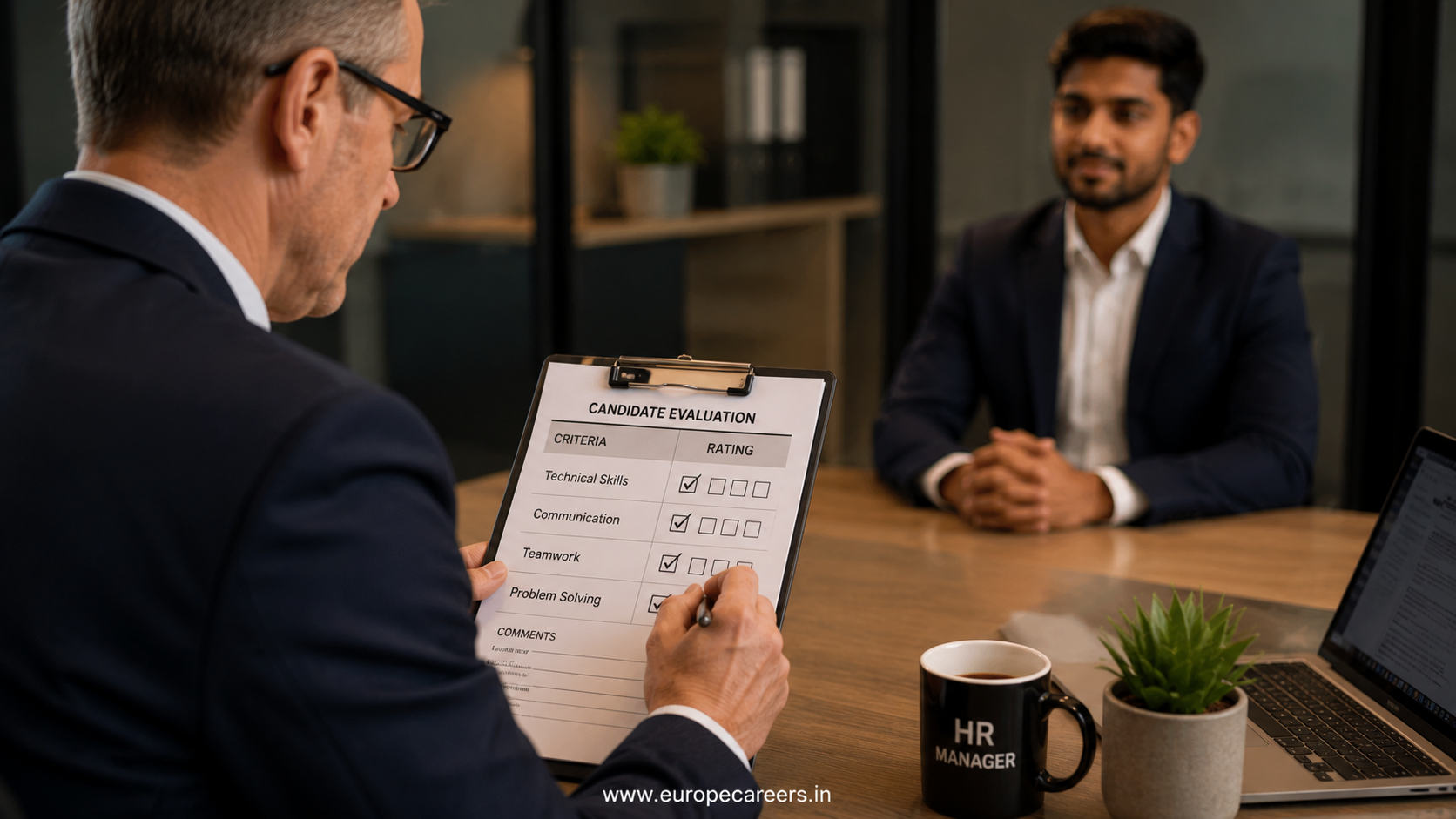 Every employer has unique hiring requirements, but most European organizations evaluate candidates using similar criteria. Preparing for these expectations allows applicants to present themselves more effectively during interviews.
The table below summarizes the qualities most commonly assessed by European employers.
| What Employers Evaluate | Why It Matters |
|---|---|
| Technical Skills | Ability to perform the responsibilities of the role. |
| Relevant Work Experience | Demonstrates practical knowledge and industry expertise. |
| Communication Skills | Essential for teamwork and workplace collaboration. |
| Problem-Solving Ability | Shows how candidates handle technical or operational challenges. |
| Teamwork | Indicates the ability to work effectively with colleagues from different backgrounds. |
| Adaptability | Demonstrates readiness to learn new technologies and processes. |
| Professionalism | Reflects punctuality, honesty, responsibility, and workplace ethics. |
| Safety Awareness | Especially important in manufacturing, engineering, healthcare, and construction industries. |
| Positive Attitude | Employers value candidates who are motivated, respectful, and willing to learn. |
Rather than trying to give perfect answers, focus on providing honest examples from your own experience. Explain what the situation was, what actions you took, and what results you achieved. Real-life examples are often much more convincing than general statements and help interviewers understand the value you can bring to their organization.
How to Prepare Before the Interview
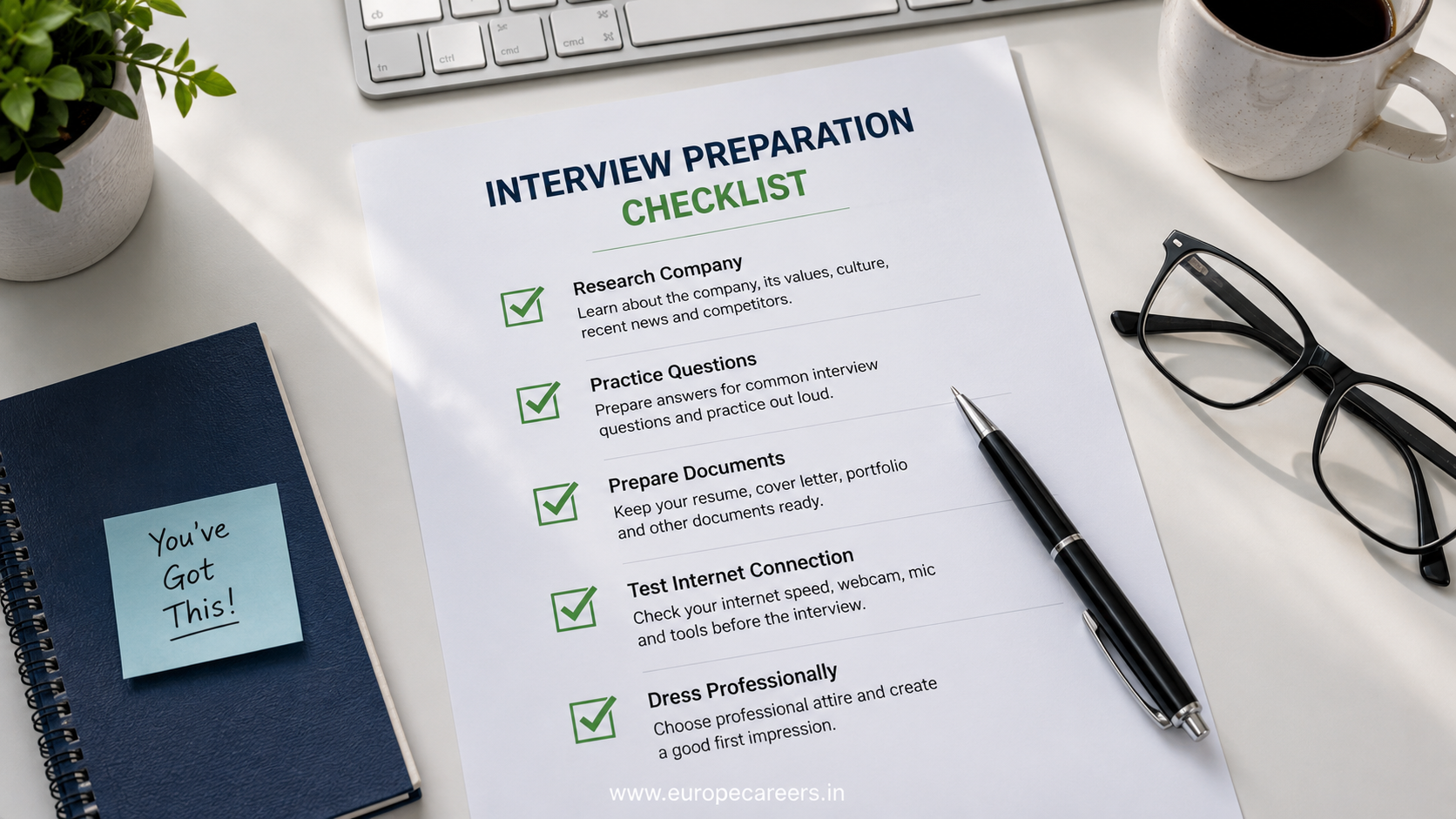 Successful interviews begin long before you sit down with the interviewer. European employers appreciate candidates who arrive prepared, understand the company, and can confidently explain why they are suitable for the role. Preparation demonstrates professionalism, enthusiasm, and respect for the employer’s time. It also helps reduce nervousness because you already know what information you want to communicate during the interview.
The first step is to thoroughly understand the job description. Carefully read every responsibility and required qualification listed in the vacancy. Compare these requirements with your own experience and prepare examples that show how you have successfully performed similar tasks in previous jobs. If the position requires preventive maintenance, machine troubleshooting, customer service, software development, or project management, think of practical situations where you demonstrated those skills.
Researching the employer is equally important. Visit the company’s official website and learn about its products, services, locations, values, and recent achievements. Understanding the business helps you answer questions more confidently and shows the interviewer that you are genuinely interested in joining the organisation rather than simply applying for any available job.
Candidates should also review their resume carefully before the interview. Everything written on the CV should be easy to explain because interviewers often ask questions about previous employers, responsibilities, technical projects, achievements, and career changes. If you mention reducing machine downtime or leading a successful engineering project, be prepared to explain exactly how you achieved those results.
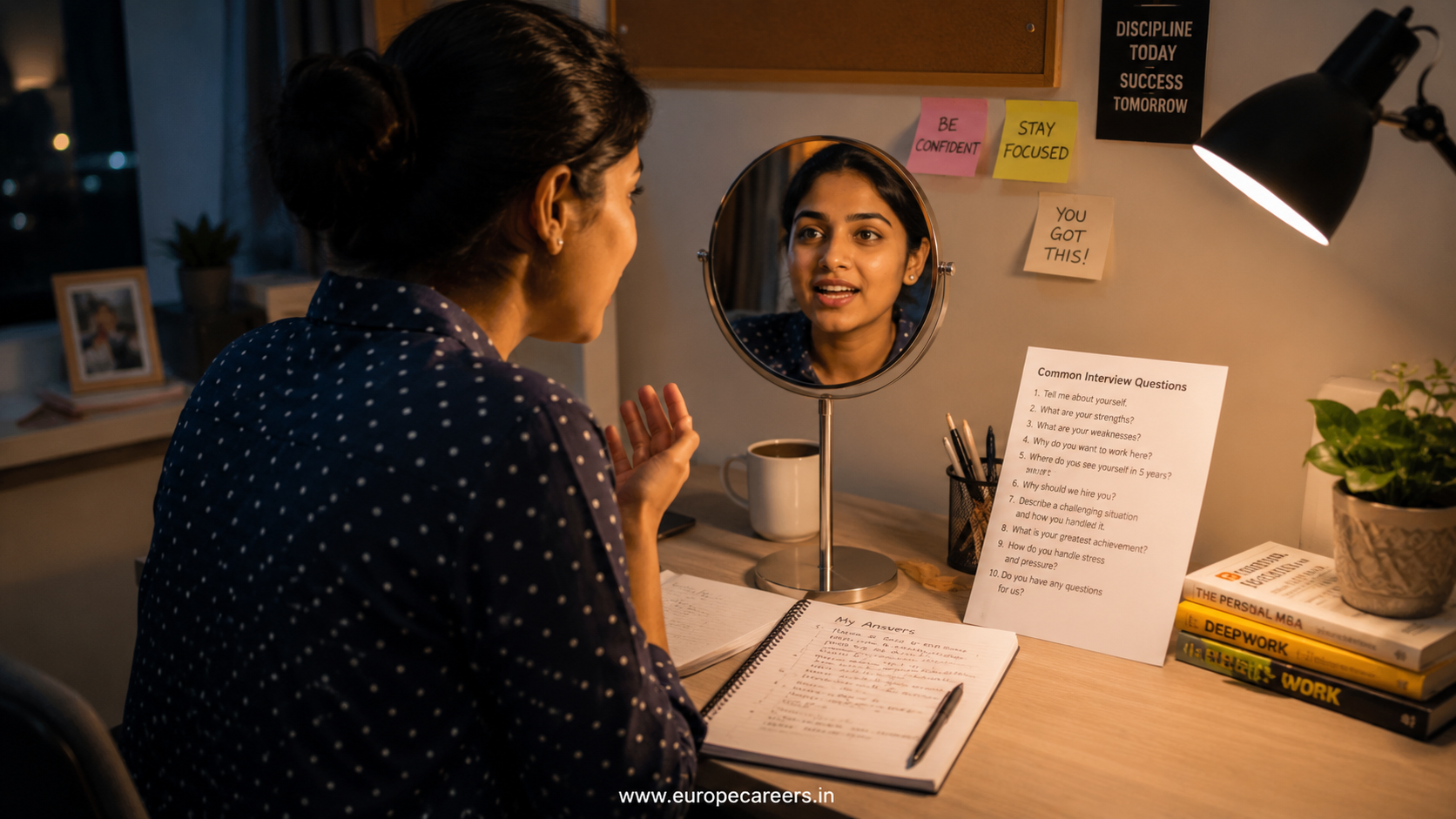
Practising common interview questions is another excellent way to build confidence. Speaking your answers aloud helps improve communication, reduces hesitation, and enables you to organise your thoughts more clearly. If possible, conduct a mock interview with a friend or family member to become comfortable answering questions naturally.
Finally, prepare all necessary documents in advance. Having everything organised creates a professional impression and prevents last-minute stress.
Interview Preparation Checklist
| Preparation Task | Why It Is Important |
|---|---|
| Read the complete job description | Understand employer expectations. |
| Research the company | Demonstrates genuine interest. |
| Review your resume | Prepare to explain your experience confidently. |
| Practice common interview questions | Improves confidence and communication. |
| Prepare examples from previous jobs | Supports your answers with practical evidence. |
| Organise required documents | Creates a professional impression. |
| Check interview time and location | Prevents delays or confusion. |
| Test internet and equipment (online interviews) | Avoids technical problems during virtual interviews. |
Common Technical Interview Questions
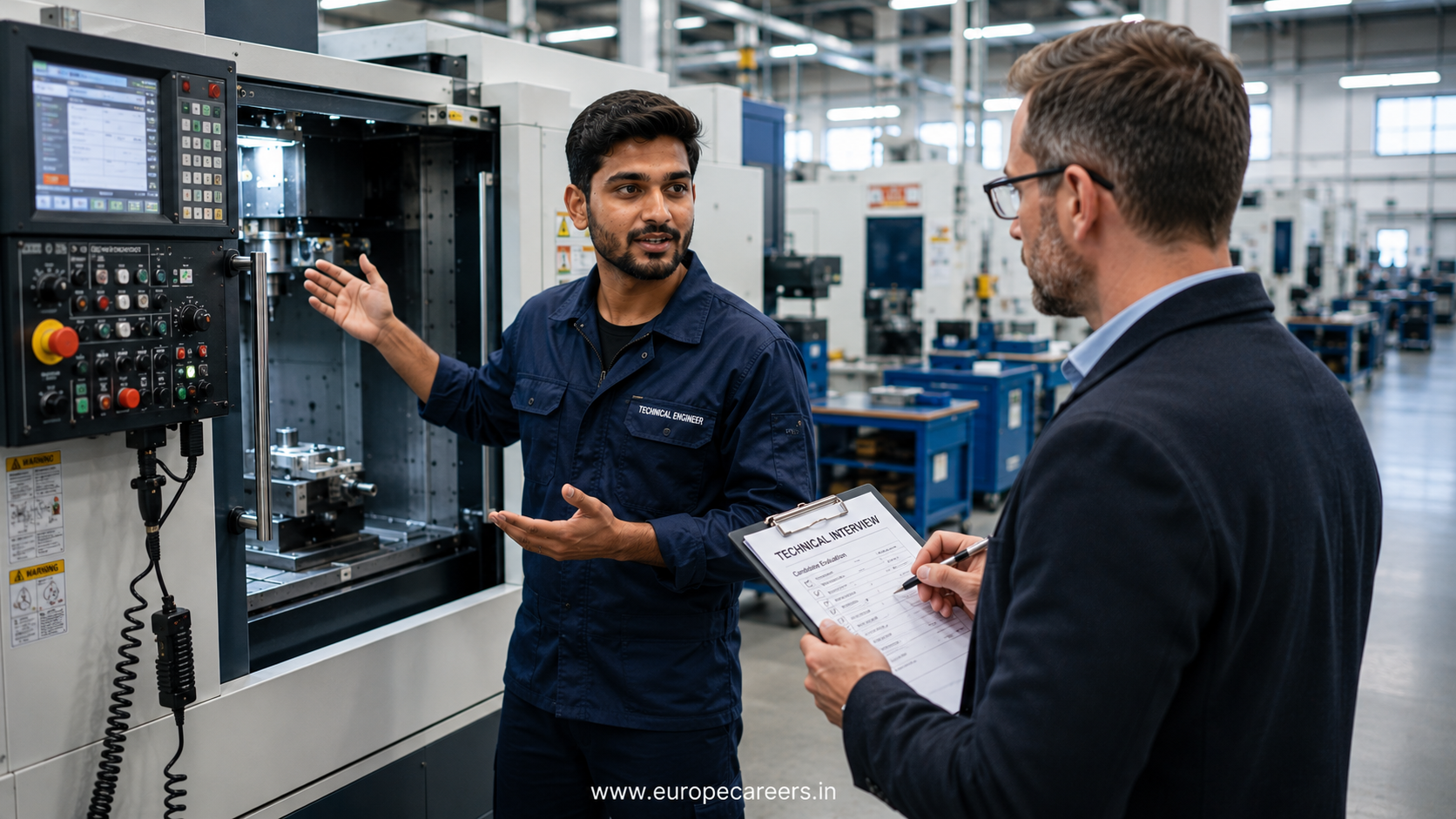
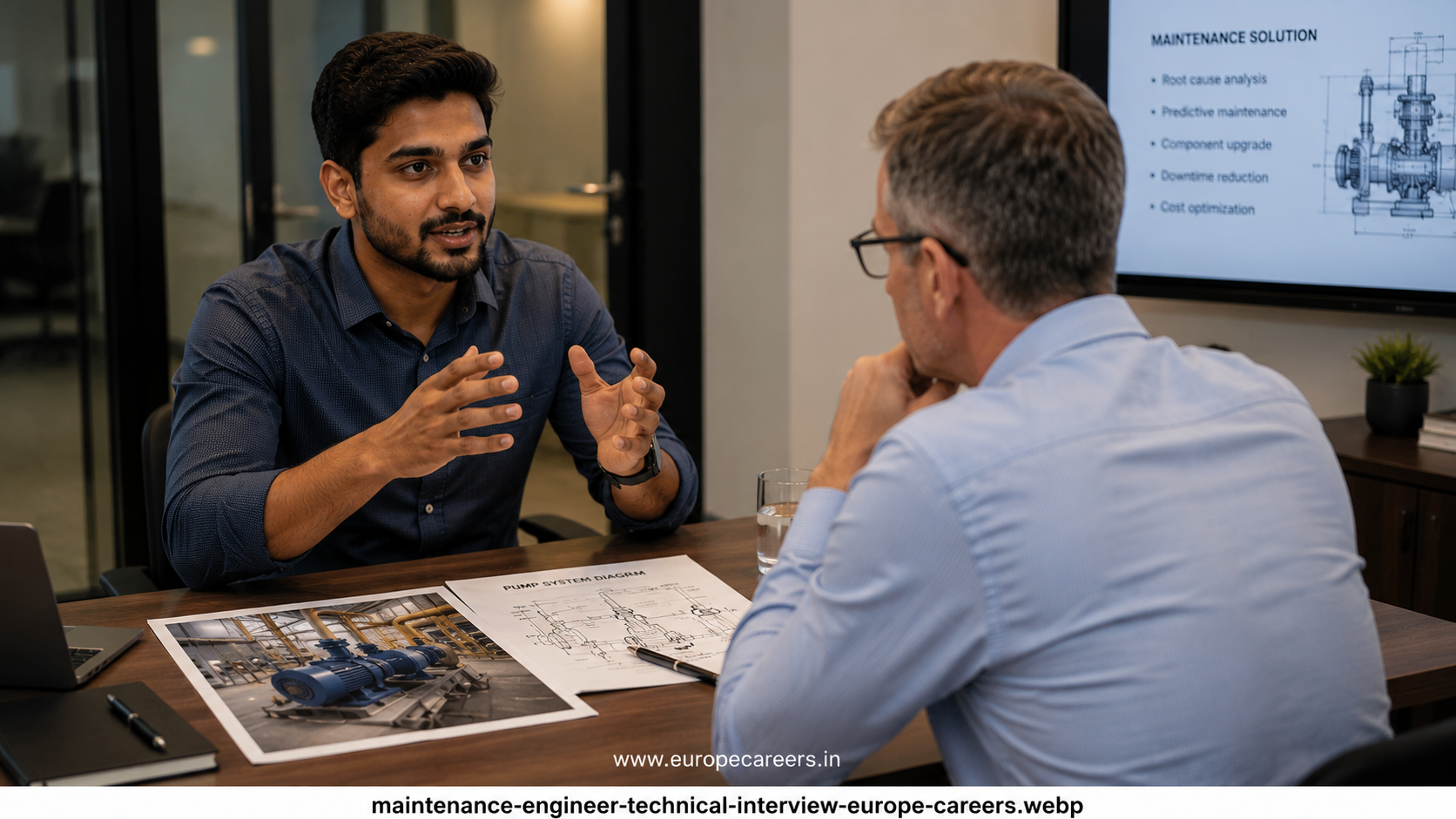 Technical interviews allow employers to evaluate your professional knowledge and determine whether you possess the skills required for the position. Unlike written examinations, technical interviews focus on practical experience rather than memorised definitions. Interviewers usually ask candidates to describe how they solved real problems in previous workplaces, maintained equipment, handled customer situations, or completed technical projects successfully.
For example, maintenance technicians may be asked how they diagnose machine failures, while software developers may explain how they solved coding challenges. Engineers might discuss quality improvements, project planning, or equipment optimisation. Employers are interested in understanding your thought process as much as your technical knowledge.
When answering technical questions, avoid giving one-word responses. Instead, explain the situation, describe your actions, and conclude with the result. This structured approach helps interviewers understand your practical abilities.
Examples of Technical Questions
| Question | What the Employer Wants to Know |
| Describe a technical problem you solved recently. | Problem-solving ability. |
| How do you perform preventive maintenance? | Practical maintenance knowledge. |
| What safety procedures do you follow? | Workplace safety awareness. |
| Which machines or software have you worked with? | Technical experience. |
| How do you prioritise urgent tasks? | Decision-making under pressure. |
| What would you do if production stopped unexpectedly? | Troubleshooting approach. |
Whenever possible, answer using examples from your previous employment. Practical experience often makes a stronger impression than theoretical explanations.
Common HR Interview Questions
 Human Resources interviews focus on understanding your personality, communication skills, motivation, and ability to fit into the organisation’s culture. European employers want to know whether you can work effectively with colleagues from different backgrounds while maintaining professionalism and a positive attitude.
These questions are usually conversational, giving candidates an opportunity to explain their career goals, strengths, and work preferences. Honesty is important because experienced interviewers can often recognise rehearsed or unrealistic answers.
Frequently Asked HR Questions
| Question | Purpose |
| Tell us about yourself. | Understand your background and communication skills. |
| Why do you want to work in Europe? | Evaluate motivation and career goals. |
| Why do you want to join our company? | Measure preparation and interest. |
| What are your strengths? | Identify valuable qualities. |
| What would you like to improve? | Assess self-awareness and willingness to learn. |
| Where do you see yourself in five years? | Understand long-term career planning. |
| Why are you leaving your current job? | Learn about career decisions. |
Answer honestly and keep your responses focused on professional growth, learning opportunities, and contributing to the employer’s success.
Behavioural Interview Questions
Behavioural questions have become increasingly common in European recruitment because past behaviour often provides valuable insight into future workplace performance. Instead of asking hypothetical questions, employers ask candidates to describe real situations they experienced during previous employment.
A useful technique for answering these questions is the STAR Method:
| STAR Step | Meaning |
| Situation | Describe the background or challenge. |
| Task | Explain your responsibility. |
| Action | Describe the steps you took. |
| Result | Share the positive outcome. |
Examples of Behavioural Questions
- Tell us about a time you solved a difficult problem.
- Describe a situation where you worked under pressure.
- Explain how you handled a disagreement with a colleague.
- Tell us about a mistake you made and what you learned.
- Describe a project you successfully completed.
Using the STAR approach helps you organise your answers logically and demonstrate both technical ability and professional maturity.
Problem-Solving Questions
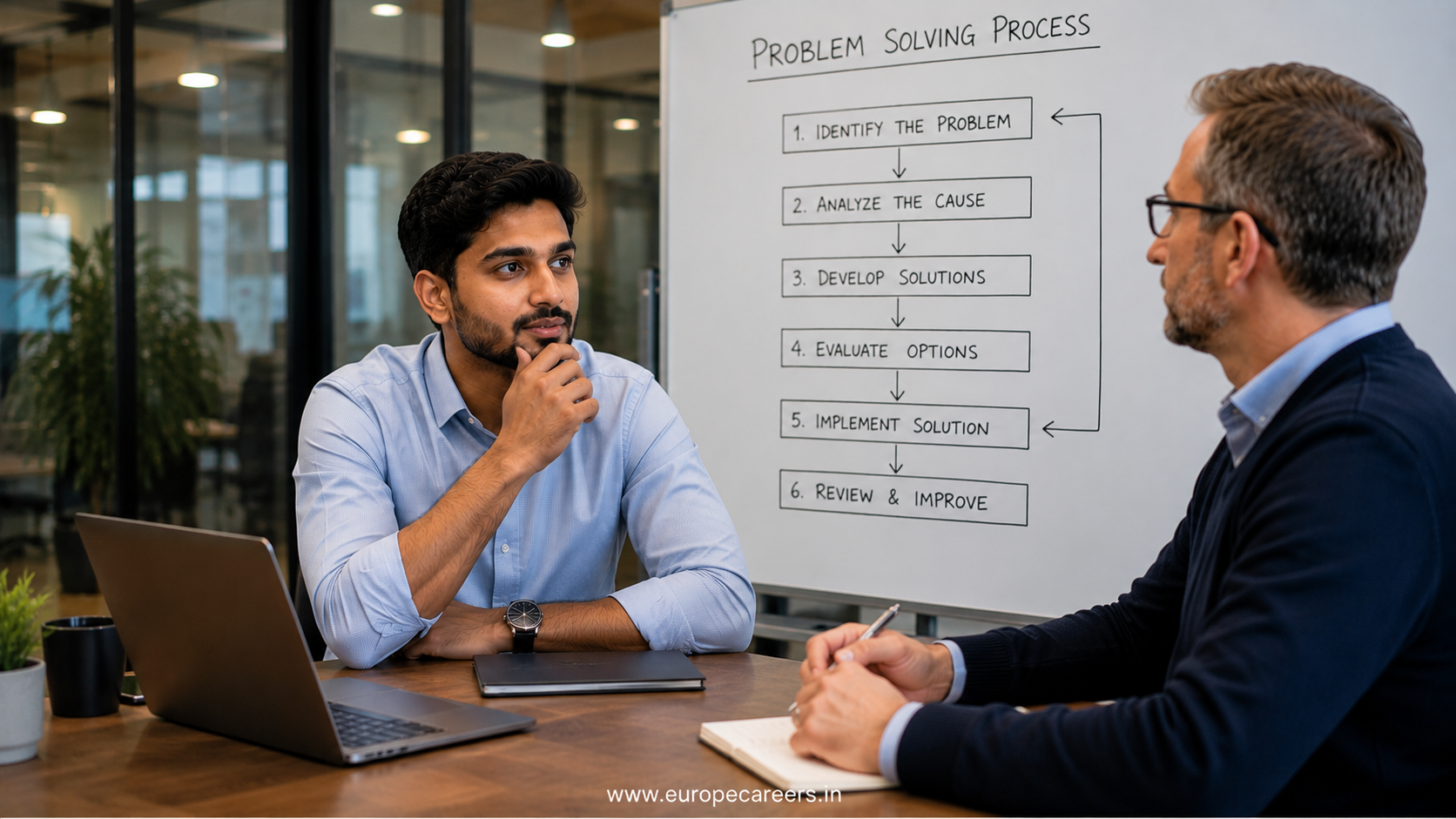
European employers value employees who remain calm and think logically when unexpected situations occur. For this reason, many interviews include problem-solving questions designed to assess analytical thinking rather than technical knowledge alone.
Interviewers may present a realistic workplace scenario and ask how you would respond. For example, a maintenance technician may be asked how they would diagnose a machine breakdown, while a logistics professional might explain how they would manage delayed deliveries.
When answering these questions, explain your reasoning step by step. Demonstrate that you prioritise safety, gather information, evaluate possible solutions, and communicate effectively with colleagues before making decisions.
Employers understand that there may be more than one correct answer. They are usually more interested in your thought process than in finding a perfect solution.
By preparing examples from your previous work experience and practising structured responses, you can approach technical, HR, behavioural, and problem-solving questions with greater confidence during interviews with European employers.
Online Interview Tips for European Employers
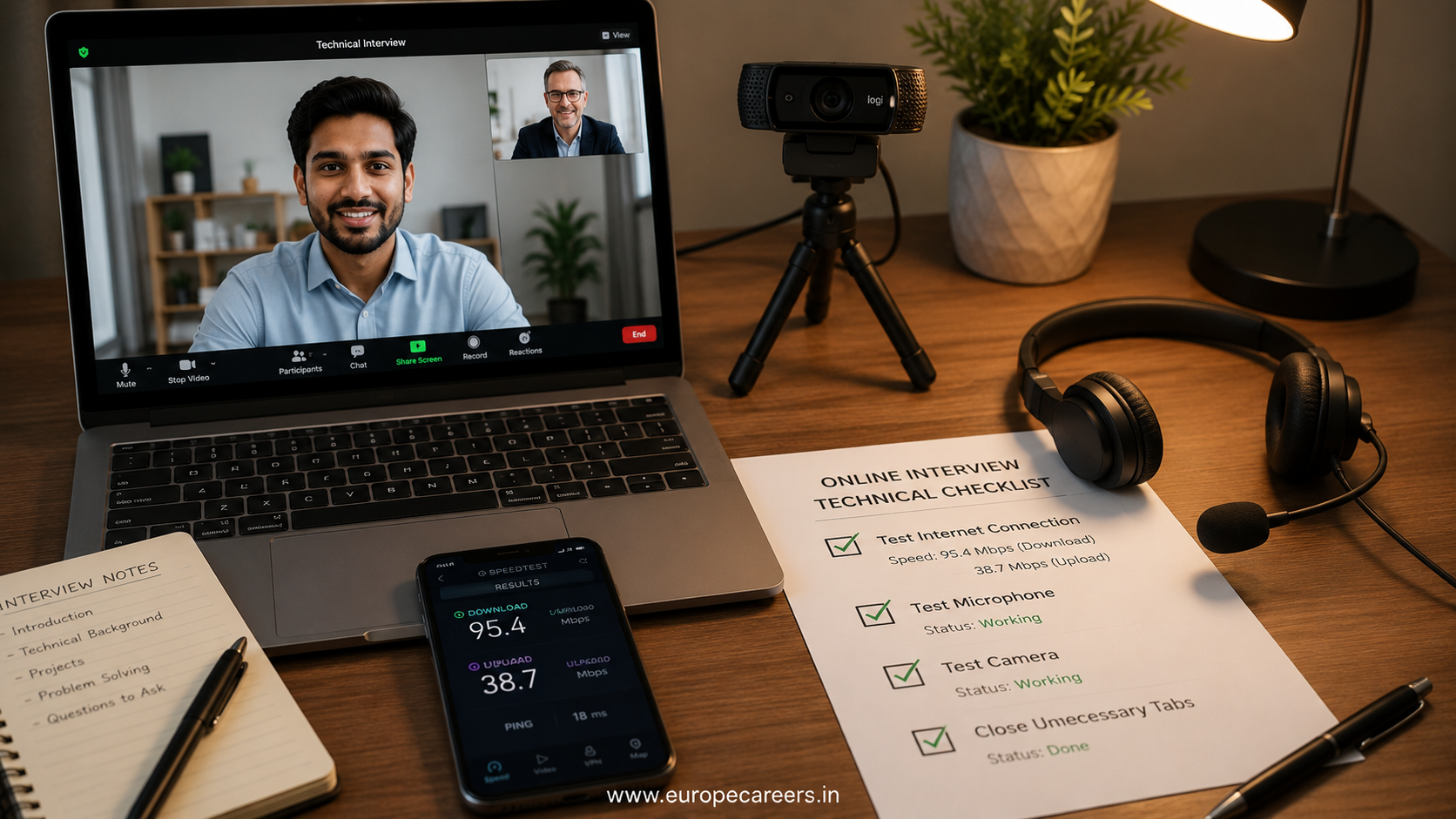
 Online interviews have become a standard part of the recruitment process across Europe. Many employers conduct the first interview through platforms such as Microsoft Teams, Zoom, Google Meet, or Skype before inviting shortlisted candidates to additional interview rounds. While the questions may be similar to face-to-face interviews, candidates must also demonstrate professionalism in a virtual environment.
Preparation begins with your technical setup. Test your internet connection, microphone, webcam, and headphones at least 30 minutes before the interview. Choose a quiet room with good lighting and a clean background so that the interviewer can see and hear you clearly. Interruptions from mobile phones, television, or other people should be avoided.
Dress professionally, even if the interview is conducted from home. Wearing appropriate business attire shows respect for the interviewer and creates a positive first impression. Join the meeting at least five to ten minutes early to avoid unnecessary stress and demonstrate punctuality.
During the interview, maintain eye contact by looking at the camera rather than constantly looking at your own video. Listen carefully, avoid interrupting the interviewer, and speak clearly at a moderate pace. If there is a technical issue, remain calm and politely explain the problem rather than becoming frustrated.
Many employers also evaluate how comfortable candidates are with digital communication because remote collaboration has become increasingly common in international workplaces.
Body Language and Professional Communication
 Body language plays an important role during interviews because it communicates confidence, professionalism, and interest. Even highly qualified candidates can create a poor impression if their body language appears nervous or disinterested.
Simple habits such as sitting upright, smiling naturally, maintaining appropriate eye contact, and listening attentively help create a positive impression. Avoid crossing your arms, constantly checking your phone, or looking around the room while speaking.
Professional communication is equally important. European employers appreciate candidates who answer questions honestly, communicate respectfully, and remain focused throughout the interview. If you do not understand a question, politely ask the interviewer to repeat or clarify it rather than guessing.
The table below summarises effective interview behaviour.
| Positive Behaviour | Avoid These Mistakes |
|---|---|
| Maintain eye contact | Looking at your phone |
| Sit confidently | Slouching in your chair |
| Listen carefully | Interrupting the interviewer |
| Speak clearly | Speaking too quickly |
| Smile naturally | Appearing uninterested |
| Be honest | Exaggerating experience |
| Thank the interviewer | Leaving without appreciation |
Good communication demonstrates professionalism and helps interviewers feel confident about your ability to work with colleagues and customers.
Common Interview Mistakes to Avoid
 Even experienced professionals sometimes make avoidable mistakes during interviews. Understanding these common errors can help you present yourself more effectively.
One of the biggest mistakes is arriving late. Whether the interview is online or in person, punctuality is extremely important in European workplaces. Always plan to arrive or join the meeting several minutes early.
Another common mistake is failing to research the company. Interviewers expect candidates to have at least a basic understanding of the organisation’s business, products, or services. Candidates who cannot answer simple questions about the company may appear unprepared.
Providing vague answers is another weakness. Instead of saying, “I am hardworking,” explain how you improved productivity, solved a technical problem, or completed a successful project. Real examples are much more convincing.
Speaking negatively about previous employers should also be avoided. If asked why you are leaving your current position, focus on career growth, learning opportunities, or professional development rather than criticising past managers or colleagues.
Finally, never exaggerate your qualifications or experience. Employers often verify information through reference checks, technical assessments, or follow-up questions.
Questions You Should Ask the Employer
At the end of many interviews, employers ask whether you have any questions. This is an opportunity to demonstrate genuine interest in the role and gather useful information about the company.
Some professional questions include:
- What does a typical working day look like in this role?
- What training opportunities does the company provide?
- How is employee performance evaluated?
- What are the opportunities for career growth?
- What are the next steps in the recruitment process?
Avoid asking about salary or holidays during the first interview unless the interviewer introduces the topic. Focus instead on understanding the role, expectations, and company culture.
Documents to Keep Ready Before the Interview
Preparing your documents in advance helps create a professional impression and allows you to respond quickly if the interviewer requests additional information.
| Document | Purpose |
|---|---|
| Updated Resume (CV) | Summary of qualifications and work experience. |
| Passport | Identity verification if required. |
| Educational Certificates | Proof of technical qualifications. |
| Experience Certificates | Verification of previous employment. |
| Technical Certifications | Demonstrates specialised skills. |
| Portfolio or Project Details | Useful for engineering, IT, or design roles. |
| References | Contact details of previous employers if requested. |
Keep digital copies organised in clearly labelled folders for online interviews.
How EuropeCareers Helps Candidates Prepare
Preparing for international interviews can be challenging, especially for first-time applicants. EuropeCareers supports Indian professionals by providing guidance that helps candidates present themselves confidently and professionally during the recruitment process.
Our support includes:
| Service | Benefit |
|---|---|
| Resume Guidance | Helps create a professional CV suitable for European employers. |
| Interview Preparation | Practice common HR and technical interview questions. |
| Career Advice | Guidance on choosing suitable roles and industries. |
| Job Search Support | Information on applying for genuine opportunities. |
| Professional Resources | Practical tips for working successfully in Europe. |
Preparation, confidence, and continuous learning are the foundations of successful international careers.
Frequently Asked Questions (FAQs)
1. How should I introduce myself in a European interview?
Begin with a brief summary of your education, work experience, technical skills, and career goals. Keep your introduction professional and relevant to the position.
2. Do European employers ask technical questions?
Yes. Technical questions are common, especially for engineering, healthcare, manufacturing, IT, logistics, and skilled trade positions.
3. What should I wear for an online interview?
Dress professionally as you would for an in-person interview. Business or business-casual clothing is generally appropriate.
4. Is English enough for European interviews?
Many multinational companies conduct interviews in English. However, learning the local language can improve employment opportunities in certain countries and industries.
5. What should I do if I don’t know the answer to a question?
Be honest. Explain how you would approach solving the problem rather than guessing or providing incorrect information.
6. How long do European interviews usually last?
Most first-round interviews last between 30 and 60 minutes, depending on the role and company.
7. Should I ask questions at the end of the interview?
Yes. Asking thoughtful questions demonstrates genuine interest in the company and helps you better understand the role.
8. How can EuropeCareers help me prepare?
EuropeCareers provides practical guidance on resume preparation, interview readiness, and career planning to help Indian professionals confidently pursue genuine employment opportunities in Europe.
Conclusion
A successful interview is about much more than answering questions correctly. European employers look for candidates who combine technical competence with professionalism, communication skills, problem-solving ability, and a willingness to learn. Careful preparation allows you to demonstrate these qualities confidently and significantly increases your chances of receiving a job offer.
Research the company, understand the job description, practise common interview questions, prepare examples from your previous work experience, and organise your documents before the interview. Whether your interview is online or face-to-face, punctuality, honesty, and respectful communication leave a lasting positive impression.
At EuropeCareers, we believe that every interview is an opportunity to showcase your potential. With thorough preparation, continuous learning, and the right mindset, Indian professionals can compete successfully in the European job market and build rewarding international careers.
Your preparation today can become the opportunity that shapes your future in Europe.