German Language Levels Explained Through Real Workplace Situations

“I am learning German, but what will I actually be able to do at work?” This is one of the most common and practical questions Indian professionals ask our team at Europe Careers. Whether you are an Indian nurse preparing for hospital wards in Bavaria, an electrical engineer heading to Baden-Württemberg, an IT specialist joining a tech team in Frankfurt, or a skilled trades technician starting an industrial career, you have certainly seen the letters: A1, A2, B1, and B2.
However, textbook descriptions of language levels rarely match the daily reality of a German workplace. A curriculum brochure might tell you that B1 means “independent language user” or that B2 means “vantage level.” While those definitions are technically accurate under the Common European Framework of Reference for Languages (CEFR), they do not explain what happens when a German shift supervisor speaks quickly, when a hospital colleague hands over a patient file, or when a teammate asks for your opinion during a morning stand-up meeting.
There is also an essential distinction every international professional must understand: passing a language examination is not the same as using German at work. A Goethe-Zertifikat, telc, or ÖSD diploma proves that you have mastered the grammatical structures, vocabulary, and examination formats required by official test boards. But real workplace communication includes dynamic, unscripted situations: verbal instructions, sudden questions, telephone calls with suppliers, clinical documentation, safety briefings, shift handovers, and casual conversations in the break room.
In this guide, written from the direct experience of Europe Careers language trainers and career counsellors, we explain what German language levels actually feel like on the job. Rather than memorizing theoretical definitions, you will see exactly what an Indian professional can understand, say, and achieve at A1, A2, B1, and B2 through realistic workplace scenarios. You will discover why language gives you independence, how workplace German differs from classroom German, what different professions require, and how you can systematically build confident, professional communication for your career in Germany.

What Do A1, A2, B1, and B2 Mean? The Core Framework
German language proficiency is standardized across Europe using the Common European Framework of Reference for Languages (CEFR). The framework divides language learning into six progressive levels: A1 and A2 (basic user), B1 and B2 (independent user), and C1 and C2 (proficient user). For international professionals moving to Germany, the first four levels — A1 to B2 — form the critical bridge from arrival to professional practice.
Here is how the four key levels are broadly defined:
| Level | Official CEFR Definition | Workplace Reality for International Workers | Typical Degree of Independence |
|---|---|---|---|
| A1 | Beginner / Breakthrough | Can understand familiar everyday words, simple greetings, and basic personal details when people speak slowly. | Minimal independence; requires constant English assistance or visual guidance. |
| A2 | Elementary / Waystage | Can handle routine, predictable exchanges about familiar tasks, immediate surroundings, and basic schedules. | Limited independence; comfortable with repetitive daily routines, but struggles with unexpected changes. |
| B1 | Intermediate / Threshold | Can understand main points of clear standard German, express opinions simply, describe work problems, and write basic messages. | Substantial independence in familiar environments; can solve routine issues without immediate translation. |
| B2 | Upper Intermediate / Vantage | Can understand complex technical or professional discussions, explain viewpoints in detail, participate actively in meetings, and write clear professional reports. | High professional independence; can handle unscripted workplace challenges and collaborate smoothly with German colleagues. |
It is important to remember that these levels describe general language ability. They do not measure your technical competence, engineering brilliance, or medical knowledge. A neurosurgeon or senior software architect may hold decades of elite clinical or technical experience, but if their German is at A1, their ability to navigate a German work environment independently will initially be very limited.
A1 German in a Real Workplace: The First Steps
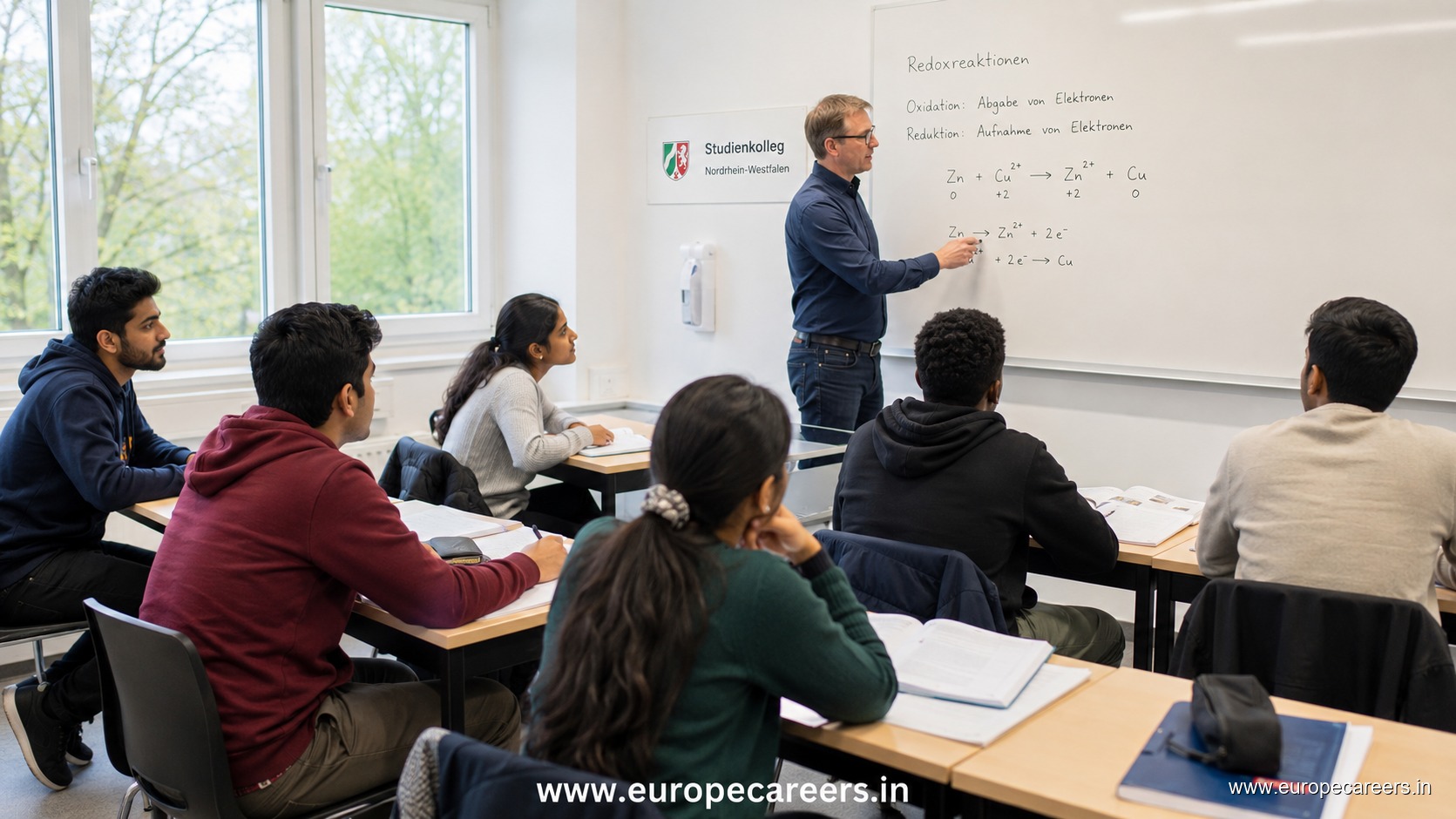
Level A1 is your introductory foundation. At this stage, you have learned basic grammatical building blocks, pronunciation rules, numbers, days of the week, and simple everyday expressions. You know how to introduce yourself and spell your name.
In a German workplace, an A1 speaker can realistically manage basic, predictable interactions:
- Greeting Colleagues: Saying hello politely in the morning and wishing someone a pleasant evening (Schönen Feierabend!).
- Basic Introductions: Stating your name, where you are from in India, and your job title.
- Simple Directions: Asking where common facilities are located (the cafeteria, the restroom, the elevator, the break room).
- Recognizing Basic Instructions: Understanding single-step commands when spoken slowly, such as “Please sign here” or “Please wait a moment.”
- Signaling Comprehension Limits: Politely informing someone that you do not understand or asking them to speak slowly.
Here are typical phrases an A1 learner uses at work:
- Guten Morgen! Mein Name ist Rahul. Ich bin neu hier. — “Good morning! My name is Rahul. I am new here.”
- Entschuldigung, wo ist der Pausenraum? — “Excuse me, where is the break room?”
- Können Sie das bitte wiederholen? — “Could you please repeat that?”
- Bitte sprechen Sie etwas langsamer. — “Please speak a little slower.”
- Ich verstehe das leider nicht. — “Unfortunately, I do not understand that.”
Real Workplace Situation at A1: The First Morning
To visualize A1 in action, imagine Priya, an Indian mechanical engineer who has just arrived at an automotive component facility near Stuttgart for her first orientation day:
The Scene: Priya arrives at the reception desk at 08:00 AM. The receptionist smiles and says: “Guten Morgen! Wie kann ich Ihnen helfen?” (Good morning! How can I help you?). Priya recognizes the greeting and responds carefully: “Guten Morgen. Ich bin Priya Sharma. Ich habe einen Termin mit Herrn Weber.” (Good morning. I am Priya Sharma. I have an appointment with Mr. Weber.)
A colleague named Stefan arrives to guide her. He speaks slowly and points: “Hier ist Ihr Spind. Das ist der Schlüssel.” (Here is your locker. That is the key.) Priya smiles: “Danke schön, Stefan.” (Thank you very much, Stefan.) She then asks: “Wo ist die Küche?” (Where is the kitchen?) Stefan points down the corridor: “Dort drüben links.” (Over there on the left.)
What A1 Accomplished: Priya made a polite, friendly first impression, verified her arrival, and located essential facilities without feeling completely lost.
Where A1 Reached Its Limit: Ten minutes later, Stefan begins chatting casually about the traffic on the B27 highway and explaining the company’s internal health and safety regulations for fire escapes. Priya cannot follow his sentences. The words blend together, the vocabulary is unfamiliar, and she must politely ask Stefan if they can switch to English for technical and safety details.
Can A1 German Be Enough for Work?
The honest answer is: for most regular jobs in Germany, A1 is not enough to work independently. In healthcare, nursing, education, and skilled technical trades, A1 is legally and practically insufficient. You cannot safely administer medication, read a blueprint, or understand an emergency warning at A1.
However, A1 can serve as an acceptable starting point in very specific circumstances:
- International Technology Teams: In multinational software corporations, venture-backed startups, or research centers where the primary corporate working language is English, some employers hire skilled IT developers who hold only A1 German, often providing company-funded language courses to help them progress.
- Initial Visa Applications: Under certain visa routes — such as the Opportunity Card (Chancenkarte) or spousal reunification for standard work permits — A1 provides foundational points or satisfies minimum consular entry criteria.
- Show of Commitment: Even when English is accepted, having A1 shows German hiring managers that you respect their culture and are willing to integrate.
At Europe Careers, we advise every candidate: treat A1 as your launching pad, never your destination.
A2 German in a Real Workplace: Managing Routine Tasks
Reaching A2 is a significant milestone. At this level, you can communicate in simple, routine situations requiring a direct exchange of information on familiar matters. You understand past-tense structures (Perfekt), common modal verbs (können, müssen, dürfen), and basic workplace vocabulary.
In a real workplace, an A2 speaker can handle everyday operational routines:
- Daily Work Schedules: Discussing shift timings, breaks, holidays, and working hours with team members.
- Understanding Standard Instructions: Following predictable, routine work orders when the steps are clear and familiar.
- Reporting Basic Status: Stating that a task is finished, asking where tools or materials belong, or mentioning that a supply has run out.
- Workplace Signs and Warnings: Reading simple safety notices, door labels, and routine maintenance signs.
- Simple Small Talk: Exchanging pleasantries with colleagues about weekend plans, the weather, or lunch preferences.
Typical workplace phrases at A2 include:
- Ich arbeite diese Woche im Frühdienst. — “I am working the early shift this week.”
- Ich habe die Prüfung abgeschlossen. Was soll ich als Nächstes tun? — “I have completed the check. What should I do next?”
- Wir brauchen neues Material im Lager. — “We need new material in the storage room.”
- Wann beginnt die Besprechung heute? — “When does the meeting begin today?”
- Ich habe gestern mit dem Kunden telefoniert. — “I spoke with the client on the phone yesterday.”
Real Workplace Situation at A2: Finding Tools and Reporting Progress
Consider Amit, an Indian industrial electrician who joined a manufacturing plant in North Rhine-Westphalia three weeks ago:
The Scene: Amit needs a specific torque wrench (Drehmomentschlüssel) to assemble a control cabinet. He walks up to his senior colleague, Markus: “Hallo Markus, hast du einen Moment? Ich suche das Werkzeug für Schaltschrank drei. Wo finde ich das?” (Hello Markus, do you have a moment? I am looking for the tool for control cabinet three. Where do I find that?)
Markus replies in clear, everyday German: “Das Werkzeug liegt im Schrank neben Werkbank zwei. Wenn du fertig bist, bring es bitte sofort zurück.” (The tool is in the cabinet next to workbench two. When you are finished, please bring it back immediately.)
Amit understands the instruction: “Alles klar, vielen Dank. Ich mache das gleich.” (Understood, thank you very much. I will do that right away.) Later that afternoon, Amit reports back: “Markus, ich habe Schaltschrank drei fertig montiert. Das Werkzeug ist wieder im Schrank.” (Markus, I have finished assembling control cabinet three. The tool is back in the cabinet.)
What A2 Accomplished: Amit completed his routine technical workflow entirely in German. Markus felt comfortable giving instructions without needing to translate into English.
Where A2 Reached Its Limit: At 03:00 PM, an unexpected electrical fault occurs on production line two. Markus and the plant manager begin an urgent, fast-paced technical debate regarding voltage fluctuations, safety relays, and warranty liability. Amit wants to suggest a potential sensor fault, but he lacks the vocabulary to explain compound technical causes, hypothetical scenarios, or conditional arguments. He feels sidelined because his German is limited to simple facts.
Can A2 German Be Enough for Work?
A2 is sufficient for certain entry-level, highly structured roles where tasks are repetitive, visual, and closely supervised — such as logistics picking, basic machine operation, or kitchen assistance. Some employers hiring through recognition partnerships (§ 16d AufenthG) accept A2 upon arrival, provided the candidate is enrolled in intensive language training to reach B1 or B2 within 12 to 18 months.
However, for professional careers — including nursing, medical practice, client-facing engineering, and team management — A2 is not enough. You cannot participate effectively in multi-person meetings, handle client complaints, or write professional documentation at A2.
B1 German in a Real Workplace: The Turning Point to Independence
Level B1 is the true turning point in an international professional’s journey. According to CEFR guidelines, a B1 speaker is an independent language user. At this stage, you can understand the main points of clear standard input on familiar matters regularly encountered at work, school, and leisure.
In a German workplace, B1 fundamentally changes your daily experience:
- Explaining Work Problems: Describing what went wrong, why a deadline might be missed, or what steps you took to troubleshoot an issue.
- Handling Professional Phone Calls: Answering calls, taking messages, transferring callers to colleagues, and confirming appointment dates.
- Writing Clear Professional Emails: Drafting routine emails to colleagues, requesting information, and summarizing daily tasks without translation software.
- Active Participation in Simpler Meetings: Following discussions about familiar projects, asking clarification questions, and sharing your progress.
- Understanding Standard Operating Procedures: Reading internal work manuals, safety guidelines, and standard operating procedures (SOPs) with occasional dictionary reference.
Realistic workplace phrases at B1 include:
- Ich habe das Problem mit der Maschine überprüft. Der Sensor ist defekt und muss ausgetauscht werden. — “I checked the problem with the machine. The sensor is defective and must be replaced.”
- Könnten wir diesen Punkt morgen in der Besprechung besprechen? — “Could we discuss this point tomorrow in the meeting?”
- Ich habe die E-Mail vom Kunden erhalten und werde bis 14 Uhr antworten. — “I received the email from the client and will reply by 2:00 PM.”
- Aufgrund von Lieferverzögerungen können wir das Projekt leider erst nächste Woche abschließen. — “Due to delivery delays, we unfortunately cannot complete the project until next week.”
- Können Sie mir bitte genau erklären, wie dieser Prozess funktioniert? — “Could you please explain to me exactly how this process works?”
Real Workplace Situation at B1: Troubleshooting a Project Delay
Let us look at Sneha, an Indian software test engineer working at a logistics automation company in Nuremberg:
The Scene: During the morning daily standup, Sneha speaks to her project lead, Tobias: “Guten Morgen zusammen. Gestern habe ich das neue Software-Update getestet. Dabei habe ich einen Fehler in der Datenbankschnittstelle gefunden. Die Daten werden nicht korrekt gespeichert.” (Good morning everyone. Yesterday I tested the new software update. While doing so, I found a bug in the database interface. The data is not being saved correctly.)
Tobias asks: “Weißt du, woran das liegt? Liegt es am Server oder am Code?” (Do you know what is causing it? Is it the server or the code?)
Sneha explains: “Ich denke, es liegt am Code. Ich habe den Fehlerbericht im System dokumentiert und den Entwicklern zugewiesen. Wenn sie den Fehler heute beheben, kann ich morgen mit dem nächsten Testlauf fortfahren.” (I think it is the code. I documented the bug report in the system and assigned it to the developers. If they fix the bug today, I can continue with the next test run tomorrow.)
What B1 Accomplished: Sneha clearly communicated a technical problem, outlined the cause, explained the action she took, and set realistic expectations for the timeline — all independently in German.
What Can Still Be Difficult at B1?
While B1 provides remarkable independence, it has distinct limitations that Indian professionals must anticipate:
- Fast Native Speech & Dialects: In regions like Bavaria (Bairisch), Swabia (Schwäbisch), or Saxony (Sächsisch), native speakers often use regional colloquialisms and fast contractions that textbook B1 German does not prepare you for.
- Subtle Workplace Nuances: Understanding German professional diplomacy, subtle disagreement, or workplace humor (Ironie) is very challenging at B1.
- High-Stakes Technical & Legal Texts: Employment contracts, liability clauses, complex engineering specifications, and formal medical discharge summaries remain exhausting to decipher.
- Mental Fatigue: Speaking and listening to German at B1 for eight continuous hours often leaves international workers mentally drained by mid-afternoon.
B2 German in a Real Workplace: The Gold Standard for Professional Fluency
Level B2 is widely regarded by German employers, state recognition authorities, and immigration bodies as the gold standard for international professionals. At B2, you are no longer merely “getting by” — you can interact with a degree of fluency and spontaneity that makes regular interaction with native speakers quite possible without strain for either party.
In a real workplace, a B2 professional can navigate virtually all day-to-day challenges:
- Active, Confident Meeting Participation: Presenting project updates, offering constructive feedback, defending technical choices, and negotiating timelines.
- Nuanced Communication: Using subjunctive forms (Konjunktiv II) to make polite requests, formulate hypothetical solutions, and soften disagreements (e.g., “Ich würde vorschlagen…” — “I would suggest…”).
- Handling Unplanned & Stressful Situations: Managing unexpected equipment failures, urgent client escalations, or acute patient changes with calm, structured communication.
- Clear Written Documentation: Writing comprehensive shift handovers, incident reports, client proposals, and detailed technical documentation.
- Building Natural Relationships: Participating comfortably in cafeteria conversations, understanding office culture, and establishing strong professional bonds with German peers.
Key workplace phrases at B2 include:
- Ich möchte kurz erläutern, welche Maßnahmen wir bisher ergriffen haben. — “I would like to briefly explain what measures we have taken so far.”
- Aus meiner Sicht wäre es sinnvoll, die Prioritäten neu zu setzen, um Engpässe zu vermeiden. — “From my perspective, it would make sense to reset priorities to avoid bottlenecks.”
- Könnten Sie mir bitte die genauen Hintergründe dieser Entscheidung darlegen? — “Could you please explain to me the exact background of this decision?”
- Obwohl die Testergebnisse vielversprechend sind, sollten wir vor dem Rollout zusätzliche Sicherheitsprüfungen durchführen. — “Although the test results are promising, we should conduct additional safety checks before rollout.”
- Ich verstehe Ihre Bedenken, allerdings müssen wir die gesetzlichen Vorgaben strikt einhalten. — “I understand your concerns; however, we must strictly comply with statutory regulations.”
Real Workplace Situation at B2: Defending a Solution in a Team Meeting
Imagine Karthik, an Indian civil and structural engineer working at a municipal engineering consultancy in Frankfurt:
The Scene: The project team is discussing a structural renovation of an older commercial building. The senior architect, Herr Müller, proposes reinforcing the existing foundation with standard concrete piles to save time.
Karthik reviews the geological soil report and speaks up: “Herr Müller, ich habe mir das neue Bodengutachten genau angesehen. Aufgrund des hohen Grundwasserspiegels in diesem Bereich sehe ich ein erhebliches Risiko für Setzungsrisse, wenn wir herkömmliche Pfähle verwenden.” (Mr. Müller, I looked closely at the new soil survey. Due to the high groundwater level in this area, I see a substantial risk of settlement cracks if we use conventional piles.)
Herr Müller looks skeptical: “Eine Spezialgründung würde aber das Budget um mindestens fünfzehn Prozent übersteigen. Haben Sie eine Alternative?” (A specialized foundation would exceed the budget by at least fifteen percent. Do you have an alternative?)
Karthik responds smoothly and professionally: “Ja. Wenn wir eine Mikropfahlgründung mit Injektionsankern kombinieren, können wir die Tragfähigkeit gewährleisten, ohne den Kostenrahmen maßgeblich zu sprengen. Ich habe dazu bereits eine Vergleichsberechnung vorbereitet, die ich Ihnen gerne im Anschluss zusende.” (Yes. If we combine micropile foundations with injection anchors, we can ensure load-bearing capacity without significantly breaking the cost framework. I have already prepared a comparative calculation, which I would be pleased to send you afterwards.)
What B2 Accomplished: Karthik identified a technical risk, countered senior skepticism with professional diplomacy, formulated a cost-conscious alternative, and offered documented evidence — demonstrating complete professional equality in a high-level German technical discussion.
B2 German for Nurses: Why Healthcare Demands High Precision
Nowhere is the German language more critical than in healthcare. When Indian nurses (holding B.Sc. Nursing or GNM qualifications) prepare for Germany, they often ask why German state authorities insist on B2 German for professional recognition. The answer lies in patient safety, legal liability, and clinical teamwork.
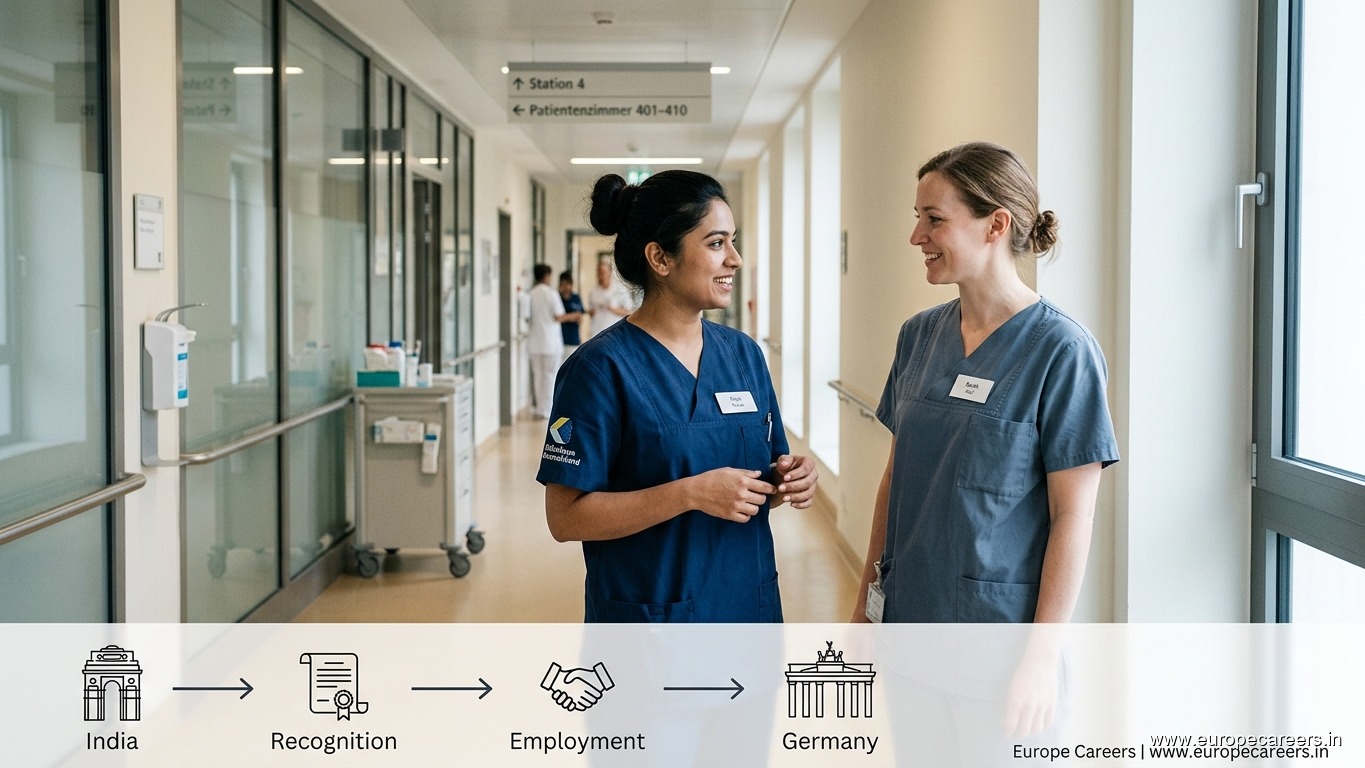
Consider the daily communicative responsibilities of a registered nurse in a German hospital ward:
- The Shift Handover (Übergabe): At the change of every shift, nurses transfer patient care through a detailed verbal handover. You must accurately describe vital sign trends, medication changes, intravenous infusion rates, surgical wound drainage, and patient mood in German.
- Patient Care & Empathy: Hospital patients are often elderly, anxious, in pain, or disoriented. They may speak in dialect or with slurred speech. You must ask: “Wo genau tut es weh? Strahlt der Schmerz aus?” (“Where exactly does it hurt? Does the pain radiate?”) and reassure them with warmth and patience.
- Communicating with Ward Physicians: When a patient’s blood pressure drops or an allergic reaction occurs, you must immediately brief the attending physician (Stationsarzt), summarize recent clinical observations, and carry out urgent verbal medication orders without hesitation.
- Nursing Documentation (Pflegedokumentation): Under German healthcare law, if a nursing action is not documented, it legally did not happen. You must record vital signs, wound care assessments (Wunddokumentation), mobility scores, and fluid balances with grammatical clarity and accurate medical terminology.
- Conversations with Anxious Relatives: Family members call or visit constantly, asking for updates on their loved ones. Explaining a patient’s condition politely while respecting patient privacy laws (GDPR / Schweigepflicht) requires mature, sensitive language.
Official Licensing Requirement: In all 16 German federal states, obtaining your permanent professional nursing license (Berufserlaubnis / Urkunde) legally mandates proof of B2 German proficiency (from Goethe-Institut, telc, ÖSD, or telc Deutsch B1-B2 Pflege). While you can enter Germany with B1 to begin your adaptation course (Anpassungslehrgang) as detailed in our guide on the German Defizitbescheid Process, your ultimate career autonomy depends entirely on mastering B2.
B2 and C1 German for Medical Doctors
For Indian medical doctors (MBBS, MD, MS) moving to Germany, language requirements are even more rigorous. Practicing medicine requires not only general fluency but complete mastery of clinical communication and specialized medical terminology (Fachsprache):
- General German Foundation (B2): A certified B2 certificate is the minimum administrative prerequisite to apply for the medical licensing pathway with the respective State Medical Chamber (Landesärztekammer).
- The Medical Language Exam (Fachsprachenprüfung — FSP at C1 Level): Before obtaining a temporary practice permit (Berufserlaubnis) or full medical license (Approbation), foreign doctors must pass an intensive three-part practical simulation: taking a structured 20-minute patient history (Anamnesegespräch), writing a formal medical doctor’s report (Arztbrief), and presenting the clinical case to two senior German medical examiners (Arzt-zu-Arzt-Gespräch).
- Dual Vocabulary Mastery: German doctors must master two parallel languages: Latin/Greek anatomical terms used with fellow doctors (e.g., Appendizitis, Hypertonie) and everyday German colloquial terms used with patients (e.g., Blinddarmentzündung, Bluthochdruck).
German for Engineers and IT Professionals: The English vs. German Reality
Among Indian software developers, cloud architects, and engineers, there is a widespread assumption: “Everyone in tech speaks English, so why do I need German?”
While English is indeed common in multinational tech firms in Berlin or Munich, the broader German employment market paints a very different picture:
- The German Mittelstand: Over 90% of German industrial manufacturers, automation firms, and engineering consultancies are medium-sized enterprises (the Mittelstand) located in smaller towns across Germany. In these companies, project meetings, cross-departmental coordination (with production, purchasing, and quality assurance), and internal documentation happen primarily in German.
- Job Selection & Security: An Indian engineer who speaks B1/B2 German has access to 80% more job openings than someone who speaks only English. Furthermore, during economic restructurings, employees who communicate easily with German leadership and shop-floor technicians enjoy vastly superior job security.
- Fast-Track Permanent Settlement: Under the EU Blue Card regulations, holding B1 German reduces the mandatory waiting period for permanent residency (Niederlassungserlaubnis) from 27 months down to just 21 months of employment.
B2 German for Skilled Trades and Technical Crafts (Handwerk)
For electricians, HVAC mechanics (SHK-Anlagenmechaniker), welders, and industrial mechatronics technicians, language is directly tied to workplace safety and legal liability:
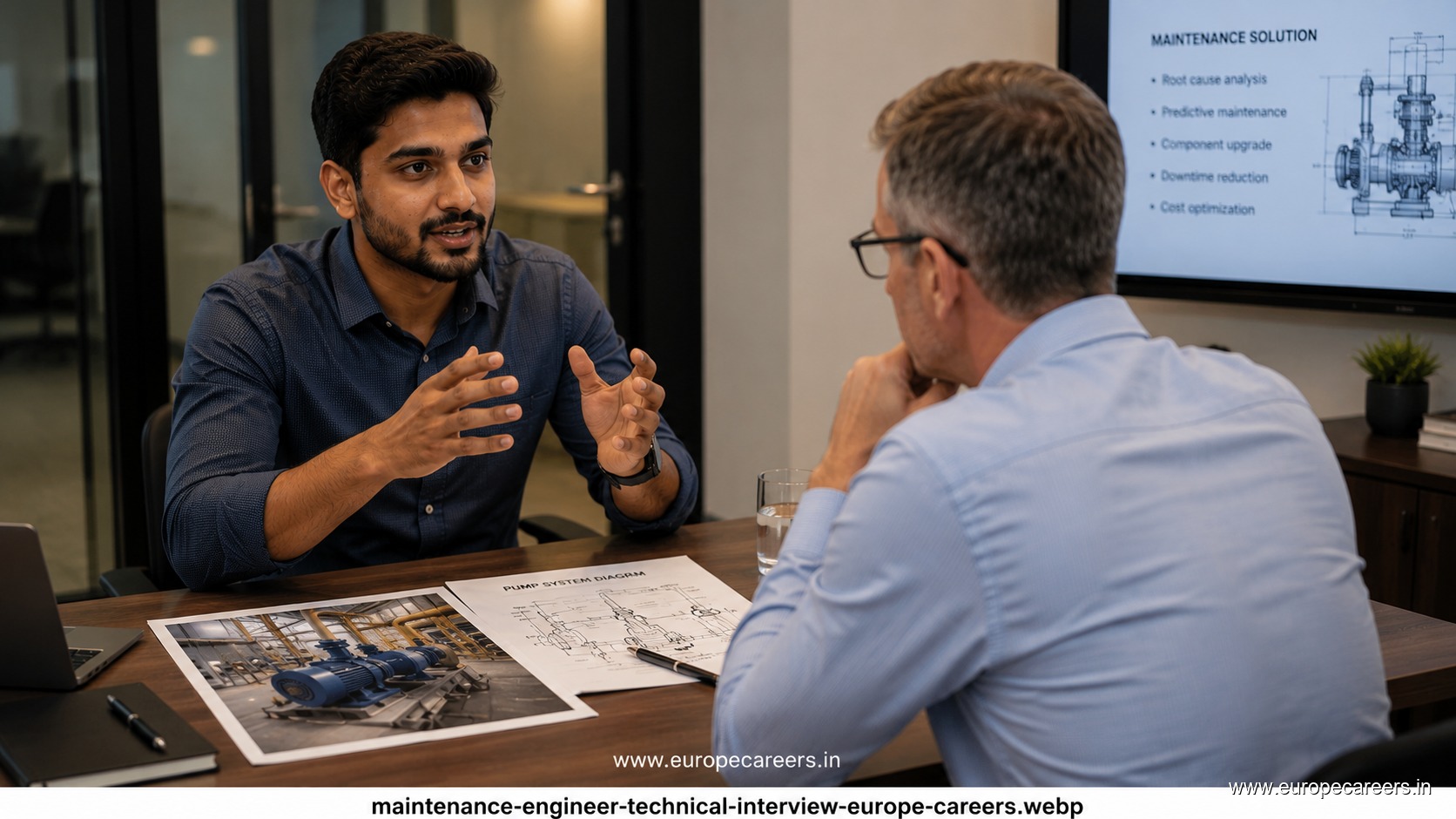
- Technical Standards (DIN & VDE Norms): Electrical installations and gas heating systems in Germany must comply with strict statutory safety codes. Misinterpreting a technical manual or wiring diagram written in German can result in catastrophic electrical fires or safety hazards.
- Client and Customer Interaction: Skilled tradesmen frequently visit residential homes or commercial construction sites. Explaining an installation to a German property owner, answering their questions, and having them sign the handover protocol (Abnahmeprotokoll) requires confident B1/B2 spoken German.
- Master Craftsman Coordination: Craft businesses operate under the supervision of a Master Craftsman (Handwerksmeister). Quick verbal commands on a noisy construction site must be understood instantly without confusion.
Workplace Situation Comparison: A1 vs. A2 vs. B1 vs. B2
The following illustrative learning matrix shows how communicative capability evolves across the four key levels in common workplace situations:
| Workplace Situation | A1 (Beginner) | A2 (Elementary) | B1 (Intermediate) | B2 (Upper Intermediate) |
|---|---|---|---|---|
| Introducing Yourself | Can state name, country of origin, and job title using memorized phrases. | Can describe educational background, family, and past employment simply. | Can comfortably summarize career journey, technical skills, and professional interests. | Can present professional profile with confidence, nuances, and strategic emphasis. |
| Understanding Instructions | Understands very simple, single-step commands when spoken slowly with gestures. | Understands routine, predictable instructions related to daily familiar tasks. | Understands most standard operational instructions, SOPs, and multi-step tasks. | Understands complex, detailed technical instructions, even when delivered rapidly. |
| Asking Questions | Can ask basic questions regarding locations (where is the room, who is the manager). | Can ask routine questions about shift times, tool locations, and task sequence. | Can ask detailed clarification questions about problem causes and procedures. | Can ask probing, analytical questions to challenge assumptions and refine solutions. |
| Team Meetings | Cannot follow natural discussions; relies on colleagues translating summary points. | Catches isolated familiar keywords; can give simple one-sentence status updates. | Follows main topics in familiar meetings; can express basic opinions and report progress. | Participates actively and spontaneously; debates technical options and defends proposals. |
| Email Communication | Can write very basic greeting messages or confirm receipt of documents. | Can write short, simple emails requesting appointments or confirming schedules. | Can draft standard professional emails, report issues, and summarize meetings. | Writes polished, professional business correspondence with correct diplomatic tone. |
| Explaining a Problem | Can only say that something is broken or not working (“Maschine kaputt”). | Can state basic facts about when something stopped working and who noticed it. | Can describe symptoms, outline troubleshooting steps, and suggest next actions. | Can explain root causes, evaluate operational risks, and recommend comprehensive fixes. |
| Break Room Conversations | Limited to smiling, nodding, and exchanging basic greetings (Guten Appetit!). | Can discuss simple topics: the weather, weekend plans, food, and public holidays. | Can converse comfortably about current events, travel, hobbies, and personal opinions. | Participates effortlessly in humor, cultural discussions, and deep professional banter. |
German Language Levels by Workplace Task: What Do You Need?
To help you map your language goals to your daily responsibilities, here is a practical overview of the level typically required to perform specific workplace tasks comfortably:
| Workplace Task | Minimum Practical Level | Recommended Target Level | Why This Level Is Required |
|---|---|---|---|
| Greeting colleagues and reception staff | A1 | A2 | Requires basic courtesy phrases and clear pronunciation. |
| Following routine operational instructions | A2 | B1 | Instructions follow predictable patterns, but safety requires reliable understanding. |
| Reporting an equipment or software fault | B1 | B2 | Requires describing symptoms, past actions, and immediate operational impacts. |
| Participating in department meetings | B1 | B2 | Requires following multiple speakers, understanding rapid banter, and speaking spontaneously. |
| Writing formal reports or incident logs | B2 | B2+ / C1 | Requires formal sentence structure, correct passive voice, and legal precision. |
| Patient clinical care and shift handover | B2 | B2 (Pflege) | Patient safety and statutory licensing mandate thorough clinical comprehension. |
| Doctor-to-patient consultation & diagnosis | B2 + C1 FSP | C1 (Medizin) | Requires empathetic communication, complex clinical reasoning, and formal Approbation. |
| Job interview with a German employer | B1 | B2 | Interviewers evaluate whether you can integrate smoothly without burdening the team. |
General German vs. Workplace German: What Is the Difference?
Many learners who pass a standard B1 or B2 exam feel completely overwhelmed on their first week at work. They wonder: “Why did my exam not prepare me for this?”
The reason is the fundamental gap between General German (Allgemeinsprache) and Workplace German (Berufssprache):
- General German (The Foundation): Covers everyday life — shopping at Aldi, buying a train ticket, discussing your hobbies, ordering in a restaurant, and chatting about holidays. It builds your grammar, verb conjugations, and general vocabulary.
- Workplace German (The Applied Layer): Covers professional communication — technical terms, shift handovers, formal email etiquette, conflict management, statutory safety rules, and industry jargon.
General German is the indispensable foundation — you cannot learn workplace German without understanding basic grammar. However, workplace German is the practical bridge that allows you to perform your job safely and earn the respect of your colleagues.
Why Workplace Vocabulary Matters: Beyond Grammar
You can master all four cases (Nominativ, Akkusativ, Dativ, Genitiv) and conjugate verbs flawlessly, but if you do not know the specific terms used in your industry, workplace communication will stall. Notice how common professional terms differ from everyday language:
- The Deadline: Die Frist or der Abgabetermin (not just die Zeit).
- The Meeting: Die Besprechung or die Dienstbesprechung (more common in German companies than the English loanword Meeting).
- The Shift: Die Schicht (Frühschicht = early shift, Spätschicht = late shift, Nachtschicht = night shift).
- The Task: Die Aufgabe or der Arbeitsauftrag.
- Safety / Compliance: Die Arbeitssicherheit and die Vorschrift.
- The Report: Der Bericht or das Protokoll.
- The Patient: Der Patient (male) or die Patientin (female).
- The Colleague: Der Kollege (male) or die Kollegin (female).
- End of the Working Day: Der Feierabend (a sacred cultural concept in Germany signifying the clear boundary between work and personal rest).
Why Listening and Speaking Practice Matter Most at Work
When Indian students study German in traditional classroom settings, the emphasis is frequently placed on reading and written grammar exercises. While reading and writing are vital, the reality of a German workplace is overwhelmingly auditory and spoken.
The Workplace Listening Challenge
In a classroom, teachers speak clear, enunciated High German (Hochdeutsch) at a measured pace. At work, your colleagues will speak quickly, swallow word endings, use regional idioms, and talk over background noise — such as hospital monitor alarms, factory machinery, or noisy office open spaces. Furthermore, telephone calls strip away visual lip-reading cues, making active listening comprehension your most critical survival skill.
The Speaking Hesitation Trap
Many Indian professionals suffer from “passive fluency” — they understand 80% of what is said, but they freeze when asked to speak because they fear making a grammatical mistake with articles (der, die, das) or adjective endings. In a German workplace, communicative clarity is far more valued than grammatical perfection. A colleague would rather you say a sentence with a minor article mistake than remain silent when an urgent operational problem needs to be reported.
What Language Level Should Different Professionals Target?
Rather than adopting a one-size-fits-all approach, Indian candidates should align their language milestones with their specific profession and regulatory framework:
- Nurses (B.Sc. & GNM): Target B1 in India to secure your contract, adaptation course, and visa — and target B2 immediately upon arrival to achieve full state recognition and salary scale advancement. Learn more about the nursing pathway in our detailed guide on GNM vs. B.Sc. Nursing in Germany.
- Medical Doctors: Target B2 certified before initiating consular paperwork, followed by specialized C1 Medical German (FSP preparation) to clear the state examination.
- Engineers & Technical Specialists: Target B1 minimum before travel to handle daily workplace onboarding, aiming for B2 within your first year to unlock leadership, client consulting, and project management opportunities.
- IT Specialists: If joining an English-speaking international tech company, A2/B1 allows comfortable cultural integration. If targeting the vast German Mittelstand, aim for B1/B2 to access the widest selection of premium positions.
- Skilled Trades (Electricians, Mechanics, SHK): Target B1 certified to guarantee workplace safety, follow technical manuals, and coordinate effectively with master craftsmen.
How Europe Careers Helps Candidates Build Real Workplace German
At Europe Careers, we do not view German language training as a dry academic exercise. We believe language preparation must directly mirror the professional environment you will step into on your first day in Germany.
Our structured training model combines rigorous CEFR curriculum with intensive practical workplace simulations:
- Assess: We evaluate your baseline language aptitude and learning pace, establishing clear, realistic timelines toward your target examination.
- Learn: Experienced native and certified bilingual instructors teach core grammar, vocabulary, and sentence structures using interactive, communicative methodologies.
- Practise: From week one, students engage in active verbal communication, daily listening comprehension drills, and realistic question-and-answer exchanges.
- Specialise: We introduce profession-specific modules — teaching clinical nursing German (Pflegefachsprache), engineering terminology, and technical safety phrases alongside general coursework.
- Simulate: Candidates participate in simulated employer job interviews, telephone drills, shift handover role-plays, and conflict management scenarios.
- Certify: We prepare candidates thoroughly for official examinations (Goethe-Zertifikat, telc, or ÖSD) conducted by authorized international test centers.
Real Workplace Practice: 5 Common Dialogues Every Professional Should Know
To help you prepare for daily life in a German workplace, here are five essential role-play dialogues demonstrating practical, professional communication:
Dialogue 1: First Day Introduction (Recommended Level: A1–A2)
Situation: You meet your new team members in the break room on your first morning.
German: “Guten Morgen! Ich bin Ananya. Ich fange heute als neue Pflegekraft auf dieser Station an. Ich freue mich sehr auf die Zusammenarbeit mit Ihnen.”
English: “Good morning! I am Ananya. I am starting today as a new nurse on this ward. I am very much looking forward to working together with you.”
Dialogue 2: Asking a Colleague for Assistance (Recommended Level: A2–B1)
Situation: You need guidance on an internal software tool or hospital record system.
German: “Hallo Thomas, hättest du kurz fünf Minuten Zeit? Ich bin mir bei der Eingabe dieses Berichts nicht ganz sicher und möchte keinen Fehler machen.”
English: “Hello Thomas, would you have five minutes briefly? I am not entirely sure about entering this report and I don’t want to make a mistake.”
Dialogue 3: Reporting an Operational Problem (Recommended Level: B1)
Situation: An equipment malfunction threatens to delay production or patient treatment.
German: “Herr Wagner, ich muss Ihnen kurz melden, dass die Pumpe an Station vier unregelmäßig arbeitet. Ich habe das Gerät vorsorglich gestoppt, damit keine Folgeschäden entstehen.”
English: “Mr. Wagner, I need to briefly report to you that the pump on station four is running irregularly. I stopped the device as a precaution so that no consequential damage occurs.”
Dialogue 4: Contributing an Idea in a Team Meeting (Recommended Level: B2)
Situation: The team is brainstorming ways to reduce waiting times or improve workflow efficiency.
German: “Wenn ich kurz etwas ergänzen dürfte: Wir könnten die Vorbereitungsschritte bereits am Vorabend digital erfassen. Das würde dem Frühdienst mindestens eine halbe Stunde Zeitersparnis bringen.”
English: “If I might add something briefly: We could record the preparation steps digitally the previous evening. That would save the early shift at least half an hour of time.”
Dialogue 5: Discussing Priorities with Your Manager (Recommended Level: B2)
Situation: You have received multiple urgent assignments and need clear guidance on which to tackle first.
German: “Frau Becker, ich habe heute zwei dringende Aufgaben erhalten: den Qualitätsbericht und die Kundenpräsentation. Da beides bis morgen fertig sein soll, möchte ich kurz abstimmen, welche Aufgabe für Sie die höhere Priorität hat.”
English: “Ms. Becker, I received two urgent tasks today: the quality report and the client presentation. Since both are due by tomorrow, I would like to coordinate briefly on which task has the higher priority for you.”
Practical Advice: How Indian Professionals Can Accelerate Workplace Fluency
Learning German while managing a demanding job in India or adapting to a new life in Germany is challenging. Here are battle-tested strategies recommended by Europe Careers mentors:
- Speak German Every Day (Even for 15 Minutes): Consistency trumps marathon weekend sessions. Talk to language partners, narrate your daily actions in German, or practice shadowing audio recordings.
- Learn Full Phrases, Not Isolated Words: Instead of memorizing die Frist (deadline) alone, learn eine Frist einhalten (to meet a deadline) and die Frist verlängern (to extend a deadline). This gives you instant sentence templates.
- Record Yourself and Listen Back: Use your smartphone voice recorder to practice introducing yourself or explaining a technical task. Listening back reveals pronunciation hitches and builds self-correction instincts.
- Listen to German Workplace Podcasts: Tune in to Deutsche Welle’s Marktplatz, Wirtschaftswoche audio series, or healthcare podcasts to accustom your ear to natural speaking cadences.
- Maintain a Specialized Vocabulary Journal: Keep a notebook divided into sections: Daily Operations, Tools/Equipment, Safety Rules, and Social Expressions. Note down new terms you hear at work every single day.
- Stop Translating Word-for-Word: German sentence structure (especially verb placement at the end of subordinate clauses with weil, dass, wenn) does not mirror English or Hindi. Accept German syntax on its own terms rather than translating mentally.
Common Mistakes to Avoid on Your German Language Journey
Being aware of common pitfalls helps you progress faster and avoid unnecessary discouragement:
- The Grammar Perfection Trap: Waiting until you know 100% of grammar rules before speaking. Language is a muscle that strengthens through real use, not silent memorization.
- Assuming a Certificate Equals Fluency: Holding a B2 certificate is a proud milestone, but remember it is an academic credential. Expecting to understand every dialect or fast conversation on day one leads to shock. Real fluency develops over your first 6 to 12 months on the job.
- Isolating Yourself in English or Hindi Bubbles: It is natural to seek comfort with fellow Indian expatriates, but spending your entire workday and evening speaking English or Hindi will stall your language development. Immerse yourself in German media and social activities.
- Ignoring Workplace Culture: Language and workplace norms are inseparable. Understanding German directness (Sachlichkeit), punctuality (Pünktlichkeit), and the sacred nature of Feierabend is just as important as knowing the words. Learn more in our guide on German Workplace Culture for Indian Professionals.
What Happens After B2? Lifelong Professional Growth
Passing your B2 exam and settling into your job is not the finish line — it is the foundation of a rewarding, lifelong career in Germany. As you gain workplace experience, your German will naturally evolve:
- C1 Proficiency: You begin understanding subtle irony, implied criticism, and sophisticated rhetoric during management meetings.
- Leadership & Mentorship: You gain the communicative confidence to mentor German apprentices, train junior international recruits, and lead cross-functional project teams.
- Civic & Social Integration: You navigate German administrative paperwork, parent-teacher conferences, and community clubs effortlessly, making Germany a true second home for you and your family.
Frequently Asked Questions (FAQs): German Language Levels for Work
1. What are the CEFR German language levels?
The Common European Framework of Reference for Languages (CEFR) standardizes language ability into six levels: A1 (Beginner), A2 (Elementary), B1 (Intermediate), B2 (Upper Intermediate), C1 (Advanced), and C2 (Mastery/Native-level).
2. What does A1 German look like at work?
A1 allows you to introduce yourself, greet colleagues, ask for basic locations (restroom, cafeteria), and recognize simple one-step instructions when spoken slowly. It does not allow independent working or technical conversations.
3. What does A2 German look like at work?
A2 enables you to handle routine, predictable daily tasks: reporting that a task is finished, asking where tools belong, understanding shift timings, and exchanging basic small talk with colleagues.
4. What does B1 German look like at work?
B1 provides genuine independence in familiar situations. You can describe equipment or software faults, handle routine telephone calls, write clear emails, follow standard team meetings, and explain past experience.
5. What does B2 German look like at work?
B2 is the benchmark for full professional autonomy. You can participate actively in meetings, defend technical viewpoints, write comprehensive reports, handle emergency clinical changes, and collaborate smoothly with native speakers.
6. Can I get a job in Germany with A1 German?
Generally no for standard German-speaking workplaces. However, certain international IT corporations or venture-backed tech startups where English is the primary language hire developers with A1, often providing language classes post-arrival.
7. Can I work in Germany with A2 German?
A2 can be sufficient for repetitive, highly visual, or non-regulated roles (such as warehouse logistics or entry-level assembly) or under recognition partnerships (§ 16d AufenthG) where you commit to ongoing language learning while employed.
8. Is B1 German enough for professional jobs in Germany?
B1 is often sufficient to obtain initial employment contracts and visas for skilled trades and engineering roles, but professional growth and regulated professions (nursing, medicine) require reaching B2.
9. Why is B2 German strictly required for nurses?
Nursing involves direct patient safety, clinical documentation, doctor handovers, and emergency response. In all German federal states, official state recognition (Berufserlaubnis) legally mandates a certified B2 level.
10. What language level do Indian doctors need to practice in Germany?
Doctors need a general certified B2 certificate to initiate their application, followed by passing the specialized Medical Language Examination (Fachsprachenprüfung — FSP at C1 level) conducted by the State Medical Chamber.
11. What German level do engineers need in Germany?
While some multinational firms hire engineers with English, B1 is recommended for smooth shop-floor integration, and B2 is ideal for long-term career advancement within the German Mittelstand.
12. What German level is needed for IT professionals?
Many software engineers find roles with English only. However, having B1/B2 German significantly expands your job opportunities across medium-sized German enterprises and accelerates permanent residency.
13. What German level is required for skilled trades (Handwerk)?
Electricians, mechanics, and HVAC technicians typically need B1 German for safety compliance, blueprint interpretation, customer visits, and team communication.
14. What is the difference between classroom German and workplace German?
Classroom German focuses on grammar rules, written texts, and slow, polite speech. Workplace German involves fast colloquial speech, technical terminology, shift handovers, telephone calls, and industry jargon.
15. How long does it take to reach B2 German from scratch?
With intensive, structured daily study (15 to 20 hours per week), reaching certified B2 typically takes between 8 and 12 months. Part-time learners studying 4 to 6 hours per week usually require 14 to 18 months.
16. Which language examination certificates are recognized in Germany?
German embassies and state licensing authorities primarily recognize certificates from the Goethe-Institut, telc, ÖSD, and TestDaF. Online unaccredited certificates are not accepted for official visa or recognition purposes.
17. Does a B2 certificate guarantee that I will speak fluently at work?
No. A certificate proves that you met the examination criteria. True workplace fluency requires active daily speaking practice, familiarity with regional accents, and learning your specific industry’s vocabulary.
18. How does German language level affect permanent residency?
Under the EU Blue Card regulations, holding certified B1 German reduces the waiting period for permanent residency (Niederlassungserlaubnis) from 27 months down to just 21 months of statutory employment.
19. Can I work in Germany with English only?
Yes, but primarily in specific sectors like software development, academic scientific research, and multinational corporate headquarters. Outside these niches, German is essential for employment and social life.
20. Does Europe Careers provide German language training?
Yes. Europe Careers provides structured, result-oriented German language training from A1 through B2, featuring specialized workplace role-plays, nursing vocabulary, and interview preparation for Indian professionals.
21. Does a B2 certificate guarantee me a job offer?
No language certificate guarantees a job. Hiring decisions depend on technical qualifications, verified professional experience, interview performance, and employer requirements. However, B2 makes you exceptionally competitive.
22. How does Europe Careers support my relocation after language training?
Europe Careers guides you through credential recognition dossiers, schedules direct employer interviews, coordinates fast-track visa processing (§ 81a AufenthG), and assists with arrival settlement across Germany.
Conclusion: Unlocking Your Professional Independence in Germany
Your journey to working in Germany is about more than collecting letters on a certificate. A1 opens the door to basic courtesy and arrival. A2 supports routine, predictable tasks. B1 delivers real operational independence. And B2 unlocks confident, professional equality with your German peers.
For every Indian nurse, doctor, engineer, IT professional, and technician dreaming of a thriving career in Germany, the most valuable question you can ask yourself today is not simply: “What level exam did I pass?” It is: “Can I understand my supervisor, support my teammates, and advocate for my patients or clients with confidence in German?” With dedicated daily practice, realistic expectations, and the right professional mentorship, the answer will be an enthusiastic Ja!
Ready to build your German language skills for real workplace success? Partner with the international career specialists at Europe Careers. Whether you need structured A1–B2 language coaching, specialized nursing German, interview preparation, or comprehensive career guidance, our team is here to support you at every milestone.
Visit our official website at www.europecareers.in or email us directly at support@europecareers.in to begin your personalized career and language assessment today.