What Is Fachkräftemangel in Germany and Which Careers Are Affected

If you are an Indian professional researching work opportunities in Germany, you have almost certainly encountered the word Fachkräftemangel. It appears constantly in European news headlines, government press releases, recruitment webinars, and visa policy updates. Often translated simply as “labor shortage” or “skills shortage,” the term is frequently cited as proof that Germany is actively looking for international workers across the globe.
However, there is a profound difference between a general shortage of workers and what is actually happening in Germany. One of the most dangerous mistakes international job seekers make is assuming that Germany has a shortage of all workers, or that anyone with a degree or diploma can effortlessly relocate and find immediate employment. That is simply not true. The German labor market is one of the most structured, heavily regulated, and qualification-driven employment ecosystems in the world.
In plain language, Fachkräftemangel does not mean Germany needs “warm bodies” or unskilled labor. It means Germany faces acute, structural shortages of specifically qualified, formally trained specialists in clearly defined professions, industries, and geographic regions. Furthermore, the German Federal Employment Agency (Bundesagentur für Arbeit — BA) conducts continuous statistical analyses to track exactly which jobs are genuine “bottlenecks” and which are experiencing normal or even surplus labor supply.
At Europe Careers, our core mission as a professional international recruitment, career guidance, German language training, and relocation support agency is to provide honest, transparent, and fact-checked guidance to Indian professionals. We believe that career migration to Germany should be built on realistic expectations, recognized qualifications, verified language competence, and deep regulatory understanding — never on exaggerated marketing claims. In this comprehensive guide, we explain exactly what Fachkräftemangel means, dissect the critical differences between official bottleneck occupations and general market demand, review the latest official labor market findings, analyze which professions are urgently needed (and which are not), and outline practical steps for Indian nurses, doctors, engineers, IT specialists, and skilled trades professionals to build a successful career in Germany.

Breaking Down the Word: What Does Fachkräftemangel Actually Mean?
German is renowned for its compound nouns — long words formed by joining multiple concepts together. To understand the term accurately, we must dissect its two constituent parts:
- Die Fachkraft (plural: Fachkräfte): In German employment law and social terminology, a Fachkraft is not just any employee. It specifically denotes a qualified specialist — someone who has completed either a recognized state vocational training program (usually a 2 to 3.5-year Duale Ausbildung) or holds a recognized higher education degree (Bachelor’s, Master’s, or state examination) in a specific technical, commercial, or academic field. An untrained worker is called an Ungelernte Kraft or Hilfskraft, not a Fachkraft.
- Der Mangel: This translates directly to shortage, scarcity, lack, or deficit.
Putting the two words together, Fachkräftemangel literally means “a shortage of qualified, skilled specialists.”
Notice what the word is not: it is not Arbeitskräftemangel (a general labor shortage). While some sectors do experience broader staffing deficits, the fundamental challenge facing German industry, public healthcare, and the social system is that employers cannot find candidates who possess both the formal professional qualification and the practical competencies required to perform specialized roles safely and effectively.
The 4 Key Terms You Must Never Confuse
When navigating German recruitment portals, immigration law, and international agency websites, you will encounter several terms that sound similar but carry vastly different legal and practical meanings. Conflating these terms leads to wasted time, incorrect visa applications, and bitter disappointment. Here is the definitive breakdown:
1. Fachkräftemangel (Macroeconomic Shortage Phenomenon)
This is a broad, nationwide economic concept. It describes the macro-level reality that the overall supply of qualified specialists across multiple key sectors of the German economy is insufficient to satisfy current and projected demand. It reflects demographic trends, educational patterns, and technological transformation across the country as a whole.
2. Engpassberuf (Officially Analyzed Bottleneck Occupation)
An Engpassberuf is an official administrative and statistical classification defined by the German Federal Employment Agency (Bundesagentur für Arbeit — BA). An occupation is declared an Engpassberuf only when rigorous empirical criteria are met:
- The average vacancy duration (Vakanzzeit) is significantly longer than the national average across all occupations (often exceeding 180 to 220+ days).
- The ratio of registered unemployed specialists to open reported positions is extremely low (often fewer than 100 or even 50 unemployed candidates per 100 vacancies).
- The shortage is statistically verified across multiple federal states (Länder).
Occupations classified as Engpassberufe receive special immigration facilitation, including eligibility for the EU Blue Card under lower salary thresholds and streamlined approval from the Federal Employment Agency’s International Placement Services (ZAV).
3. In-Demand Profession (Gesuchter Beruf / Market Demand)
An in-demand profession is a career field where employers are actively recruiting, where numerous opportunities exist, and where the sector is recognized as strategically vital (such as on the official federal portal Make it in Germany). However, an in-demand profession may not necessarily meet the strict mathematical criteria to be classified as a nationwide “bottleneck.” For instance, there may be high demand in large cities but balanced supply in smaller towns, or strong demand for senior experts alongside a surplus of junior graduates.
4. Open Job Vacancy (Offene Stelle)
An open job vacancy is simply a specific, individual job opening advertised by a private or public employer on a job board (such as StepStone, LinkedIn, or the BA Jobbörse). Just because a company has 10 open job postings for graphic designers or administrative assistants does not mean that graphic design or office administration is experiencing a Fachkräftemangel or is an Engpassberuf. Individual corporate turnover does not equal a national structural shortage.
| Term | Nature & Scope | Who Determines It? | Legal & Visa Impact | Practical Significance for Indians |
|---|---|---|---|---|
| Fachkräftemangel | Macroeconomic phenomenon across industries and regions. | Economic institutes, statistical offices (Destatis), ministries (BMAS, BMWK). | Shapes federal legislation like the Skilled Immigration Act (FEG). | Explains why Germany is open to skilled migration from India. |
| Engpassberuf | Statistically verified bottleneck occupation with extreme vacancy durations. | Federal Employment Agency (Bundesagentur für Arbeit). | Lowers EU Blue Card salary threshold; fast-track labor approval (ZAV). | Highest priority for visa processing and direct employer recruitment. |
| In-Demand Profession | Broad sector with sustained hiring and strategic economic importance. | Industry associations, Make it in Germany portal, market data. | Eligible for standard skilled worker visas (§§ 18a, 18b, 18g AufenthG). | Excellent job prospects, provided candidate has relevant skills and language. |
| Open Job Vacancy | A single, concrete job opening at a specific company in a specific city. | Individual employer or hiring manager. | Required to sponsor an employer-bound work visa or Blue Card. | A job ad alone does not guarantee a visa if immigration criteria are not met. |
The Official Labor Market Analysis: What the Facts Actually Show
Every year, the Federal Employment Agency (Bundesagentur für Arbeit — BA) publishes its comprehensive Skilled Worker Bottleneck Analysis (Fachkräfteengpassanalyse). This report is based on rigorous mathematical evaluations of hundreds of distinct occupational groups across all 16 German federal states.
The latest official analysis assessing the labor market provides crucial insights that dispel many widespread internet myths:
- 157 Shortage Occupational Groups: The latest assessment identified exactly 157 bottleneck occupational groups across Germany. This is a slight decrease from 163 shortage groups in the previous year and 183 groups in 2023.
- Why Did the Number Decrease? The decline in the number of official bottleneck groups does not mean Germany suddenly found hundreds of thousands of new domestic workers. Rather, it reflects broader macroeconomic cooling — particularly cyclical slowdowns in export-driven manufacturing, construction financing headwinds due to elevated interest rates, and cautious corporate hiring in certain corporate functions. When hiring slows, vacancy durations temporarily decrease, causing some occupations to fall below the strict statistical threshold for an “Engpassberuf.”
- No General Labor Shortage: The BA’s central finding cannot be emphasized enough: there is no widespread, generalized labor shortage across the entire German economy. In over two-thirds of all occupational fields, labor supply and demand are balanced, or there is even a surplus of job seekers. If you work in general office administration, standard graphic design, basic human resources, marketing communication, or non-specialized retail, there are plenty of domestic candidates available, and obtaining a German work visa without exceptional specialized skills is extremely challenging.
- Severe Concentration in Essential Sectors: While the overall number of shortage groups contracted slightly, shortages in critical essential sectors — especially healthcare, nursing, skilled technical crafts, electrical trades, and social pedagogy — became even more acute and structurally entrenched.
Which Careers Are Officially Affected? The 2026 Shortage Landscape
Let us examine the specific professional categories where Fachkräftemangel is a pressing, everyday reality for German employers:
1. Healthcare, Medicine, and Nursing (Extreme Bottleneck)
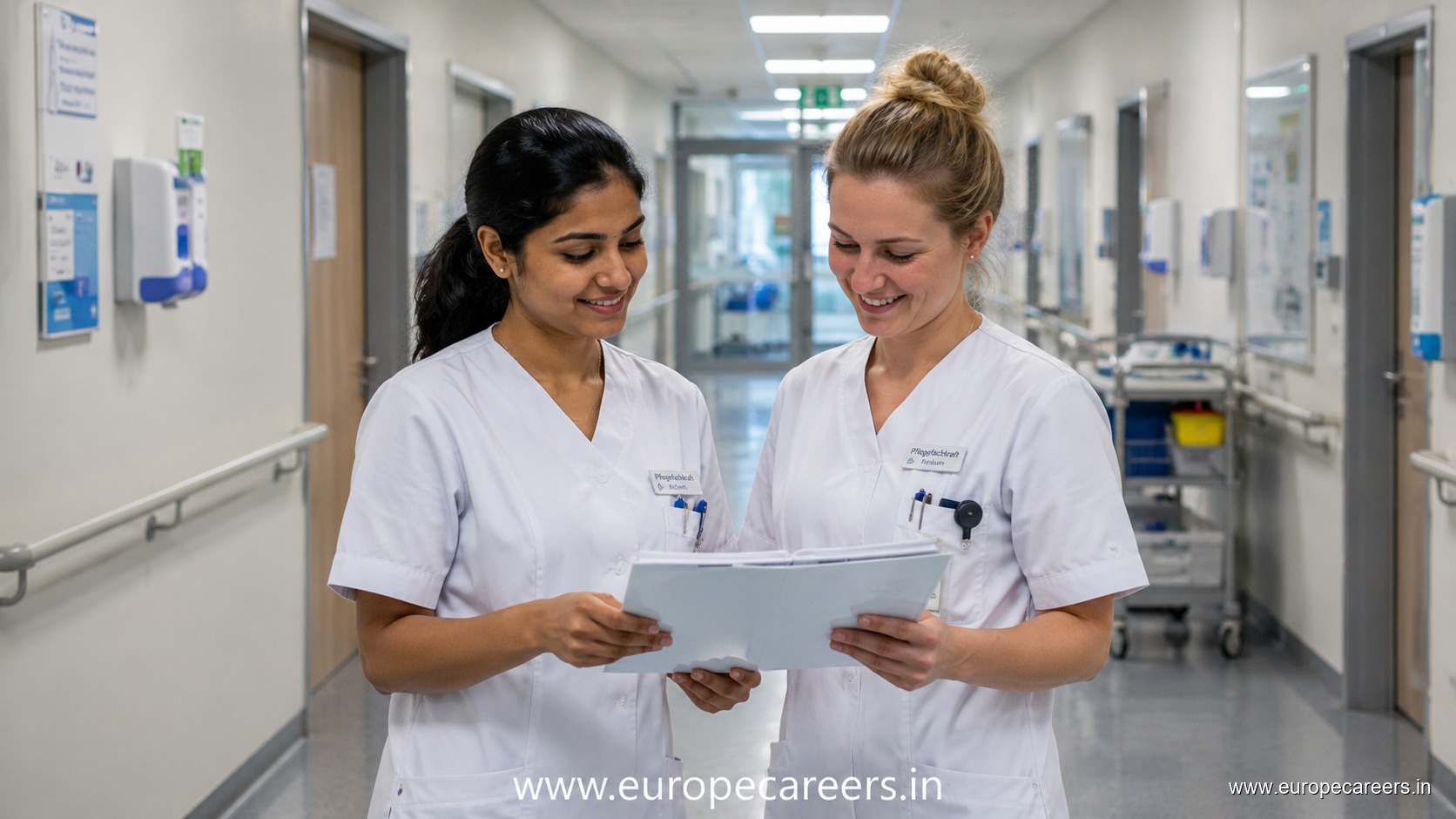
Healthcare remains the single most severe and unbroken bottleneck in the entire German labor market. German hospitals, university clinics, rehabilitation centers, and elderly care facilities face structural shortages that threaten daily patient operations.
- Registered General Nurses (Pflegefachleute / Gesundheits- und Krankenpfleger): Across all 16 federal states, acute hospital wards cannot operate at full bed capacity due to statutory nurse-to-patient staffing quotas (Pflegepersonaluntergrenzen — PpUGV). When hospitals lack sufficient registered nurses, they are legally required to shut down intensive care beds or postpone elective surgeries.
- Geriatric and Elderly Care Nurses (Altenpflege): With Germany’s aging population, nursing homes and outpatient mobile care services (Ambulante Pflegedienste) face unprecedented vacancy levels.
- Specialized Clinical Nurses (Fachkrankenpflege): Operating room (OT) nurses, anesthesia assistants (ATA), surgical assistants (OTA), and pediatric intensive care nurses face severe national deficits.
- Physicians and Medical Doctors (Ärzte): Especially outside major metropolitan hubs — in rural hospitals, community health centers, and regional clinics — there is a profound shortage of internal medicine specialists, general practitioners (Allgemeinmediziner), anesthesiologists, and geriatricians.
- Physical Therapists, Occupational Therapists, and Midwives: Rehabilitation clinics and maternity wards face persistent multi-month vacancy durations.
2. Skilled Technical Trades and Crafts (Handwerk & Industrie)
The German craft sector (Handwerk) is the backbone of the economy, but domestic youth have increasingly gravitated toward university academic degrees rather than physical trades. As older master craftsmen (Handwerksmeister) retire, thousands of positions remain unfilled:
- Sanitary, Heating, and Air Conditioning Technicians (SHK-Anlagenmechaniker): Crucial for Germany’s legally mandated green heating transition (installing heat pumps, solar thermal systems, and modern energy-efficient ventilation). Vacancies often take over 240 days to fill.
- Electricians and Electrical Installation Technicians (Elektroniker für Energie- und Gebäudetechnik): Needed everywhere — from residential wiring and industrial factories to EV charging infrastructure and grid modernization.
- Industrial Mechanics and Mechatronics Technicians (Industriemechaniker, Mechatroniker): Factory automation, machinery maintenance, robotics, and production line servicing across medium-sized industrial manufacturers.
- Automotive Mechatronics (Kfz-Mechatroniker): Diagnosing, servicing, and repairing modern hybrid and electric vehicle systems.
- Roofers, Carpenters, and Glaziers (Dachdecker, Zimmerer): Essential for structural building renovation, insulation, and solar panel installation.
3. Transport, Logistics, and Essential Services
Modern supply chains and daily services rely on specialized operational personnel where domestic recruitment has hit critical limits:
- Professional Heavy Truck Drivers (Berufskraftfahrer): Over a third of active truck drivers in Germany are over the age of 55. As tens of thousands retire each year, freight transport and logistics companies face severe operational constraints.
- Professional Cooks and Gastronomy Specialists (Köche): Commercial kitchens, hotel restaurants, company cafeterias, and hospital dietary facilities report widespread staffing shortages for certified culinary professionals.
- Early Childhood Educators and Childcare Specialists (Erzieher): Germany has a statutory legal right to a childcare place for children over the age of one (Rechtsanspruch auf einen Kita-Platz). Due to a severe shortage of qualified educators, thousands of childcare centers (Kitas) are forced to reduce operating hours, creating massive pressure on working families.
Newly Added Shortage Occupations in the Latest Analysis
One of the most valuable aspects of the latest Federal Employment Agency report is identifying occupational groups that were newly classified as shortage occupations due to escalating structural deficits:
- Surveying Technology and Geoinformation (Vermessungstechnik / Geoinformatik): Germany is embarking on massive nationwide infrastructure overhauls — including high-speed rail corridor expansions (Deutsche Bahn), high-voltage underground power transmission lines (SuedLink), offshore wind farm connections, and municipal 3D digital cadastres. Qualified surveying technicians, geodesists, and GIS data analysts are in extremely short supply.
- Social Work (Soziale Arbeit): Municipal social welfare offices (Jugendämter), community counseling centers, refugee integration programs, and psychiatric rehabilitation facilities face unprecedented caseloads. Certified social workers with recognized degrees are urgently sought by public and non-profit carriers (Caritas, Diakonie, AWO).
- Social Pedagogy (Sozialpädagogik): School social work, adolescent support facilities, and specialized youth care centers report extensive unfilled positions across almost all metropolitan and regional school districts.
Occupations No Longer Classified as Shortages: The Real Story Behind IT and Software
Perhaps the most talked-about finding in the latest BA analysis was the removal of several prominent occupations from the official bottleneck list:
- Software Development (Softwareentwicklung)
- IT Sales and Solution Sales (IT-Vertrieb)
- Metal-Cutting and Machining Occupations (Zerspanungstechnik)
When this news emerged, many Indian IT professionals and tech aspirants panicked, asking: “Does this mean Germany is no longer hiring software engineers? Are tech visas closed?”
The answer is an emphatic NO. Understanding why software development was removed from the official bottleneck list reveals how German labor market statistics actually function:
Why Was Software Development De-Listed as an Official Bottleneck?
The removal was purely a matter of statistical threshold mathematics, driven by specific economic factors:
- Tech Sector Rationalization: Following the hyper-hiring surge of 2021–2022, the European venture capital market cooled significantly. Tech startups and scale-ups restructured, instituted hiring freezes, or executed targeted layoffs. This released thousands of tech workers into the European domestic job market.
- Reduction in Average Vacancy Duration: Because more candidates were available locally for entry-level and generalist programming roles, the average time required for a company to fill a software position dipped below the statistical “bottleneck” threshold calculated by the BA.
- Junior vs. Senior Divergence: There is currently a healthy supply of domestic junior developers, bootcamp graduates, and career changers. Consequently, the profession as a whole could no longer be classified as a nationwide shortage across all experience levels.
The Reality: IT Remains a Massive In-Demand Sector
While software development is no longer classified as an official mathematical Engpassberuf, it remains one of the largest in-demand employment sectors in Germany. According to the German digital association Bitkom, tens of thousands of specialized IT positions remain vacant across German businesses.
German employers continue to recruit heavily from abroad — particularly from India — for specialized, high-level technical roles, including:
- Cloud Architecture and DevOps: Senior engineers experienced with AWS, Microsoft Azure, Google Cloud, Kubernetes, Terraform, and CI/CD enterprise pipelines.
- Cybersecurity and Information Security: Certified experts in threat detection, penetration testing, ISO 27001 compliance, and NIS2 regulatory implementation.
- Enterprise ERP and SAP Consulting: Functional and technical consultants in SAP S/4HANA migration, ABAP, Supply Chain, and Finance modules.
- Data Engineering, Data Architecture, and AI/ML: Designing large-scale enterprise data pipelines, Snowflake, Databricks, and practical machine learning applications.
- Embedded Systems and Automotive Software: C, C++, Rust, AUTOSAR, and CAN bus programming for electric vehicle control units and industrial robotics.
Furthermore, under German immigration law, IT specialists continue to benefit from the EU Blue Card (§ 18g AufenthG) with reduced salary thresholds, and experienced IT professionals can even qualify for a German work visa without a formal university degree if they possess at least three years of documented professional experience and relevant certifications.
The Engineering Sector Nuance: Broad Demand vs. Specific Bottlenecks
Another common point of confusion among Indian professionals concerns engineering. Germany is internationally renowned as the premier engineering nation of Europe — home to legendary automotive giants, machine tool manufacturers, and chemical conglomerates. Engineering is prominently featured on Make it in Germany as an in-demand profession. However, not every engineering discipline is an official Engpassberuf.
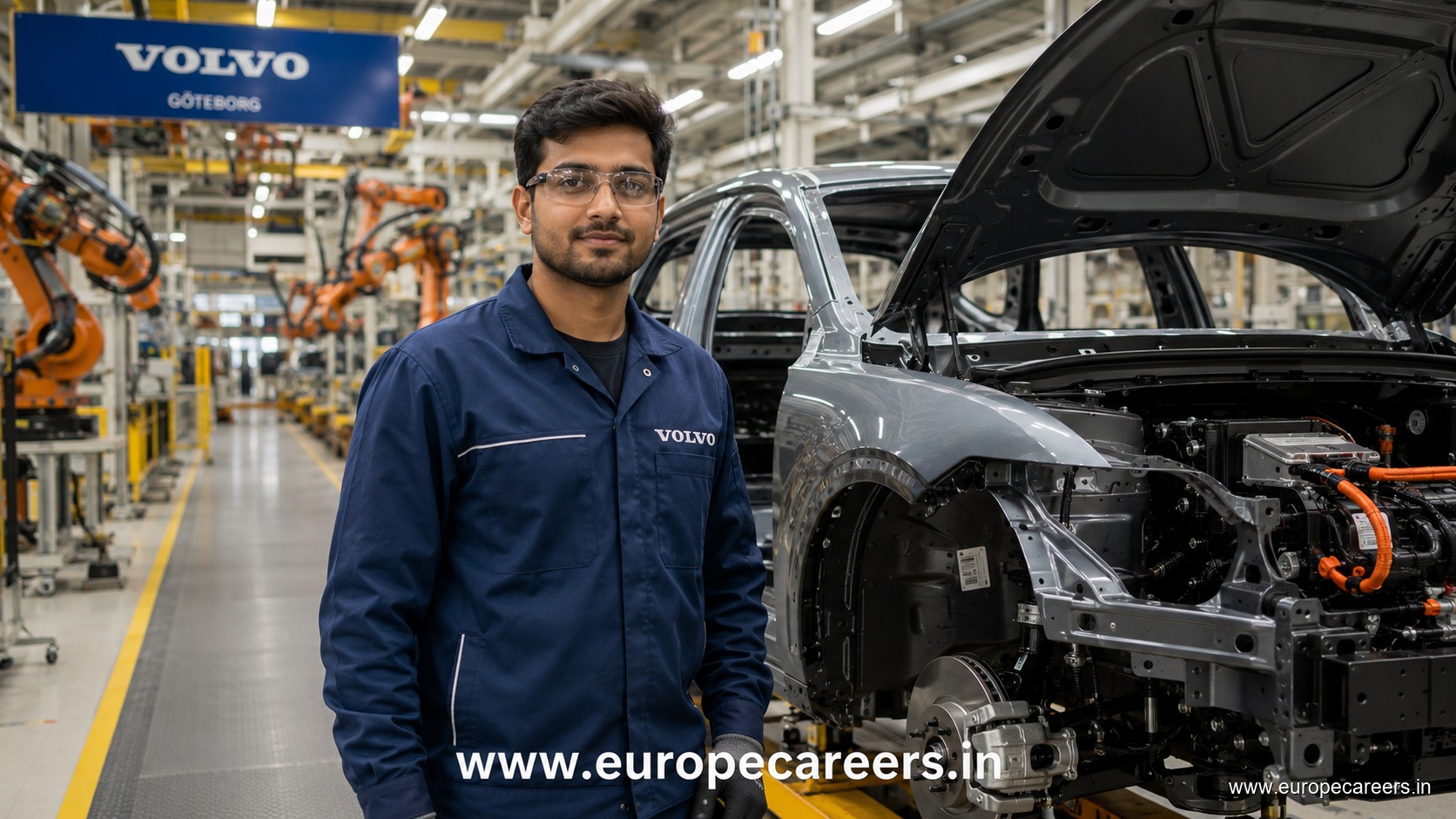
Understanding the internal dynamics of German engineering is critical for Indian graduates:
- High-Shortage Engineering Disciplines: Electrical engineering (Elektrotechnik), power engineering, grid distribution, industrial automation, control engineering, and mechatronics face acute shortages. The national shift toward renewable energy and industrial robotics creates intense demand that domestic universities cannot satisfy.
- Restructuring Engineering Disciplines: Traditional mechanical engineering (Maschinenbau) — especially disciplines focused on combustion engines, standard automotive chassis design, and conventional metal cutting — is undergoing massive structural transformation. As automotive suppliers transition to electric powertrains, some traditional design roles have seen reduced hiring or reallocations.
- Civil and Structural Engineering (Bauingenieurwesen): Highly sought after for rail, bridge, and energy grid reconstruction, but requires formal recognition as a regulated profession (Reglementierter Beruf) through the respective state chamber of engineers (Ingenieurkammer).
The Complete 2026 Shortage Matrix: Sectors, Status, and Requirements
The following detailed matrix summarizes the official classification, current market demand, recognition requirements, and language prerequisites for key professional fields relevant to Indian candidates:
| Professional Field | Official BA Status | Market Demand Level | Recognition Type | Mandatory Language Level | Key Visa Pathways |
|---|---|---|---|---|---|
| Registered Nursing (General & Pediatric) | Official Bottleneck (Engpassberuf) | Extremely High (Nationwide) | Regulated (Mandatory Berufserlaubnis) | B1 to enter; B2 for full license | § 16d (Adaptation), § 18a, Fast-track § 81a |
| Medical Doctors & Specialists | Official Bottleneck (Engpassberuf) | Extremely High (Regional / Clinics) | Regulated (Mandatory Approbation) | B2 General + C1 Medical German (FSP) | § 16d, § 18b, EU Blue Card § 18g |
| Electrical & Electronics Trades | Official Bottleneck (Engpassberuf) | Extremely High (Nationwide) | Non-regulated craft (IHK / HWK equivalence) | B1 German minimum | § 18a (Vocational Skilled Worker) |
| HVAC & Sanitation (SHK) | Official Bottleneck (Engpassberuf) | Extremely High (Heat pump transition) | Craft qualification equivalence (HWK) | B1 German minimum | § 18a, Recognition partnership § 16d |
| Software Development & Cloud | In-Demand Profession (De-listed from Engpass) | High (Especially Senior & Niche) | Non-regulated (ZAB statement of comparability) | English often sufficient; B1/B2 expands options | EU Blue Card § 18g, § 18b, § 19c (Experience) |
| SAP & Enterprise IT Consulting | In-Demand Profession | Very High (Mittelstand & Enterprise) | Non-regulated (Degree comparability) | B1/B2 German highly preferred | EU Blue Card § 18g, § 18b |
| Electrical / Automation Engineering | Official Bottleneck / In-Demand | High (Industry & Grid modernization) | Non-regulated for employment; protected title via Chamber | B1/B2 German essential for Mittelstand | EU Blue Card § 18g, § 18b |
| Traditional Mechanical Engineering | Balanced / Cyclical Demand | Moderate (Automotive restructuring) | Non-regulated for standard industry roles | B2 German strongly expected | § 18b, EU Blue Card § 18g |
| Surveying & Geoinformation | Official Bottleneck (Newly Added) | High (Infrastructure projects) | Technical degree equivalence | B1/B2 German required | § 18a, § 18b |
| Early Childhood Educators (Erzieher) | Official Bottleneck (Engpassberuf) | Extremely High (Kitas nationwide) | Regulated (State recognition as educator) | B2 German certified (C1 preferred) | § 16d (Adaptation), § 18a |
| Social Work & Social Pedagogy | Official Bottleneck (Newly Added) | High (Public & Welfare carriers) | Regulated state recognition (Staatliche Anerkennung) | B2/C1 German essential | § 16d, § 18b |
| Professional Truck Drivers (CE) | Official Bottleneck (Engpassberuf) | Very High (Freight & Supply chains) | EU Driver Qualification Card (Code 95) | B1 German recommended; basic German minimum | § 24a BeschV (Professional Drivers) |
| General Office Administration & Marketing | Surplus / Balanced (No Shortage) | Low for international applicants | Non-regulated | C1/C2 Native-level German required | Standard work visa (Subject to strict labor checks) |
Why Does Germany Have These Shortages? The Core Structural Drivers
To build a successful long-term career strategy, Indian candidates must understand why these shortages exist. Germany’s Fachkräftemangel is not an accidental or temporary phenomenon; it is driven by profound, long-term structural shifts:
1. The Demographic Cliff (Demografischer Wandel)
The single greatest driver of Fachkräftemangel is Germany’s aging population. Between 1955 and 1969, Germany experienced an unprecedented birth boom — the “Baby Boomer” generation. Today, these baby boomers are reaching the statutory retirement age of 65 to 67 and leaving the labor market in massive numbers. According to the Federal Statistical Office (Destatis), Germany will lose an estimated 4 to 5 million workers from its domestic labor pool over the next decade. There simply are not enough young Germans entering the workforce to replace those who retire.
2. Academic Drift (Akademisierungswahn)
For generations, Germany’s economic strength rested on its world-famous dual vocational training system (Duale Ausbildung), where young people learned skilled trades (electricians, mechanics, plumbers, nurses) through combined practical apprenticeship and vocational schooling. Over the past twenty years, social attitudes shifted: an overwhelming proportion of German school-leavers now opt to attend university rather than enter vocational trades. This “academic drift” has led to a severe deficit in practical, hands-on technical professions, leaving thousands of craft businesses without successors or apprentices.
3. The Twin Green and Digital Transitions (Die Transformation)
Germany has enacted aggressive federal climate targets aimed at achieving carbon neutrality. Reaching these goals requires complete modernization of domestic heating systems (transitioning to heat pumps and district heating), expanding wind and solar generation, building thousands of kilometers of high-voltage transmission lines, and retrofitting older residential buildings. These projects cannot be completed by software algorithms; they require hundreds of thousands of certified electricians, mechatronics technicians, civil engineers, and heating installers working on the ground.
4. Rising Healthcare Demands of an Aging Society
As the population ages, the proportion of citizens living with chronic illnesses, multimorbidity, and long-term care needs rises exponentially. This demographic reality creates a compounding double-impact on healthcare: older healthcare professionals are retiring, while the volume of patients requiring intensive medical and nursing care is expanding rapidly.
Regional Variations: Where in Germany Are Shortages Most Acute?
Another crucial reality that Indian professionals must grasp is that Germany is a federal republic comprising 16 states, each with distinct economic structures, industrial specializations, and demographic profiles. Shortages are not distributed uniformly across the map:
- Southern Germany (Bavaria & Baden-Württemberg): Boasts the lowest unemployment rates in the country and the densest concentration of industrial Mittelstand manufacturers, automotive leaders, and high-tech firms. Shortages in electrical engineering, mechatronics, and nursing are acute. However, housing in cities like Munich and Stuttgart is competitive and expensive.
- Western Germany (North Rhine-Westphalia, Hesse, Rhineland-Palatinate): North Rhine-Westphalia is Germany’s most populous state, with massive healthcare networks, university hospitals, and logistics hubs. Hesse is home to Frankfurt — Europe’s financial and data center hub. Strong demand for healthcare professionals, SAP consultants, and logistics coordinators.
- Northern Germany (Hamburg, Lower Saxony, Schleswig-Holstein): Major hubs for offshore wind energy, maritime logistics, port engineering, and aviation (Airbus in Hamburg). Consistent demand for electrical engineers, renewable energy technicians, and clinical nurses.
- Eastern Germany (Saxony, Thuringia, Saxony-Anhalt, Brandenburg): Facing the most rapid demographic aging due to historic westward migration in the 1990s. Extreme shortages in healthcare, elderly care, and rural medical clinics. Concurrently, cities like Dresden and Leipzig are booming as high-tech and semiconductor clusters (“Silicon Saxony”), generating high demand for microelectronics and automation engineers.
- The Urban vs. Rural Reality: Glamorous major cities like Berlin, Hamburg, and Munich attract high volumes of international job seekers easily. However, many of Germany’s wealthiest and most stable employer companies are located in smaller towns, regional centers, and rural districts. These regional employers face the most desperate hiring bottlenecks, often offer superior long-term job security, and provide affordable rental markets where a comfortable family life is readily achievable.
The Recognition Hurdle: Regulated vs. Non-Regulated Professions
Understanding that an occupation is an Engpassberuf is only half the battle. In Germany, the gateway to legal employment is professional recognition (Anerkennung). German law strictly divides occupations into two major categories:
Regulated Professions (Reglementierte Berufe)
In regulated professions, you cannot legally work in Germany under your professional title without formal authorization from the responsible state authority (Zuständige Stelle). Examples include:
- Registered Nurses (requires state nursing license — Berufserlaubnis / Approbation)
- Physicians and Dentists (requires medical license — Approbation)
- Pharmacists, Midwives, and Physiotherapists
- School Teachers and Early Childhood Educators (Staatliche Anerkennung)
- Civil Engineers signing structural building plans (registered with state Ingenieurkammer)
When Indian nurses or healthcare specialists apply for recognition, the state authority evaluates their Indian curriculum (B.Sc. Nursing or GNM) against the German nursing curriculum (Pflegefachfrau / Pflegefachmann). In most cases, the authority issues an official assessment notice known as a Defizitbescheid (Notice of Deficits). This is not a rejection; it is an official roadmap specifying the practical clinical hours or theoretical modules needed to achieve full recognition through an adaptation course (Anpassungslehrgang) or knowledge test (Kenntnisprüfung).
Non-Regulated Professions (Nicht reglementierte Berufe)
Most corporate, commercial, and technical professions in Germany are non-regulated. Examples include:
- Software Engineers, IT Architects, and DevOps Specialists
- Mechanical, Automotive, and Electrical Engineers working in industry (as long as they do not sign public structural plans)
- Business Analysts, Financial Controllers, and Marketing Specialists
- Skilled Trades Craftsmen working under a Master Craftsman’s supervision
For non-regulated university professions, you do not need a state licensing exam. Instead, you need proof that your Indian university degree is formally comparable to a German degree. This is verified either through the official Anabin database (confirming your university has an H+ rating and your degree matches German equivalents) or via an individual Statement of Comparability issued by the Central Office for Foreign Education (Zentralstelle für ausländisches Bildungswesen — ZAB).
The German Language Factor: The True Gatekeeper
There is a persistent myth on social media that because Germany has a Fachkräftemangel, employers will happily communicate in English for all positions. This is a severe misunderstanding that causes immense frustration for unprepared candidates.
Language requirements are dictated strictly by the practical demands of the profession:
- Healthcare (Non-Negotiable German): German hospital patients, elderly residents, and their families communicate in German. Nursing documentation, physician orders, and medical handovers must be recorded in German with legal precision. You need a certified B1 level to obtain an entry visa for recognition adaptation, and you must achieve a verified B2 level to receive your permanent state nursing license (Berufserlaubnis). For doctors, a specialized medical language exam (Fachsprachenprüfung — FSP at C1 level) is mandatory.
- Skilled Trades & Crafts (German Workplace Reality): Electricians, plumbers, and mechanics work directly with German colleagues, master craftsmen, site supervisors, and customers. Blueprints, technical safety regulations (DIN standards, VDE norms), and equipment manuals are written in German. A certified B1 German proficiency is the practical minimum for workplace integration and safety.
- Information Technology & STEM (English vs. German Nuance): English is widely spoken in multinational tech enterprises and venture-backed startups in Berlin or Munich. However, over 80% of German businesses are medium-sized enterprises (Mittelstand) located in smaller towns where daily internal communication, project management, and cross-departmental coordination take place in German. An Indian IT professional who speaks conversational German (B1/B2) commands vastly higher job security, enjoys a wider selection of job offers, and integrates far more smoothly into workplace culture.
How German Immigration Law Accommodates Shortage Occupations
Recognizing the urgent economic necessity of qualified international recruitment, the German federal government has modernized its immigration legislation through successive updates to the Skilled Immigration Act (Fachkräfteeinwanderungsgesetz — FEG). Key legal provisions directly benefiting Indian professionals in shortage fields include:
- Lowered EU Blue Card Salary Thresholds (§ 18g AufenthG): For recognized bottleneck occupations (including IT, mathematics, engineering, and medical doctors), the statutory gross annual salary threshold is significantly lower than for standard occupations (set at €45,300 gross annually in 2026), making the coveted EU Blue Card accessible to a wider pool of qualified specialists.
- Recognition Partnerships (§ 16d AufenthG): Under the updated law, an international worker can enter Germany with an employer contract and begin working immediately, completing their professional qualification recognition adaptation simultaneously while on the job, provided they possess certified A2/B1 German.
- Fast-Track Procedure for Skilled Workers (§ 81a AufenthG): German employers can apply directly to the local Foreigners’ Authority (Ausländerbehörde) for an expedited preliminary visa approval, which reduces consular waiting times at the German Embassy and Consulates in India to just a few weeks.
- Opportunity Card (Chancenkarte — § 20a AufenthG): A points-based job search visa allowing qualified professionals to enter Germany for up to one year to search for a qualified position, with extra points awarded for degrees in official bottleneck professions.
- Accelerated Permanent Settlement (Niederlassungserlaubnis): EU Blue Card holders who demonstrate B1 German language proficiency can obtain indefinite permanent residency after just 21 months of employment and statutory pension contributions (or 27 months with basic A1 German).
Strategic Roadmap: How Indian Professionals Can Leverage the Shortage
If your profession is affected by Germany’s Fachkräftemangel, how do you translate that macroeconomic reality into a concrete, successful job offer and relocation? Follow this structured roadmap:
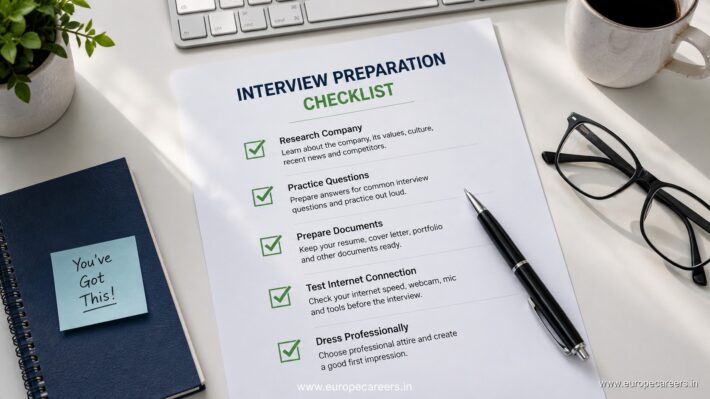
- Perform an Honest Profile Audit: Determine whether your exact occupation is an official Engpassberuf, a broader in-demand field, or a domestically saturated role. Verify whether your degree is from a recognized institution (H+ rating on Anabin).
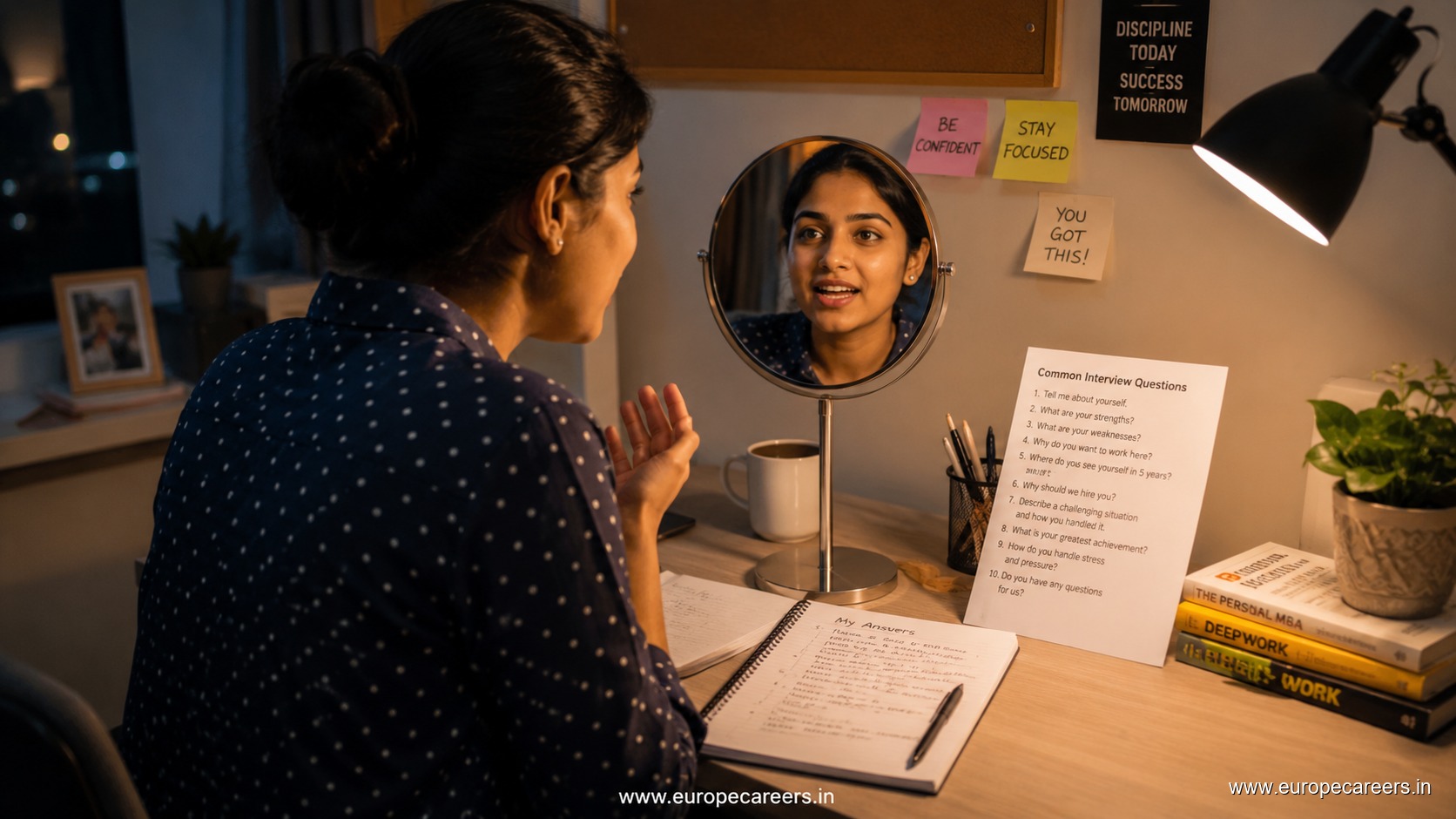
- Start Intensive German Language Training Immediately: Do not wait for a job interview to start learning German. In healthcare and skilled trades, language is the primary prerequisite. Enroll in accredited German classes (Goethe-Institut, telc, or specialized Europe Careers language batches) targeting B1/B2 certifications.
- Initiate Professional Recognition Early: For regulated fields (nursing, medicine), submit your document dossier — including certified translations and apostilled degree certificates — to the responsible German state licensing authority to obtain your official Defizitbescheid.
- Format Your Application Dossier to German Standards: Create a standard European tabular resume (Tabellarischer Lebenslauf), an honest, concise cover letter (Anschreiben), and a complete portfolio containing verified experience certificates, university transcripts, and language diplomas.
- Target Employers Strategically Across Regions: Rather than competing against thousands of applicants for jobs in Berlin or Frankfurt, explore high-growth Mittelstand manufacturers, municipal clinics, and regional health systems across Bavaria, Baden-Württemberg, Lower Saxony, and North Rhine-Westphalia.
- Review Employment Contracts Thoroughly: Ensure your employment offer satisfies prevailing German wage standards (Tarifverträge such as TVöD for public healthcare) and meets the gross income requirements for your specific visa category. Learn how your salary slip works, including social security and tax deductions, using our detailed Germany Salary Slip Explained Guide.
- Execute Relocation and Settlement Preparedness: Secure your mandatory health insurance (see our German Health Insurance Guide), understand rental document requirements (see our Renting in Germany Guide), and review mandatory post-arrival steps (see our First 30 Days in Germany Guide).
How Europe Careers Bridges the Gap Between India and Germany
Navigating the complex matrix of German professional recognition, language certifications, employer matching, and immigration law can be overwhelming when attempted alone. At Europe Careers, we serve as an experienced, dedicated partner throughout your entire international career journey:
- Transparent Profile Evaluation: We evaluate your academic qualifications, clinical or technical work experience, and language level to provide an honest, unvarnished assessment of your German employment prospects. If your profession is not currently in demand or does not meet visa thresholds, we tell you directly.
- Specialized German Language Coaching: We deliver structured, result-oriented German language training from A1 through B2, tailored specifically for healthcare vocabulary (Pflegefachsprache) and technical engineering communication.
- Complete Recognition Dossier Management: Our expert legal and administrative team assists you in assembling, apostilling, and translating your educational documentation, liaising directly with the responsible German state recognition authorities.
- Direct Matching with Ethical German Employers: We partner directly with leading German hospital networks, municipal care providers, and industrial Mittelstand enterprises that offer transparent tariff contracts, supportive onboarding, and adaptation course financing.
- Fast-Track Visa Coordination (§ 81a AufenthG): We coordinate with your future employer and the local German immigration authority to secure fast-track preliminary approvals, expediting your consular visa appointment in India.
- Family Reunification Support: Once settled, we guide you through the documentation required to bring your spouse and children to Germany (see our Family Reunification Guide).
Self-Assessment Checklist: Is Your Profile Ready for Germany?
Before investing time and resources into an international job search, review this 6-point verification checklist:
- ☑ Accredited Qualification: Your degree or diploma is from a formally recognized, UGC/AICTE/INC-accredited Indian institution verified with H+ status on Anabin.
- ☑ Shortage or In-Demand Alignment: Your professional specialization corresponds to an official Engpassberuf (healthcare, crafts, logistics) or high-demand field (cloud, SAP, mechatronics).
- ☑ Certified Language Foundation: You possess or are actively enrolled in certified German language classes (Goethe-Zertifikat, telc, or ÖSD).
- ☑ Clean Document Dossier: You have original degree certificates, semester transcripts, practical curriculum breakdown, and verified work experience letters ready for MEA apostille.
- ☑ Adaptation Willingness: You are fully prepared to undergo practical adaptation training (for regulated fields) or complete probation periods (Probezeit) in a professional German workplace.
- ☑ Realistic Financial & Cultural Mindset: You understand German tax deductions, social security benefits, cost of living, and workplace values (punctuality, direct communication, and precision).
Frequently Asked Questions (FAQs) About Fachkräftemangel in Germany
1. What is the simple English meaning of Fachkräftemangel?
Fachkräftemangel means a “shortage of skilled specialists.” In German, a Fachkraft is someone with a recognized vocational qualification or university degree, and Mangel means a shortage. It does not mean a general shortage of all workers, but a specific deficit of qualified specialists in particular technical, healthcare, and trade occupations.
2. Does Germany have a labor shortage across every profession?
No. The German Federal Employment Agency (BA) explicitly states that there is no general labor shortage across the entire German economy. Shortages are concentrated in 157 specific occupational groups. Fields like general administration, marketing, generic humanities, and unskilled roles have a balanced or even surplus domestic labor supply.
3. What is an Engpassberuf, and how is it different from Fachkräftemangel?
Fachkräftemangel is the broad macroeconomic concept of a skilled labor shortage. An Engpassberuf is an officially analyzed, mathematically verified “bottleneck occupation” designated by the Federal Employment Agency where job vacancies take substantially longer to fill than the national average and there are very few unemployed applicants.
4. Why was software development removed from the official bottleneck list?
Software development was de-listed due to statistical threshold shifts caused by tech startup restructuring, hiring pauses, and an increased domestic supply of junior developers. Because average hiring durations dropped below the statistical cutoff, it is no longer mathematically classified as a bottleneck occupation across all experience levels.
5. Can Indian software engineers still get jobs and work visas in Germany?
Yes, absolutely. IT remains a major in-demand profession with tens of thousands of active vacancies. Senior software engineers, cloud architects, cybersecurity specialists, SAP consultants, and DevOps engineers continue to enjoy excellent career opportunities and qualify for the EU Blue Card (§ 18g AufenthG).
6. Which career field has the most severe shortage in Germany?
Healthcare — specifically registered nursing (clinical and geriatric care) — is the most severe and enduring shortage in Germany. Due to legally mandated nurse-to-patient staffing ratios (PpUGV), hospitals and nursing homes actively recruit qualified nurses from abroad on an ongoing basis.
7. Can Indian GNM or B.Sc. nurses work directly as registered nurses in Germany?
Indian nurses must undergo the professional recognition process (Anerkennung). The state authority evaluates their credentials and issues an assessment notice (Defizitbescheid). The nurse works as an assistant nurse while completing practical adaptation training or a knowledge test (Kenntnisprüfung) and passing the B2 German exam to receive their full state license (Berufserlaubnis).
8. Are Indian mechanical engineers in high demand in Germany?
Demand varies significantly by specialization. Mechanical engineers focused on industrial robotics, automation, and mechatronics face strong demand. However, traditional mechanical design roles tied to conventional combustion automotive engines are experiencing structural restructuring and lower hiring volumes.
9. Which engineering branches have the highest shortages in Germany?
Electrical engineering (Elektrotechnik), power transmission, automation technology, smart grid engineering, renewable energy systems, and microelectronics/semiconductor engineering face the most severe domestic candidate shortages.
10. What new occupations were added to the latest shortage analysis?
The latest BA analysis newly added Surveying Technology and Geoinformation (Vermessungstechnik / Geoinformatik), Social Work (Soziale Arbeit), and Social Pedagogy (Sozialpädagogik) to the official shortage list due to infrastructure expansion and rising social service demands.
11. Can I get a job in Germany if I speak only English?
In international tech startups, multinational software consulting firms, and specialized research institutes, English is often the primary working language. However, in healthcare, skilled trades, civil engineering, and medium-sized Mittelstand companies (which make up over 90% of the economy), certified German (B1 or B2) is mandatory.
12. What German language level is required for nurses?
Indian nurses must achieve certified B1 German (from Goethe-Institut, telc, or ÖSD) to obtain an entry visa for recognition training in Germany, and they must pass a certified B2 level examination before receiving their full state professional license (Berufserlaubnis).
13. What German language level is required for medical doctors?
Medical doctors must have a certified B2 level in general German, followed by passing a specialized medical German language examination (Fachsprachenprüfung — FSP at C1 level) conducted by the respective State Medical Chamber (Landesärztekammer).
14. Why is the craft and skilled trades sector (Handwerk) facing such big shortages?
German school-leavers have overwhelmingly preferred university academic courses over vocational apprenticeships for the past two decades. As older master craftsmen retire, trades like plumbing, heating installation (SHK), roofing, and electrical installation face severe shortages of young professionals.
15. What is the EU Blue Card salary threshold for shortage occupations in 2026?
For recognized bottleneck occupations in STEM (mathematics, IT, natural sciences, engineering) and human medicine, the statutory gross salary threshold for the EU Blue Card is approximately €45,300 gross per year in 2026, substantially lower than the standard threshold for non-shortage fields.
16. What is a Recognition Partnership (Anerkennungspartnerschaft)?
Under § 16d of the updated Residence Act, a recognition partnership allows an international specialist to enter Germany and begin working under an employment contract while completing the formal qualification recognition process alongside their job, provided they hold basic German language skills (A2 or B1).
17. Does an open job vacancy mean the profession is an Engpassberuf?
No. An open job vacancy is simply a single company needing to fill a position. An Engpassberuf requires nationwide statistical verification that positions take significantly longer to fill and that domestic qualified job seekers are virtually unavailable across the country.
18. Are early childhood educators (Erzieher) in high demand?
Yes. Germany has a legal guarantee of childcare for children over age one, but a massive nationwide deficit of certified educators forces many centers (Kitas) to restrict hours. International educators with recognized pedagogical qualifications and certified B2 German are highly sought after.
19. What is the fast-track procedure for skilled workers (§ 81a AufenthG)?
The fast-track procedure allows a German employer to apply directly to the local Foreigners’ Authority (Ausländerbehörde) on behalf of the international candidate. The authority expedites qualification recognition and labor approval, issuing a preliminary approval (Vorabzustimmung) that drastically shortens visa appointment waiting times in India.
20. Why do German employers recruit heavily in rural and medium-sized towns?
Many of Germany’s most innovative export champions (the “Mittelstand”) are situated in smaller towns across Bavaria, Baden-Württemberg, and North Rhine-Westphalia. Because local candidate pools are limited, these companies turn to international recruitment to maintain global competitiveness.
21. Can Indian professional truck drivers work in Germany?
Yes, under § 24a of the Employment Regulation (BeschV), heavy truck drivers (Category CE) can obtain German work visas. However, they must obtain the EU professional driver qualification (Code 95), possess valid commercial driving experience, and demonstrate functional German communication skills.
22. How does the probation period (Probezeit) work in shortage professions?
Even in shortage professions, standard German employment contracts include a statutory probation period of up to 6 months. During this period, either the employer or the employee can terminate the contract with just two weeks’ notice. Maintaining high professional performance and workplace communication during Probezeit is critical.
23. Can I bring my family if I get a job in a shortage profession?
Yes. Skilled workers with a qualified residence permit or EU Blue Card have the legal right to bring their spouse and minor children through family reunification (Familienzusammenführung). Blue Card holders’ spouses are exempt from proving prior German language proficiency before entering.
24. What happens if my degree is not recognized as equivalent in Germany?
In non-regulated professions (like IT or business), a degree evaluation from ZAB confirms comparability. In regulated fields (nursing), a Defizitbescheid outlines exactly which adaptation training or examination is required to achieve full equivalence.
25. How does Europe Careers help Indian professionals with Fachkräftemangel careers?
Europe Careers provides end-to-end support: realistic profile audits, tailored German language coaching from A1 to B2, professional recognition dossier management, direct employer interview matching with vetted German institutions, fast-track visa processing support, and arrival integration guidance.
Important Legal and Ethical Disclaimer
Europe Careers (www.europecareers.in) operates as a professional international recruitment, career guidance, language training, and relocation support agency. Europe Careers provides advisory guidance, profile evaluations, and administrative facilitation; however, official decisions regarding professional qualification recognition are made solely by the competent German state authorities (Zuständige Stellen), and decisions regarding visa issuance are made exclusively by the German diplomatic missions (Embassy and Consulates) in India. Furthermore, hiring decisions, contractual terms, and employment offers remain at the sole discretion of prospective German employers. Europe Careers does not sell visas, guarantee employment, or guarantee administrative decisions. Readers are advised to verify their individual eligibility through official German government channels, including the Federal Employment Agency (Bundesagentur für Arbeit) and Make it in Germany.
Conclusion: Turning Germany’s Skilled Shortage into Your Career Reality
Germany’s Fachkräftemangel represents one of the most significant cross-border employment opportunities in modern history for qualified Indian professionals. The demographic decline of Europe’s largest economy, paired with aggressive technological and green energy transformations, has created an urgent, structural need for qualified international specialists that will persist for decades.
However, success in Germany is reserved for those who approach the market with professional maturity, rigorous preparation, and absolute honesty. A shortage of skilled workers does not mean a lowering of standards. German employers insist on verified credentials, professional competence, dedication to workplace safety, and, above all, the commitment to learn the German language.
Whether you are a dedicated nurse ready to advance patient care in a premier German hospital, an electrical or mechatronics engineer eager to power modern automation, or a senior IT specialist architecting next-generation cloud solutions, the pathway to Germany is clearly defined. By understanding the distinction between official bottleneck occupations and general demand, fulfilling your recognition requirements, and investing in certified German language proficiency, you can build an extraordinarily rewarding and secure life in Germany.
Ready to begin your journey to Germany? Contact the expert advisory team at Europe Careers today. Visit our official portal at www.europecareers.in or email us directly at support@europecareers.in to schedule your personalized career evaluation.