
Why German Employers Recruit Skilled Professionals from Abroad
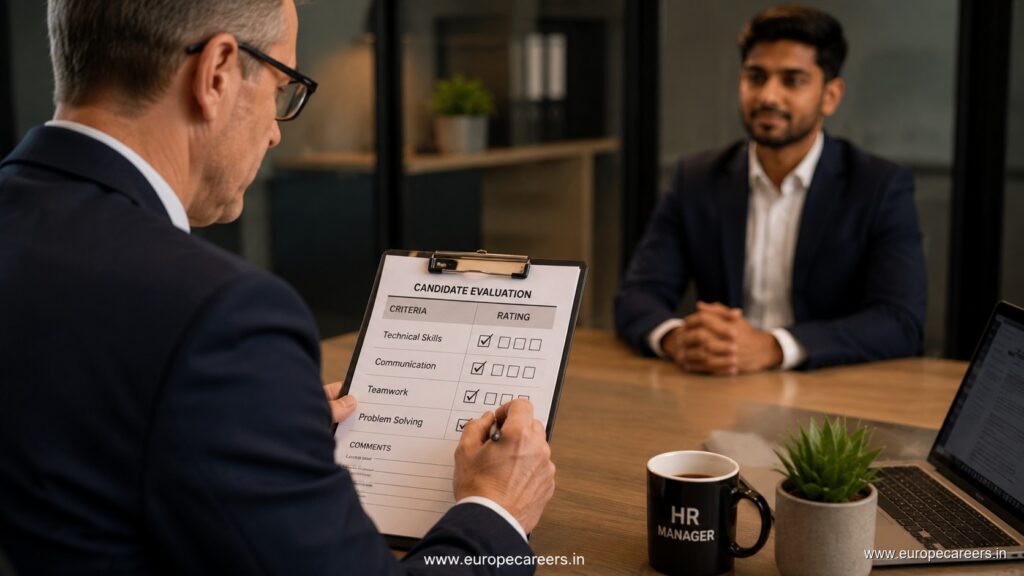
Why would a German company look outside Germany — and across continents to countries like India — to hire a professional? In a European economy known globally for its world-class vocational training systems, renowned universities, and strict engineering standards, international recruitment might initially seem counterintuitive. Yet, across German public hospitals, engineering Mittelstand firms, technology hubs, and industrial manufacturing plants, employers are actively engaging qualified international talent to sustain and grow their operations.
The reality of the German labor market is both nuanced and multifaceted. Companies recruit internationally not out of convenience, but out of necessity and strategic foresight: they need skills, talent, experience, and workforce capacity that they cannot readily source through domestic recruitment alone. Germany possesses a vast and diverse economy of over 45 million workers, but specific industries, technical specializations, and geographic regions face persistent staffing bottlenecks. For these organizations, international recruitment has become a vital component of a comprehensive, modern human resources strategy.
However, international hiring is never about simply “filling empty desks.” German employers operate within rigorous legal, regulatory, and quality frameworks. When hiring from abroad, they look for candidates with verified educational credentials, relevant hands-on experience, suitable language proficiency, professional reliability, and legal work eligibility. At Europe Careers, where our recruitment and workforce solutions team acts as an experienced bridge between qualified Indian professionals and European employers, we believe that transparency is essential. In this detailed guide, we explore the genuine economic, demographic, and technological drivers behind international recruitment, examine what German employers look for, address the real challenges involved, and outline how both employers and candidates can prepare for sustainable, long-term career partnerships.
Why Do German Employers Recruit International Professionals?
When German organizations decide to invest the considerable time, legal effort, and financial resources required to hire from outside the European Union, they do so based on clear strategic considerations. The primary drivers include:
- Domestic Skills Availability: For numerous technical and healthcare roles, there are simply not enough domestic job seekers with the requisite vocational qualifications or academic degrees actively searching for work.
- Demographic Realities: The steady retirement of experienced veteran workers is shrinking the domestic working-age population across Germany.
- Sector-Specific Expansion: Rapid technological advancements — including artificial intelligence, cloud infrastructure, renewable energy transitions, and industrial automation — require specialized skillsets that exceed domestic graduation rates.
- Regional Labor Imbalances: While major metropolitan centers like Berlin and Munich attract diverse talent, many of Germany’s most successful hidden champions (“Mittelstand” manufacturers) are located in smaller towns and rural regions across Baden-Württemberg, Bavaria, and North Rhine-Westphalia where local candidate pools are limited.
- 24/7 Healthcare Staffing Needs: Hospitals, university clinics, and geriatric care facilities require continuous, round-the-clock staffing to maintain legal patient-to-staff ratios and guarantee clinical safety.
- Global Business Operations: German multinational corporations and export-oriented medium-sized enterprises conduct business worldwide and actively benefit from multicultural engineering, sales, and software teams.
- Long-Term Workforce Planning: Proactive companies understand that workforce shortages will compound over the coming decade; building reliable international recruitment channels today safeguards operational resilience for tomorrow.
Germany’s Changing Workforce: The Demographic Landscape
To understand why international hiring is prominent in German economic discourse, one must examine the country’s demographic trajectory. According to official analyses published by the Federal Statistical Office (Destatis) and the German Federal Employment Agency (Bundesagentur für Arbeit — BA), Germany has one of the oldest average populations in Europe.
The generation born during the post-war economic boom — often referred to as the “Baby Boomers” (born between the late 1950s and mid-1960s) — is currently reaching statutory retirement age. Over the next decade, millions of experienced professionals, master craftsmen, engineers, and healthcare workers will exit the active labor force. Because subsequent domestic generations are substantially smaller in demographic size, domestic school and university leavers cannot numerically replace the volume of retiring specialists.
However, it is crucial to remain balanced: demographic decline does not mean that every single company in Germany is desperate to hire anyone who applies. Recruitment needs vary drastically by industry, company size, region, and profession. Highly qualified international candidates are sought where specific, measurable skills gaps exist.
Skills Shortages in Specific Industries: The Bottleneck Occupations
The German Federal Employment Agency periodically publishes its official Skilled Worker Bottleneck Analysis (Fachkräfteengpassanalyse), identifying professions where vacancies remain unfilled for significantly longer than the national average. International recruitment is predominantly concentrated in these designated shortage occupations (Engpassberufe):
| Industry Sector | Key Shortage Occupations | Why International Sourcing Is Utilized |
|---|---|---|
| Healthcare & Nursing | Registered Nurses (Pflegefachkräfte), Specialized ICU Nurses, Geriatric Care Nurses, Hospital Physicians. | Rapidly aging patient demographic, increasing care intensity, mandatory staffing quotas, and retirement of senior hospital nurses. |
| Information Technology (IT) | Software Developers (Java, Python, C++), Cloud Architects, Cybersecurity Specialists, Data Engineers, AI Specialists. | Comprehensive digital transformation across traditional manufacturing, banking, and public sectors outpacing domestic computer science graduate numbers. |
| Engineering & Industry | Electrical Engineers, Mechanical Design Engineers, Mechatronics Specialists, Automation Engineers, Industrial Technicians. | Germany’s export-driven manufacturing base requires high-level technical expertise for industrial automation, robotics, and green energy transitions. |
| Skilled Technical Trades (Handwerk) | Electricians, Electronic Technicians, Plumbers, HVAC Specialists, Industrial Mechanics, Metal Technicians. | Infrastructure modernization, smart building retrofitting, renewable solar/heat pump installations, and fewer domestic vocational apprentices. |
| Transport & Logistics | Supply Chain Technicians, Rail Dispatchers, Industrial Logistics Coordinators. | Central European supply chain hubs managing continental freight corridors. |
Why Healthcare Employers Recruit International Nurses
Healthcare represents the most active and structured international recruitment sector in Germany. German university hospitals (Universitätskliniken), municipal hospital networks, church welfare clinics (Caritas, Diakonie), and private healthcare providers actively recruit qualified international nurses — particularly from India, where nursing education is comprehensive, university-based, and clinically intensive.
Key factors driving healthcare recruitment include:
- Strict Statutory Nursing Staffing Ratios (Pflegepersonaluntergrenzen — PpUGV): German law enforces strict minimum nurse-to-patient ratios in critical hospital departments (intensive care, cardiology, surgery, geriatrics). If a hospital cannot staff enough recognized nurses on a shift, it is legally required to close beds or suspend surgical operations, creating severe financial and public healthcare consequences.
- Growing Patient Volume: Advanced medical capabilities mean older patients survive complex conditions, requiring sustained, high-quality inpatient bedside care and rehabilitation.
- High Clinical Standards of Indian Nurses: Indian nursing graduates (holding four-year B.Sc. Nursing degrees or three-year GNM diplomas) possess thousands of hours of hands-on patient care experience, acute medical management skills, and strong professional dedication.
- Clear State Recognition Framework: The German state recognition pathway — whether resulting in immediate full recognition or partial recognition followed by an adaptation program under a Defizitbescheid — provides employers with a legally defined roadmap to full professional licensure (Approbation / Berufserlaubnis).
“Recruiting an international nurse is a profound long-term commitment for a German hospital. Healthcare employers invest substantial capital into language training, professional adaptation courses, and housing support because they value the compassion, clinical competence, and work ethic that qualified international nurses bring to patient care.”
— Europe Careers Healthcare Recruitment Advisory
Why German Companies Recruit International IT Professionals
The German technology sector has evolved dramatically. Traditionally an industrial hardware economy, Germany is now investing heavily in digital infrastructure, cloud migration, automated mobility, artificial intelligence, and enterprise software (such as SAP systems).
German IT employers recruit international software engineers and tech specialists because:
- Access to Deep Technical Specializations: Developing modern cloud architecture, containerized microservices (Docker, Kubernetes), cybersecurity defense mechanisms, and machine learning models requires specialized experience that is scarce in local applicant pools.
- English-Friendly Technical Environments: Unlike regulated healthcare roles, many German IT departments and tech startups in Berlin, Munich, Frankfurt, and Hamburg operate primarily in English, lowering the initial language barrier for talented international candidates.
- Facilitated Immigration Pathways: Under the updated Skilled Immigration Act (Fachkräfteeinwanderungsgesetz — FEG), IT specialists benefit from lowered salary thresholds for the EU Blue Card (€45,300 gross annually for bottleneck occupations), and can even qualify without a formal university degree if they possess documented practical IT experience.
Why Engineering Employers Recruit From Abroad
Engineering is the historic backbone of German economic strength. From automotive giants (Volkswagen, BMW, Mercedes-Benz, Porsche) and industrial technology conglomerates (Siemens, Bosch) to thousands of specialized medium-sized family enterprises (the Mittelstand), engineering companies continually seek qualified technical professionals.
Engineering recruitment focuses on:
- The Green Energy and Mobility Transition: Transitioning from internal combustion engines to electric powertrains, battery cell manufacturing, smart grids, and hydrogen infrastructure requires cutting-edge electrical, chemical, and mechatronic engineering expertise.
- Embedded Systems and Automation: Modern German machinery relies heavily on embedded firmware, programmable logic controllers (PLCs), sensor networks, and robotic integration.
- Rigorous Academic Foundations: Indian engineering graduates from accredited technical universities possess strong analytical, mathematical, and computer-aided design (CAD/CAM/FEA) foundations that align closely with German engineering standards.
Why Skilled Trades Employers Recruit International Workers
In Germany, the skilled crafts and trades sector (Das Handwerk) forms an indispensable economic pillar encompassing over 1 million individual businesses. Electricians, heating and sanitary technicians, industrial metalworkers, and mechatronics craftsmen are in exceptionally high demand.
German trade employers look abroad because domestic youth increasingly pursue academic university tracks rather than traditional dual vocational training (Duale Ausbildung). Consequently, small and medium-sized craft businesses face unprecedented challenges in finding qualified successors and technicians to install heat pumps, solar arrays, electrical infrastructure, and industrial piping. Qualified international tradespeople with practical vocational training and practical diagnostic capabilities find stable, rewarding career prospects across Germany.

International Recruitment Is Not Only About Labor Shortages
While skills shortages receive the majority of media coverage, German companies frequently recruit internationally for strategic business reasons that extend far beyond raw headcount deficits:
- Multilingual and Cross-Border Competence: Export-oriented German firms doing business in India, Southeast Asia, the Middle East, or the Americas value professionals who understand both European business practices and international client cultures.
- Diverse Problem-Solving Approaches: International engineering and research teams bring varied perspectives to technical challenges, fostering innovation, patents, and creative product design.
- Global Talent Benchmarking: Leading technology and research institutions deliberately build international teams to attract top global researchers, software architects, and scientific specialists.
- Long-Term Succession Planning: Forward-thinking employers recruit international apprentices and junior specialists to ensure operational continuity over the next 15 to 20 years.
What Do German Employers Look For in International Candidates?
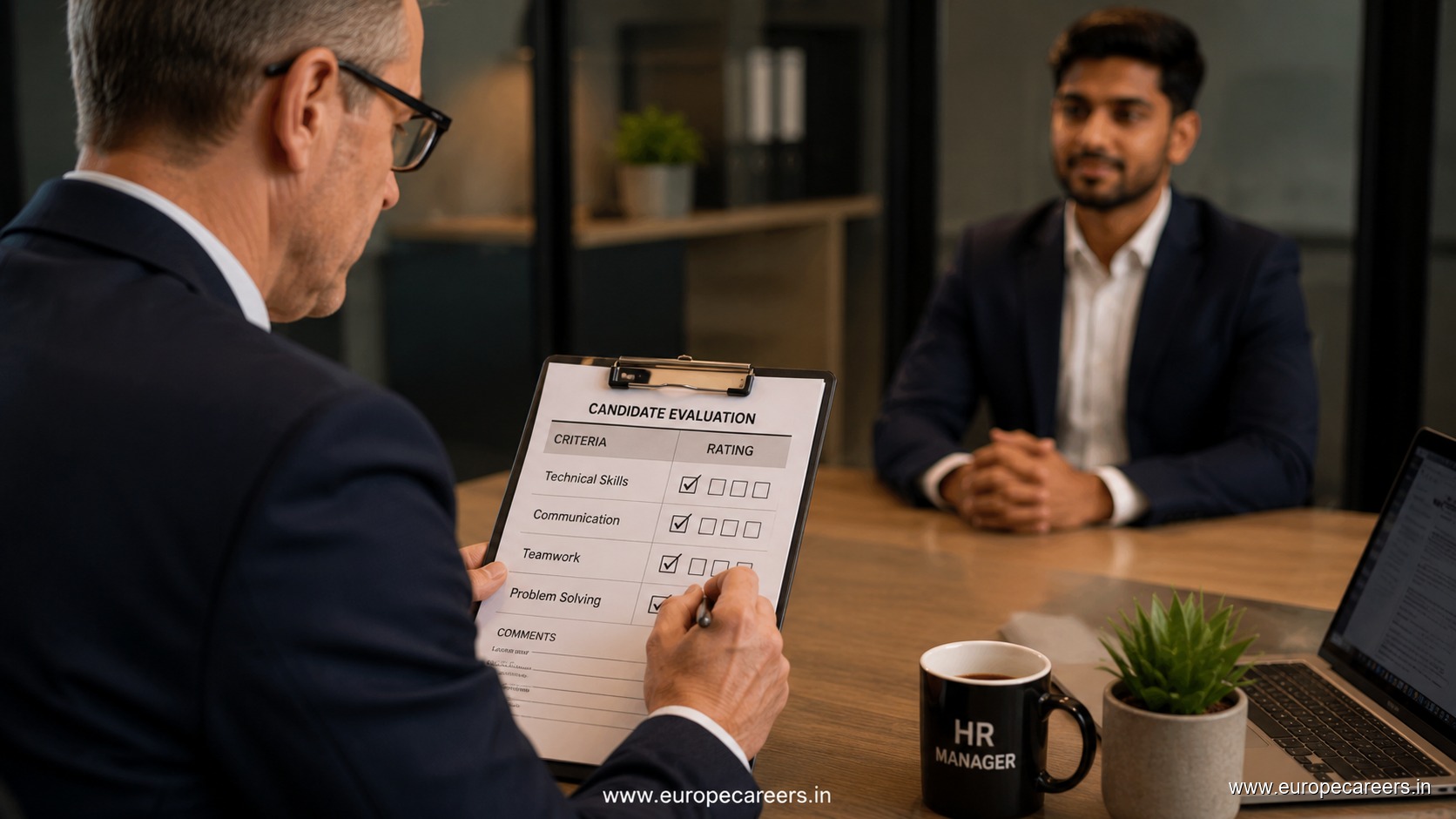
When evaluating international applicants from India, German hiring managers and HR teams follow a structured, objective assessment criteria:
| Evaluation Criterion | What German Employers Specifically Look For | Practical Relevance for Indian Candidates |
|---|---|---|
| Relevant Professional Qualifications | Completed academic degrees or certified vocational diplomas that map closely to German educational standards. | Clear transcripts, detailed course curriculum outlines, and university accreditation proof. |
| Hands-On Practical Experience | Demonstrated track record of applying technical or clinical knowledge in real-world professional settings. | Documented experience certificates specifying actual roles, technologies used, and responsibilities held. |
| German Language Proficiency | Certified language certificates (Goethe-Institut, telc, ÖSD) appropriate to the professional role. | B1/B2 for healthcare and customer-facing jobs; basic conversational skills even in English IT environments. |
| Professional Recognition Status | Preliminary assessment or formal Defizitbescheid from competent German state recognition authorities. | Evidence that the candidate has proactively initiated the official recognition process. |
| Reliability & Punctuality (Zuverlässigkeit) | Consistent professional behavior, meeting deadlines, adherence to agreed meeting times and shift rosters. | Arriving early for virtual interviews, submitting organized documentation, and following instructions meticulously. |
| Methodical Problem Solving | Structured, evidence-based thinking and adherence to quality standards (such as DIN/ISO norms in industry). | Explaining not just what you accomplished, but the structured process you followed to achieve results. |
| Adaptability & Cultural Openness | Willingness to integrate into German workplace culture and adapt to local collaborative practices. | Curiosity about German working life, constructive attitude toward feedback, and genuine relocation readiness. |
Why German Language Matters to Employers
Language expectations in Germany depend heavily on the specific profession and daily workplace environment. Candidates often ask whether learning German is truly necessary:
- Healthcare (Nurses and Doctors): German is Absolutely Mandatory. In a German hospital or care home, patient safety depends on instantaneous, flawless communication. Nurses must understand subtle patient symptoms, communicate with doctors during emergencies, understand complex medication dosages, and write legal clinical handovers (Pflegedokumentation). German state licensing authorities legally mandate certified B1/B2 level German (and C1 medical German / Fachsprachprüfung for doctors).
- Skilled Trades and Manufacturing: Workplace German is Essential. On construction sites, manufacturing floors, and electrical installations, technical blueprints, safety warning signs, and colleague instructions are delivered in German. A working knowledge of technical German (A2 to B1) is vital for physical workplace safety (Arbeitssicherheit).
- Information Technology and Software: English-Friendly, but German Accelerates Career Growth. While many international tech teams write code, conduct daily standups, and review pull requests in English, speaking conversational German (B1) enables you to build personal relationships with colleagues, understand broader corporate strategy, and participate fully in office life.
Does Qualification Recognition (Anerkennung) Matter?
In Germany, the legal requirement for official qualification recognition depends on whether your occupation is classified as regulated or non-regulated:
- Regulated Professions (Reglementierte Berufe): Recognition is Strictly Mandatory by Law. In professions such as nursing, medicine, teaching, pharmacy, and civil engineering, you cannot legally practice or use the professional title without formal state recognition (Approbation / Staatliche Anerkennung) from the responsible state authority (Landesamt). Foreign credentials must be evaluated to ensure equivalence with German training standards.
- Non-Regulated Professions (Nicht-reglementierte Berufe): Recognition is Generally Flexible. For software developers, IT architects, business analysts, data scientists, and marketing specialists, formal state recognition is not a legal prerequisite to work. German employers can evaluate your practical competence and portfolio directly. However, for visa and EU Blue Card processing, an official Statement of Comparability from the Central Office for Foreign Education (Zentralstelle für ausländisches Bildungswesen — ZAB) is typically required to prove that your foreign university degree is recognized as equivalent to a German degree.
Why Indian Professionals Can Be Relevant to German Employers
Over recent years, Indian professionals have earned an outstanding reputation across German hospitals, corporate research labs, and engineering hubs. German employers value several key strengths commonly demonstrated by Indian specialists:
- Rigorous Clinical & Technical Foundation: India’s leading universities, medical colleges, and engineering institutes maintain rigorous, demanding curricula. Indian healthcare workers and software engineers are accustomed to high operational standards and complex clinical environments.
- Strong Professional English Fluency: Indian education in technical and healthcare fields is conducted entirely in English, enabling seamless communication in international corporate environments and rapid adaptation to modern global standards.
- Commitment to German Language Learning: Dedicated candidates who invest the focused effort required to achieve certified B1 and B2 German proficiency demonstrate exceptional discipline, ambition, and long-term relocation motivation.
- Cultural Respect and Professional Dedication: Indian professionals are widely recognized in Germany for their politeness, strong family values, respect for organizational hierarchies, and commitment to delivering quality patient care and technical excellence.
Important Professional Clarification: German employers evaluate candidates strictly on individual merit, verifiable credentials, and personal suitability — nationality alone does not grant automatic hiring preference. A successful international candidate is one who pairs their Indian qualifications with targeted German language skills and cultural readiness.
— Europe Careers Career Advisory Team
What Makes International Recruitment Difficult for Employers?
While German companies recognize the value of international talent, the hiring process involves significant operational complexities:
- Complex Bureaucratic Verification: Evaluating foreign university transcripts, nursing syllabi, and official government accreditations across distant jurisdictions requires specialized legal expertise.
- Language Acquisition Lead Times: Candidates typically require 6 to 12 months of dedicated language coaching to advance from absolute beginner (A1) to certified professional working proficiency (B1/B2).
- Visa and Immigration Administrative Timelines: Coordinating consular appointments with German diplomatic missions in India, securing Federal Employment Agency (ZAV) labor approvals, and processing residence permits can take several months.
- Relocation and Initial Housing Logistics: Arranging flights, temporary accommodation, municipal registration, and bank accounts for newly arriving workers demands significant HR bandwidth.
- Workplace and Cultural Integration: Ensuring newly arrived international employees integrate harmoniously into existing German teams requires active onboarding, sensitivity training, and mentorship.
How International Recruitment Works: The Standard Employer Process
A professional international recruitment workflow follows an organized, multi-phase lifecycle:
- Workforce Need Identification: The employer analyzes long-term staffing requirements and defines exact role specifications, required qualification levels, and language prerequisites.
- International Sourcing & Screening: Sourcing qualified candidates whose educational credentials align with German equivalence standards.
- Structured Interviews: Conducting technical and personal video interviews between the German department heads, HR managers, and candidates.
- Formal Job Offer & Contract: Issuing a binding German employment contract (Arbeitsvertrag) stating contractual gross salary and tariff classification.
- Professional Recognition Filing: Submitting official recognition dossiers (translated, certified, and apostilled) to the competent German state authorities.
- Accelerated Immigration Procedure (Beschleunigtes Fachkräfteverfahren): Filing for fast-track immigration approval with the local Immigration Office (§ 81a AufenthG) to expedite visa issuance in India.
- Visa Issuance & Flight Booking: The candidate completes their visa appointment at the German Embassy or Consulate and secures their Category D employment entry visa.
- Arrival & Operational Onboarding: Airport reception, settling into initial accommodation, completing statutory health insurance registration, municipal address registration (Anmeldung), and beginning workplace orientation.
Employer Requirements vs German Legal Requirements
International candidates must clearly distinguish between requirements set by the German government and those set by individual employers:
| Requirement Category | Determined By German Law / Government | Determined By the Individual Employer |
|---|---|---|
| Visa & Work Authorisation | German Immigration Act (AufenthG), Federal Employment Agency (ZAV), and German Consulates in India. | Willingness to support the accelerated fast-track procedure (§ 81a) and provide corporate paperwork. |
| Professional Licensure | State Recognition Offices (Landesamt / Bezirksregierung) under federal nursing and medical laws. | Specific clinical specialization preferences (e.g., ICU experience, surgical scrub experience). |
| Language Certification | Legal statutory minimum for professional recognition (e.g., B2 certificate for healthcare licensure). | Workplace language used for daily internal team communication and software documentation. |
| Salary & Compensation | Statutory minimum wage and official EU Blue Card income thresholds. | Contractual gross salary based on collective bargaining tariff scales (such as TVöD, AVR, or company grids). |
Why German Employers Work With Recruitment Agencies
Managing an international hiring campaign from thousands of miles away requires specialized infrastructure that most internal hospital and corporate HR departments do not possess in-house. German employers partner with trusted agencies like Europe Careers to:
- Access Pre-Screened Candidate Pipelines: Agencies maintain active talent pools of qualified, vetted professionals whose credentials have been pre-evaluated for German equivalence.
- Oversee Intensive Language Preparation: Professional agencies organize dedicated language batches, ensuring candidates achieve verified Goethe or telc certificates before departure.
- Navigate Complex Recognition Bureaucracy: Experienced case managers prepare, translate, and track state recognition dossiers, preventing administrative delays.
- Provide Comprehensive Relocation Logistics: Coordinating flights, temporary housing, and arrival onboarding relieves hospital ward managers and engineering team leads of administrative strain.
How Europe Careers Supports German Employers
At Europe Careers, we act as a strategic, ethical workforce partner for healthcare institutions and corporate enterprises across Germany. Our end-to-end solutions include:
- Targeted Sourcing Across India: Identifying qualified nursing graduates, medical doctors, software engineers, and technical specialists with genuine career motivation for Germany.
- Academic & Clinical Pre-Screening: Rigorous evaluation of educational transcripts, clinical logbooks, and employment histories against German recognition standards.
- Dedicated German Language Coaching: Operating intensive A1-to-B2 language training programs taught by certified educators, focusing on professional and clinical vocabulary.
- Recognition Dossier Management: Compiling apostilled document dossiers and liaising with German state recognition authorities (Landesprüfungsämter).
- Fast-Track Visa Coordination: Managing § 81a accelerated procedures in partnership with German municipal immigration offices and consular teams in India.
- Turnkey Relocation & Onboarding Mentorship: Guiding candidates through municipal registration (Anmeldung), health insurance setup, bank account opening, and workplace integration.
Europe Careers Employer Recruitment Process
Our proven 13-stage framework guarantees transparency, compliance, and clinical quality at every step:
- Employer Requirement Analysis: Defining specific clinical or technical staffing numbers, departmental profiles, and start dates.
- Candidate Sourcing: Identifying accredited candidates across India matching the employer’s criteria.
- Profile Screening & Background Verification: Verifying educational degrees, nursing council registrations, and employment references.
- Initial Language Assessment: Enrolling selected candidates into structured German language training batches.
- Candidate Shortlisting: Presenting detailed candidate dossiers (CV, credentials, language progress) to the German hiring team.
- Interview Coordination: Facilitating live video interviews with simultaneous technical and translation support where required.
- Offer & Contract Coordination: Managing the execution of bilingual employment contracts according to German labor standards.
- Recognition Application Filing: Submitting formal recognition applications to the competent German state authorities.
- Accelerated Immigration Procedure: Coordinating § 81a pre-approval with local German immigration offices.
- Consular Visa Appointment: Guiding candidates through document verification and visa stamping at German Consulates in India.
- Pre-Departure Briefings: Comprehensive workshops on renting a home in Germany, culture, climate, and workplace norms.
- Travel & Arrival Logistics: Flight bookings, airport reception, and transit to initial accommodation.
- Workplace Onboarding & Mentorship: Ongoing candidate follow-up to ensure smooth workplace integration and long-term retention.
Why German Employers Value Reliable Recruitment
German employers do not need unvetted piles of resumes — they need reliable, thoroughly prepared human beings. Hiring an international worker represents an investment of thousands of Euros in relocation, administrative fees, and departmental onboarding. Employers deeply value recruitment partners who ensure that candidates:
- Possess genuine, fully verified educational certificates and authentic references.
- Understand the exact realities of their future job responsibilities, shift patterns, and working hours.
- Have realistic expectations regarding living costs, taxes, and net salaries in Germany.
- Are psychologically and emotionally prepared for international relocation and European cultural adaptation.
- Demonstrate long-term professional commitment to their new German employer.
What Indian Candidates Should Understand About Employer Recruitment
If you are an Indian professional aspiring to work in Germany, it is essential to approach the process with professional maturity. When a German employer offers you an employment contract, remember:
- You Are Being Hired for a Real, Demanding Role: German workplaces operate on high efficiency, precise documentation, and strict adherence to procedures. You will be expected to deliver real professional results from day one.
- The Probationary Period is Genuine: German employment contracts almost always feature a standard 6-month probationary period (Probezeit). During this window, both employer and employee assess mutual suitability. Diligence, reliability, and continuous language improvement during these first six months are vital.
- Ask Clarifying Questions Before Signing: Ensure you understand your contractual gross salary, collective tariff classification (e.g., TVöD Pflege P7), shift allowances, vacation entitlement (typically 30 paid days per year), and accommodation arrangements before accepting an offer.
Why Language and Cultural Preparation Matter
Technical competence alone is not enough to guarantee a flourishing career in Germany. Cultural integration is equally vital. Understanding fundamental German workplace principles ensures seamless collaboration:
- Punctuality (Pünktlichkeit): Arriving 5 minutes early for shifts, meetings, and appointments is standard professional etiquette in Germany. Being late is viewed as unprofessional and disrespectful of colleagues’ time.
- Direct Communication (Direkte Kommunikation): German colleagues communicate clearly, factually, and without excessive diplomatic softening. If a process was performed incorrectly, feedback is given directly to the point. This is not personal criticism — it is a professional commitment to quality and efficiency (Sachlichkeit).
- Work-Life Separation (Feierabend): German culture strictly respects the boundary between professional working hours and personal private life. Once your shift ends (Feierabend), you are not expected to answer work calls or emails, allowing you to recharge and enjoy personal hobbies.
- Workplace Safety & Protocol: German industry and healthcare operate under detailed statutory guidelines (DIN/ISO norms, hygiene protocols, safety regulations). Strictly following documented procedures is mandatory.

International Recruitment and Long-Term Retention
For German employers, hiring an international professional is only the beginning. The true measure of success is long-term retention. Leading German organizations invest in structured integration measures:
- Workplace Mentorship (Paten-Programm): Pairing each newly arrived international worker with an experienced German colleague who acts as a dedicated personal and professional mentor during the first year.
- Continuing Professional Education: Providing employer-funded specialization courses (e.g., intensive care nursing certificates, advanced cloud certifications) to foster ongoing career advancement.
- Family Reunification Support: Assisting relocated professionals with the housing standards and paperwork needed to bring their spouse and children to Germany under German family reunification rules, fostering permanent lifestyle stability.
What Employers Should Prepare Before Recruiting From Abroad
- [ ] Precise Job Descriptions: Clear itemization of duties, required qualifications, and language benchmarks.
- [ ] Transparent Compensation Structure: Stating exact gross salary, collective tariff classification (e.g., TVöD/AVR), and shift allowances.
- [ ] Fast-Track Immigration Commitment: Establishing contact with the local Immigration Office to execute § 81a accelerated procedures.
- [ ] Initial Accommodation Plan: Securing staff dormitory rooms or partnering with furnished housing providers for the employee’s first 3 to 6 months.
- [ ] Departmental Onboarding Strategy: Designating departmental mentors and preparing existing staff for cultural collaboration.
What International Candidates Should Prepare
- [ ] Standardized German-Format CV (Lebenslauf): Chronological, factual resume with professional photo and complete employment timeline.
- [ ] Academic & Professional Certificates: Degree certificates, consolidated mark sheets, nursing council registrations, and clinical logbooks.
- [ ] Official Document Legalization: Securing Ministry of External Affairs (MEA) apostille stamps on original educational and birth records.
- [ ] Certified German Translations: Commissioning court-sworn translators for all non-German documents.
- [ ] Certified Language Qualifications: Achieving official Goethe-Institut or telc certificates matching the target profession.
- [ ] Valid Passport: Ensuring your passport has at least two years of remaining validity.
Common Problems in International Recruitment (And How to Avoid Them)
- Incomplete or Incorrectly Certified Documents: Submitting un-apostilled degrees or uncertified translations causes state recognition bodies to reject files, delaying immigration by months.
- Language Exam Delays: Underestimating the dedicated study hours required to master B1/B2 German. Consistent daily practice is essential.
- Unrealistic Salary Expectations: Failing to understand the gap between gross contractual income and take-home net pay after mandatory social security deductions.
- Housing Registration Roadblocks: Booking short-term tourist hotels that cannot provide a Wohnungsgeberbestätigung, delaying address registration and Tax ID generation.
- Workplace Culture Shock: Misinterpreting direct German professional communication as personal hostility rather than constructive quality assurance.
Why India Is an Important Recruitment Market for Germany
The strategic partnership between Germany and India has deepened significantly under bilateral migration and mobility agreements signed by both federal governments. India graduates hundreds of thousands of highly capable nurses, physicians, software engineers, and technical professionals every year.
For German employers, India offers a deep, reliable talent pool of dedicated professionals who value stability, meritocratic career advancement, and long-term European integration. When recruitment is conducted ethically, transparently, and with comprehensive pre-departure training, this corridor creates mutual economic and social value for both nations.
How Europe Careers Connects India With Germany
Europe Careers operates as a dedicated bridge connecting talented Indian candidates with reputable, verified employers across Germany. Our structured methodology eliminates guesswork and ensures total compliance:
- In India: We identify motivated candidates, verify academic credentials, conduct intensive German language batches, guide document apostilles, and prepare applicants for employer interviews.
- In Germany: We partner with accredited hospital groups and engineering enterprises, structure legal recognition applications with state authorities, coordinate accelerated § 81a visa pre-approvals, and manage arrival logistics.
Why International Hiring Requires Real Preparation
Successful international recruitment is not an overnight transaction — it is a collaborative, disciplined journey requiring dedication from both the employer and the candidate. When German employers provide welcoming onboarding structures, and candidates invest the focused effort needed to master the German language and understand workplace norms, international recruitment becomes an extraordinary, life-changing success story.
Frequently Asked Questions (FAQs): International Recruitment in Germany
1. Why do German employers recruit skilled workers from abroad?
German employers recruit internationally because domestic demographic changes, high retirement rates among baby-boomer specialists, and expanding technological demands have created persistent shortages in bottleneck sectors like healthcare, IT, and engineering that cannot be filled locally.
2. Does Germany have a general labor shortage across all jobs?
No. Germany does not have shortages in every single profession. Demand is concentrated in specific bottleneck occupations (Engpassberufe), including nursing, medicine, IT/software engineering, electrical engineering, mechatronics, and skilled technical trades.
3. Do German hospitals actively recruit Indian nurses?
Yes. Due to statutory nurse-to-patient staffing ratios and an aging patient demographic, German public clinics and hospital networks actively recruit Indian nurses holding B.Sc. Nursing degrees or GNM diplomas, supporting them through professional recognition and language training.
4. Can foreign nurses work in Germany without professional recognition?
No. Nursing is a strictly regulated profession in Germany. An international nurse must hold an official recognition notice (Defizitbescheid) and complete an adaptation program (Anpassungslehrgang) or knowledge test (Kenntnisprüfung) before receiving their full license to practice (Berufserlaubnis).
5. Do German tech companies hire Indian software engineers?
Yes, extensively. German corporate enterprises and technology scale-ups hire qualified Indian developers, cloud architects, data scientists, and cybersecurity specialists, often operating in English-speaking technical teams under EU Blue Card regulations.
6. Do German engineering firms hire Indian mechanical and electrical engineers?
Yes. German industrial manufacturers and automotive firms recruit international engineers with strong foundations in embedded systems, automation, CAD design, power electronics, and mechatronics.
7. Do German employers prefer foreign workers over German workers?
No. Employers do not prefer one nationality over another. German employers evaluate candidates objectively based on qualifications, technical competence, language ability, professional reliability, and cultural readiness.
8. Is German language proficiency required for every international job?
It depends on the profession. Healthcare legally requires certified B1/B2 German. Skilled trades require workplace German for safety. Some software engineering roles allow English initially, but learning German is universally essential for career growth and social integration.
9. What is the accelerated skilled worker procedure (§ 81a AufenthG)?
The Beschleunigtes Fachkräfteverfahren is an official fast-track immigration process where a German employer, acting on the candidate’s behalf, coordinates with the local Immigration Office to expedite recognition and secure preliminary visa approval within a few weeks.
10. What is an EU Blue Card in Germany?
An EU Blue Card is a premier residence permit for qualified university graduates earning above statutory salary thresholds (€45,300 gross annually for shortage occupations). It provides fast-track permanent residency after 21 to 27 months of employment.
11. How does a German employer verify foreign qualifications?
For regulated professions, state recognition authorities evaluate degree syllabi against German standards. For non-regulated professions, employers and immigration officials verify university accreditation through the central ZAB database (anabin).
12. Does prior work experience matter to German employers?
Yes, significantly. Documented practical experience demonstrating your ability to handle clinical cases, operate complex machinery, or write production-grade code gives employers confidence in your immediate productivity.
13. What is the standard probation period (Probezeit) in Germany?
German employment contracts almost universally include a 6-month probationary period (Probezeit), during which either party can terminate the contract with a shortened two-week notice period. After 6 months, full statutory dismissal protections take effect.
14. Why do German employers partner with international recruitment agencies?
Agencies manage pre-screening, credential evaluation, intensive language coaching, recognition filing, consular visa appointments, and relocation logistics, removing administrative burden from hospital and corporate HR teams.
15. Does Europe Careers screen and vet international candidates?
Yes. Europe Careers conducts comprehensive credential checks, background verifications, and clinical/technical reviews to ensure that candidates presented to German employers meet all legal and educational prerequisites.
16. Does Europe Careers provide German language training?
Yes. We organize structured, intensive German language training batches (A1 through B2) taught by certified instructors, tailored specifically for clinical nursing and technical workplace communication.
17. Does Europe Careers guarantee employment or visa approval?
No ethical agency can guarantee employment or visas. Hiring decisions are made solely by German employers, and visa issuance is decided exclusively by German diplomatic missions and immigration authorities. Europe Careers coordinates and supports the process professionally.
18. What collective bargaining agreements (Tarifverträge) apply to nurses?
Most German public hospital nurses are paid under collective bargaining agreements such as TVöD Pflege or church welfare scales (AVR Caritas/Diakonie), guaranteeing structured gross salaries (€3,300 to €3,900+), mandatory overtime pay, and generous shift allowances.
19. Can international workers bring their spouse and children to Germany?
Yes. Under the German Skilled Immigration Act, qualified workers holding valid residence permits or EU Blue Cards can bring their spouse and minor children through family reunification, with spouses receiving unrestricted work rights.
20. What is Pünktlichkeit, and why is it so important in Germany?
Pünktlichkeit means punctuality. In German business and healthcare culture, arriving on time (or 5 minutes early) is considered fundamental proof of professional respect, reliability, and competence.
21. How long does the entire international recruitment journey take?
From initial candidate enrollment and B1/B2 language acquisition to employer interviews, state recognition, and visa issuance, the standard professional timeline typically spans 8 to 14 months.
22. Does an Indian degree need an MEA apostille for Germany?
Yes. German state recognition authorities and consular visa sections require original Indian educational and birth certificates to bear an official apostille from the Ministry of External Affairs (MEA), Government of India.
23. What are shift allowances (Zulagen) in German healthcare?
Shift allowances are supplements paid for working night shifts (+25% to +40%), Sundays (+50%), and public holidays (+125% to +150%). Under Section 3b of the German Income Tax Act, these allowances are 100% tax-free, significantly boosting take-home net pay.
24. Can vocational training (Ausbildung) candidates be recruited from India?
Yes. German employers increasingly recruit Indian candidates with completed school education (12th standard) and certified B1/B2 German for 3-year dual vocational training programs (Ausbildung) in nursing, mechatronics, and technical trades.
25. How can German employers contact Europe Careers to discuss staffing?
German healthcare institutions and corporate organizations can reach our international workforce solutions desk directly via email at support@europecareers.in or through our official corporate portal at www.europecareers.in.
Important Legal & Ethical Note for Employers and Candidates
International recruitment between India and Germany operates under strict legal and ethical parameters. It is essential to recognize the distinct boundaries of responsibility:
- Recognition Authorities: Professional recognition decisions (including the issuance of Defizitbescheide and full Approbations) are determined solely by responsible German state authorities (Landesbehörden).
- Government Immigration Authorities: Visa approvals, labor market permits, and residence permits are evaluated and decided exclusively by German diplomatic missions in India, the Federal Employment Agency (ZAV), and municipal Immigration Offices (Ausländerbehörden).
- Employers: Final hiring selections, employment terms, and contractual offers rest entirely with the individual German hospital or corporate employer.
- Europe Careers: Acts as an experienced recruitment, language training, and relocation coordination agency, guiding and supporting relevant stages of the journey without exercising government or final hiring authority.
Final Conclusion: Building Sustainable Careers and Stronger Teams
German employers recruit skilled professionals from abroad because international talent provides a vital solution to demographic retirement waves and specialized technological and healthcare demands. But sustainable international recruitment is far more than an administrative transaction — it is a human journey requiring thorough preparation, language dedication, regulatory rigor, and compassionate integration.
When German employers provide structured, welcoming onboarding environments, and motivated Indian professionals commit to mastering the language and cultural norms, the result is an enduring partnership that strengthens German workplaces while providing international workers with transformative, world-class career horizons.
Are you a German employer seeking qualified, pre-screened professionals from India, or a skilled candidate ready to build your European career?
At Europe Careers, our specialized workforce solutions team supports healthcare networks, industrial manufacturers, and tech organizations with complete international recruitment, credential pre-screening, German language training, and turnkey relocation coordination. Connect with our advisory desk today at support@europecareers.in or visit www.europecareers.in to explore active recruitment partnerships.