7 German Workplace Habits Indian Professionals Should Know Before Moving

You have spent months preparing. You verified your Indian degree or diploma, studied the German language, completed your qualification recognition, cleared technical interviews, and finally received your German work visa. You pack your bags, book your flight, and prepare for your flight to Frankfurt, Munich, or Berlin. But as your joining date approaches, a natural question comes to mind: What will the first few weeks at work actually feel like?
At Europe Careers, we guide hundreds of Indian nurses, software engineers, doctors, mechanical technicians, and skilled specialists through their relocation journey. While technical expertise and academic qualifications help you secure an employment contract, everyday professional habits determine how comfortably and smoothly you settle into your new team. Germany operates one of the most organized, efficient, and structured work environments in Europe. Many workplace expectations in Germany differ noticeably from the daily office dynamics common in India.
These differences do not mean German workplaces are cold, rigid, or unfriendly. In reality, German work culture is built on mutual respect, clarity, and protecting both productivity and personal well-being. By learning these common habits before you land, you can avoid misunderstandings, build strong professional relationships, and start your new job with confidence. Here are seven common German workplace habits that Indian professionals should understand before making their move.

1. Punctuality Matters (Pünktlichkeit)
In many German workplaces, punctuality (Pünktlichkeit) is taken very seriously. It is not viewed merely as good manners; it is considered a fundamental sign of respect for other people’s time and professional commitments. While arriving slightly late to an informal gathering in India is often treated casually, arriving late to a professional commitment in Germany can quickly create an impression of disorganisation or unreliability.
Consider a simple, realistic workplace situation. A project alignment meeting is scheduled for 9:00 AM. In many German offices, participants arrive at 8:55 AM, open their laptops, arrange their documents, and are ready to start speaking at exactly 9:00 AM. Arriving at 9:05 AM means the meeting either started without you, or several colleagues were kept waiting. In hospital wards, shift handovers (Schichtübergabe) operate with minute-by-minute precision to ensure patient safety.
Here is practical advice our career counsellors always share with relocating candidates:
- Plan your commute with buffer time: Download regional transit apps such as the DB Navigator or local transport apps (BVG in Berlin, MVV in Munich, RMV in Frankfurt) to monitor real-time schedules and platform updates.
- Aim to arrive 5 to 10 minutes early: This gives you time to remove your coat, grab a glass of water, and settle at your desk without stress.
- Communicate delays immediately: If train cancellations or traffic hold you up, inform your supervisor or team via message or call before the meeting starts, stating your expected arrival time.
Keep in mind that while punctuality is a widely respected cultural standard across Germany, exact degrees of flexibility can vary depending on whether you work in an agile software startup or an established engineering firm.
2. Planning Comes Before Action (Planung und Vorbereitung)
Many German organizations place tremendous value on thorough planning and detailed preparation (Planung und Vorbereitung). Before a new project begins or an engineering task is implemented, German colleagues often invest substantial time defining parameters, discussing potential risks, assigning responsibilities, and establishing realistic milestones.
To professionals arriving from dynamic, fast-paced Indian workplaces where rapid improvisation and on-the-spot problem-solving (often termed jugaad) are common, this structured planning phase can initially feel slow or overly cautious. However, the German philosophy is straightforward: investing time in careful planning upfront prevents costly errors, rework, and stress later on.
Instead of diving straight into execution with vague requirements, a German colleague or manager will often pause and ask structured questions:
- “Bis wann brauchen wir das Ergebnis?” (By when do we need the final result?)
- “Wer ist für welchen Arbeitsschritt verantwortlich?” (Who is responsible for each specific work step?)
- “Welche Dokumente und Ressourcen fehlen uns noch?” (What documentation and resources are still missing?)
When you are assigned a new task, take a moment to understand the scope, confirm the deadline in writing, and review the required documentation before you jump into coding, testing, or patient care. Your colleagues will appreciate your structured approach.
3. Communication Can Be Direct (Direkte Kommunikation)
One of the most noticeable differences for Indian professionals in Germany is the directness of workplace communication. In Indian professional culture, communication is frequently high-context and diplomatic. People often soften critical feedback, use polite indirect hints, or hesitate to say a flat “no” to a senior manager to preserve harmony and respect hierarchy.
In contrast, German professional communication values clarity, brevity, and factual precision (Sachlichkeit). A colleague or team lead might say plainly: “Dieser Bericht ist unvollständig. Bitte überarbeiten Sie Abschnitt zwei bis Donnerstag um 14 Uhr.” (“This report is incomplete. Please revise section two by Thursday at 2:00 PM.”)
For a newcomer, this level of directness can feel abrupt or even impolite. But it is essential to understand that in Germany, direct language is not personal and is rarely intended to offend. Germans separate the professional topic (die Sache) from personal feelings (die Person). Being clear and concise is considered honest, professional, and efficient.
Practical guidance for adapting to direct communication:
- Listen to the factual content: Focus on what needs to be changed or delivered rather than searching for hidden emotional undertones.
- Do not take criticism personally: A comment on a technical drawing or a nursing chart is a comment on the document, not on your worth as a human being.
- Be clear and honest yourself: If you cannot complete a task by Friday, say so clearly and explain why. Agreeing to an impossible deadline out of politeness creates far bigger problems later.
4. Respect for Personal Time (Feierabend und Erholung)
German work culture places strong, widely respected boundaries between professional duties and private life. Once the working day ends, Germans celebrate Feierabend — a cherished cultural concept that signifies the transition from work to rest, family time, hobbies, and personal relaxation.
In many Indian corporate and tech environments, answering client WhatsApp messages late in the evening, taking calls on weekends, or responding to emails after dinner is often normalized or even expected as proof of commitment. In Germany, this is generally discouraged. Sending non-urgent emails late at night or expecting colleagues to answer calls over the weekend is frequently viewed as poor boundary management or disorganised planning.
Under German labour legislation (such as the Working Hours Act — Arbeitszeitgesetz), statutory working hours, mandatory rest periods of at least 11 uninterrupted hours between shifts, and lunch breaks (Mittagspause) are carefully regulated. While doctors and nurses work rotating shift patterns, those shifts are strictly scheduled, and off-duty rest days are respected.
As an international worker in Germany, you should respect your colleagues’ Feierabend. Complete your work during your contracted hours, take your designated lunch break away from your computer, and enjoy your evenings and weekends guilt-free. To learn more about how working hours reflect on your payslip, explore our guide on understanding your gross and net salary in Germany.
5. Responsibility Is Usually Clear (Eigenverantwortung)
In many German workplaces, managers expect employees to demonstrate a high degree of individual responsibility (Eigenverantwortung). Once a task, clinical procedure, or software module is assigned to you, you are expected to take ownership of it from start to finish without needing constant supervision or daily micromanagement.
Taking ownership involves three key professional habits:
- Proactive problem reporting: If you realize an equipment part is missing, a test suite is failing, or patient lab results are delayed, report the issue to your team lead immediately. Never wait until the deadline has passed to announce that you encountered a blocker.
- Asking informed questions: German supervisors appreciate questions when they show that you have thought about the problem. It is completely acceptable to ask: “I reviewed the specification, but step three has two possible interpretations. Which approach fits our architecture best?”
- Keeping documentation updated: In Germany, thorough documentation is part of your core responsibility, not an afterthought.
Demonstrating Eigenverantwortung builds rapid trust with German employers and plays a decisive role during your 6-month probationary period (Probezeit).

6. Meetings Usually Need Preparation (Sitzungsvorbereitung)
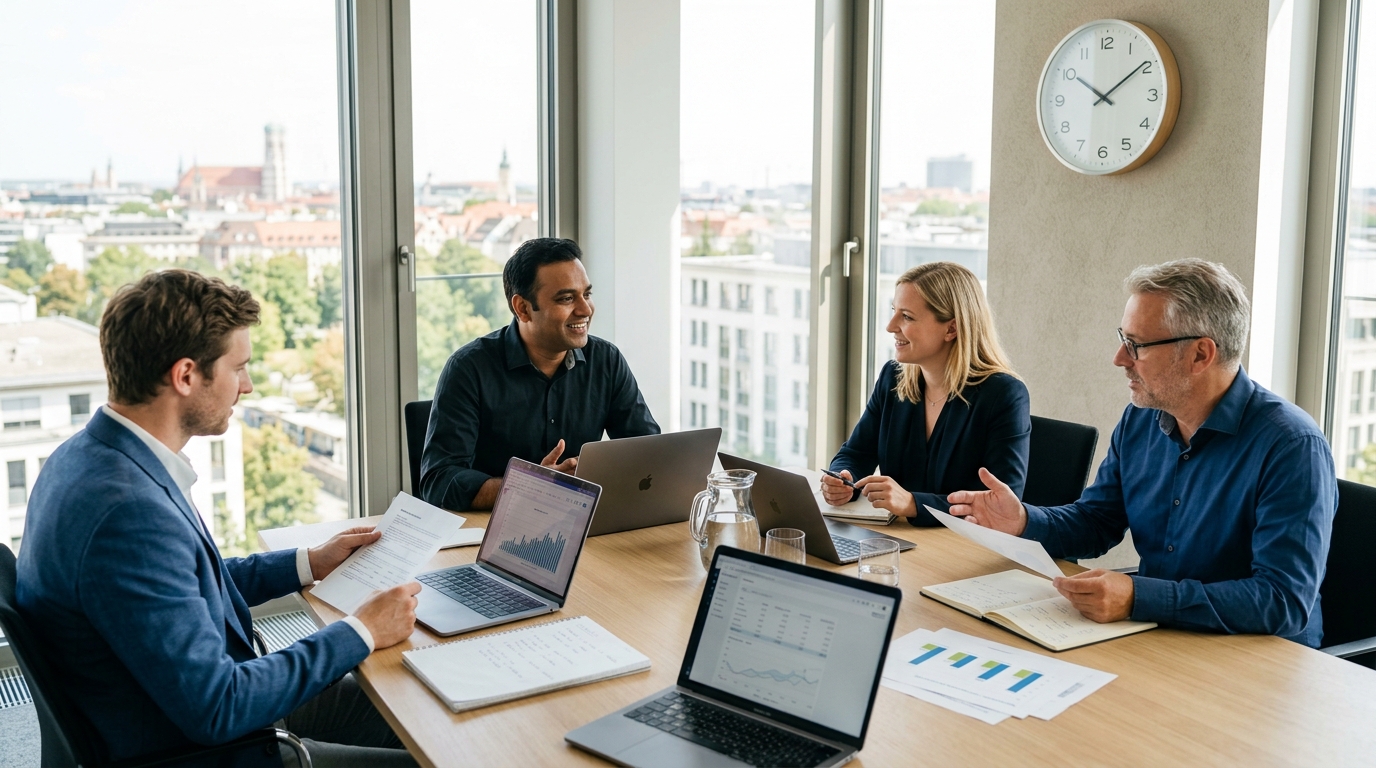
In German business culture, meetings (Besprechungen or Meetings) are generally seen as structured decision-making forums rather than casual brainstorming sessions. They are organized to make concrete decisions, approve budgets, review clinical treatment pathways, or resolve technical bottlenecks.
When a meeting is scheduled, you will usually receive a formal invitation with an agenda (Tagesordnung) and relevant background documents attached. Common expectations include:
- Read documents in advance: Expecting colleagues to summarize attached documents during the meeting is seen as an inefficient use of collective working hours.
- Stick to the agenda: Introducing unrelated topics without prior agreement is usually redirected back to the agenda points.
- Speak with facts and evidence: Ground your opinions in data, specifications, or clinical guidelines rather than general impressions.
- Document action items (To-Dos): Meetings typically conclude with a brief minutes summary (Protokoll) recording what was decided, who is responsible, and the completion deadline.
While tech startups and international teams may adopt more casual standup formats, being well-prepared is universally welcomed across German companies.
7. Professional Boundaries and Feedback (Grenzen und Sachliche Kritik)
The seventh habit brings together two closely related aspects of German workplace life: collegial boundaries and constructive feedback. In many Indian workplaces, colleagues often become close personal friends very quickly, sharing personal family matters, visiting each other’s homes, and blending social and professional lives.
In Germany, colleagues are polite, helpful, and friendly during the working day, but professional boundaries are maintained more firmly. Many German professionals prefer to keep their personal life, family finances, and political views private. It is common to have warm, collaborative relationships with teammates for years without knowing intricate details about their private family affairs.
Similarly, feedback in German workplaces is characterized by sachliche Kritik (objective, matter-of-fact critique). When a senior nurse, lead engineer, or physician points out an error, they will describe the flaw directly without elaborate compliments or apologetic preambles. This is not hostility; it is the German standard for maintaining operational excellence.
How to handle professional boundaries and feedback constructively:
- Respect conversational boundaries: Keep initial workplace conversations focused on shared work, hobbies, sports, the weather, and local culture rather than probing personal finances or family decisions.
- Adopt the correct form of address: In many traditional companies, colleagues initially address each other with the formal “Sie” and last names (e.g., Herr Müller or Frau Schmidt) until an informal “Du” is mutually offered. In modern IT firms, English-speaking offices, or hospital teams, the informal “Du” is often standard from day one. Follow your team’s lead.
- Focus on the solution: When receiving feedback, acknowledge the point calmly: “Danke für den Hinweis. Ich werde das sofort korrigieren.” (“Thank you for pointing that out. I will correct that immediately.”)
German Workplace Habits Compared With India
Every professional culture has its own internal logic shaped by history, social structures, and economic environments. Neither system is superior; they simply function differently. The table below provides a balanced comparison between common workplace habits in Germany and typical practices in India.
| Workplace Topic | Common Practice in Germany | Common Practice in India |
|---|---|---|
| Punctuality | Strictly observed; arriving 5 minutes early is standard. | Often more flexible; varies widely by organization and traffic. |
| Communication Style | Direct, factual (Sachlichkeit), and concise. | Polite, diplomatic, contextual, and hierarchy-conscious. |
| Planning & Execution | Extensive upfront planning; clear milestones and documentation. | Rapid execution; high adaptability and agile improvisation. |
| Personal Time (Feierabend) | Firm separation between work and private life; evenings respected. | Boundaries often fluid; after-hours calls and messages common. |
| Task Ownership | High individual responsibility (Eigenverantwortung); low micromanagement. | Frequent managerial guidance, checkpoints, and supervision. |
| Meeting Culture | Agenda-driven; preparation expected; decisions documented. | Brainstorming-friendly; interactive; often broader discussion scope. |
| Workplace Relationships | Polite, collegial, and mutually respectful with clear personal boundaries. | Warm, familial, and emotionally connected; social blending common. |
| Professional Feedback | Direct, specific, and focused entirely on the work product. | Often softened, indirect, or delivered privately to maintain harmony. |
How These Habits Can Help Indian Professionals
Adopting and respecting these workplace habits provides immediate, practical benefits for Indian professionals relocating to Germany:
- Faster Integration into Teams: When German colleagues see that you are punctual, prepared, and clear in your communication, mutual trust develops quickly.
- Lower Workplace Stress: Clear task responsibilities and protected Feierabend hours give you predictable daily routines and ample time to rest, explore your new city, and spend time with family.
- Successful Probation (Probezeit): In Germany, the standard probation period lasts three to six months. Demonstrating reliability, asking thoughtful questions, and handling feedback constructively ensures a smooth transition to a permanent contract.
- Fewer Misunderstandings: Direct communication eliminates guesswork. You will know exactly what is expected of you, when it is due, and how your performance is evaluated.

What Indian Professionals Should Do Before Moving
Transitioning into a German workplace begins long before you board your flight. Here is a practical, 8-point preparation checklist recommended by Europe Careers mentors:
- Practise Professional German: Move beyond textbook grammar to learn everyday workplace phrases, telephone etiquette, and email conventions. See our guide on what B1 German actually means in everyday work life.
- Learn Industry-Specific Vocabulary: Whether you are in nursing, electrical engineering, or IT, familiarize yourself with German technical terms for tools, workflows, and documentation.
- Read Workplace Culture Guides: Deepen your understanding of German professional norms through our German workplace culture guide and first 30 days in Germany checklist.
- Practise Concise Self-Introductions: Prepare a structured, 2-minute introduction in German explaining your professional background, qualifications, and role.
- Learn to Ask Clarifying Questions: Practise saying “Könnten Sie das bitte wiederholen?” or “Habe ich das richtig verstanden?” so you never feel embarrassed to seek clarity.
- Prepare for Factual Feedback: Shift your mindset from seeing feedback as personal judgment to viewing it as collaborative quality improvement.
- Map Your Commute in Advance: Once you know your workplace address and initial accommodation, research public transit routes, monthly tickets, and backup options.
- Understand German Career Steps: Review the complete journey from credentials to residency in our Germany career roadmap.
Simple German Phrases for the Workplace
You do not need to be completely fluent in German on your first day to communicate professionally. Having a few dependable, polite German phrases ready can immediately build goodwill with your new team:
| German Workplace Phrase | English Translation | When to Use It |
|---|---|---|
| Guten Morgen! / Schönen Feierabend! | Good morning! / Have a good evening! | Greeting colleagues upon arrival and when leaving work. |
| Können Sie das bitte wiederholen? | Could you please repeat that? | When a colleague speaks too fast or uses unfamiliar dialect. |
| Ich habe eine kurze Frage dazu. | I have a quick question about this. | Before asking for clarification during a task handover. |
| Bis wann brauchen Sie das? | By when do you need this? | When a new assignment or report is delegated to you. |
| Ich bin damit fertig. Was ist der nächste Schritt? | I am done with this. What is the next step? | Proactively demonstrating task completion and readiness. |
| Können wir das kurz besprechen? | Can we discuss this briefly? | Requesting a quick alignment without disrupting a colleague’s schedule. |
| Vielen Dank für den Hinweis! | Thank you for pointing that out! | Acknowledging professional feedback or a helpful correction gracefully. |
| Ich kümmere mich darum. | I will take care of it. | Confirming clear ownership of an assigned task. |
How Europe Careers Helps Indian Professionals Prepare
Securing a job offer in Germany is an impressive milestone, but arriving well-prepared for everyday workplace dynamics is what creates long-term career success. At Europe Careers, we do not simply process documents; we prepare candidates holistically for life and work in Germany.
Depending on your chosen program and service agreement, Europe Careers supports Indian professionals with comprehensive pre-departure and onboarding preparation:
- Workplace-Focused German Training: Intensive language courses from A1 to B2 emphasizing conversational fluency, professional telephone manners, and written email etiquette.
- Industry-Specific Vocabulary Modules: Dedicated medical German for nurses and doctors, technical German for engineers, and trade terminology for skilled workers.
- Interview Preparation & Role-Playing: Simulated German job interviews focusing on punctuality, direct technical explanations, and professional posture.
- Cultural Orientation Sessions: Practical briefings covering German workplace norms, waste separation, tenant etiquette, and administrative steps.
- Pre-Departure Guidance: Guidance on booking initial accommodation, health insurance coverage, and packing essential documents.
Please note that while Europe Careers provides thorough training and preparation, individual company cultures, team structures, and hiring decisions remain under the sole discretion of the German employer.
Europe Careers Workplace Preparation Pathway
Our structured preparation model is designed to build your competence and confidence step by step:
- German Language Training: Systematic progression from A1 through B1/B2 aligned with the CEFR framework.
- Workplace Vocabulary: Specialised training in medical, engineering, or IT terminology relevant to your profession.
- Communication Practice: Practical drills in asking questions, participating in meetings, and understanding instructions.
- Interview Coaching: Mastering German interview etiquette, factual self-presentation, and answering situational questions.
- Cultural Orientation: Learning everyday workplace habits, social etiquette, and legal rights under German employment law.
- Relocation Guidance & Onboarding: Practical support with travel logistics, municipal registration (Anmeldung), and starting your first working week.
Frequently Asked Questions
1. What are the most common German workplace habits?
The most common habits include strict punctuality, thorough project planning, direct and factual communication (Sachlichkeit), clear separation of work and private life (Feierabend), strong individual responsibility (Eigenverantwortung), structured meeting preparation, and objective professional feedback.
2. Is punctuality really that strict in Germany?
Yes, in most German companies, arriving on time is a core expectation. Arriving 5 minutes before a scheduled meeting is considered standard. While startups and tech offices may have flexible working hours (Gleitzeit), fixed meetings and hospital shifts always demand punctuality.
3. Are German workplaces formal or informal?
It depends on the company and industry. Traditional engineering firms, legal offices, and public institutions often use formal German (“Sie” and surnames). In contrast, modern IT startups, design agencies, and international teams frequently use first names and informal address (“Du”). Always observe your colleagues and follow your supervisor’s lead.
4. Why do Germans communicate so directly at work?
Direct communication is rooted in the principle of Sachlichkeit — focusing on the factual task rather than interpersonal diplomacy. It is viewed as efficient, honest, and respectful because it saves time and prevents misunderstandings. It is not intended as personal hostility.
5. How should Indian professionals respond to direct feedback?
Listen carefully without becoming defensive. Acknowledge the feedback, ask what specific changes are needed, and confirm your next action. Remember that the feedback focuses on the work deliverable, not on your personal character.
6. Do German employees truly disconnect after work?
In many organizations, yes. The cultural concept of Feierabend and German labour legislation protect personal rest hours. Unless you are on contracted emergency call duty (Rufbereitschaft), employees are rarely expected to answer work calls or emails in the evening or on weekends.
7. What should I do if I am running late for work?
Notify your team lead or manager as early as possible via phone or message. State clearly that you are delayed, provide the reason briefly (e.g., train disruption), and give an accurate estimated arrival time.
8. Why is upfront planning so important in German companies?
German organizations prioritize risk minimization and sustainable quality. Detailed planning, clear documentation, and milestone definitions prevent costly errors and project delays later on.
9. How are meetings typically conducted in Germany?
Meetings usually have a clear agenda distributed in advance. Participants are expected to read materials beforehand, contribute factually, stick to the topic, and follow up on assigned action points (To-Dos).
10. Do I have to change my personality to work in Germany?
No. You do not need to alter your identity, warmth, or values. Adapting to German workplace habits simply means understanding how your team plans tasks, communicates progress, and respects professional boundaries.
11. Is speaking German necessary to understand workplace habits?
While some tech companies operate in English, speaking German (at least B1 or B2 level) is vital for understanding team discussions, building trust, and integrating into healthcare, engineering, and everyday office environments.
12. Can Europe Careers help me prepare for German workplace culture?
Yes. Europe Careers provides structured German language training, workplace communication workshops, role-play interview sessions, and relocation orientation to help Indian candidates transition smoothly into German workplaces.
Final Thoughts
Relocating from India to work in Germany is an exciting, transformative career step. Your qualifications, technical capabilities, and dedication have earned you this opportunity. However, thriving in your new environment requires more than technical skill alone — it calls for cultural awareness and an open mindset.
By embracing punctuality, valuing structured planning, appreciating direct communication, respecting personal boundaries, and taking ownership of your tasks, you will not only make your first few months smoother but also earn the lasting respect of your German colleagues. You do not need to change who you are; you simply need to understand the rhythm of your new workplace.
Start Your Germany Journey with Europe Careers
Are you an Indian healthcare professional, engineer, IT specialist, or skilled worker preparing for a career in Germany? At Europe Careers, our experienced team provides end-to-end guidance — from German language courses and qualification recognition support to workplace communication coaching and relocation orientation.
Visit: www.europecareers.in
Email: support@europecareers.in