
What “Work Experience” Really Means to German Employers

When international professionals — especially candidates from India — prepare their job applications for Germany, one phrase appears constantly on resumes and cover letters: “I have five years of experience,” or “I have eight years of experience in this field.” In many Indian corporate and healthcare environments, the total number of years spent at a company is treated as the primary benchmark of seniority, competence, and readiness for a promotion.
However, when a German hiring manager (Personalabteilung) or department head (Fachabteilungsleiter) reviews your application, they look at work experience through a very different lens. To a German employer, the total number of years is merely a starting point. What truly matters is the substance of that experience: what tasks you actually performed, which tools and procedures you mastered, how independently you worked, how you solved problems, and how directly your past responsibilities match their vacant role.
At Europe Careers, we regularly counsel Indian nurses, software engineers, mechanical specialists, and skilled technicians who wonder why their extensive Indian work history is not receiving the response they expected. The issue is rarely a lack of skill; rather, it is a mismatch in how work experience is defined, documented, and presented. In this guide, our career consultants break down what German employers really look for when evaluating foreign work experience and how you can present your professional background with precision and credibility.
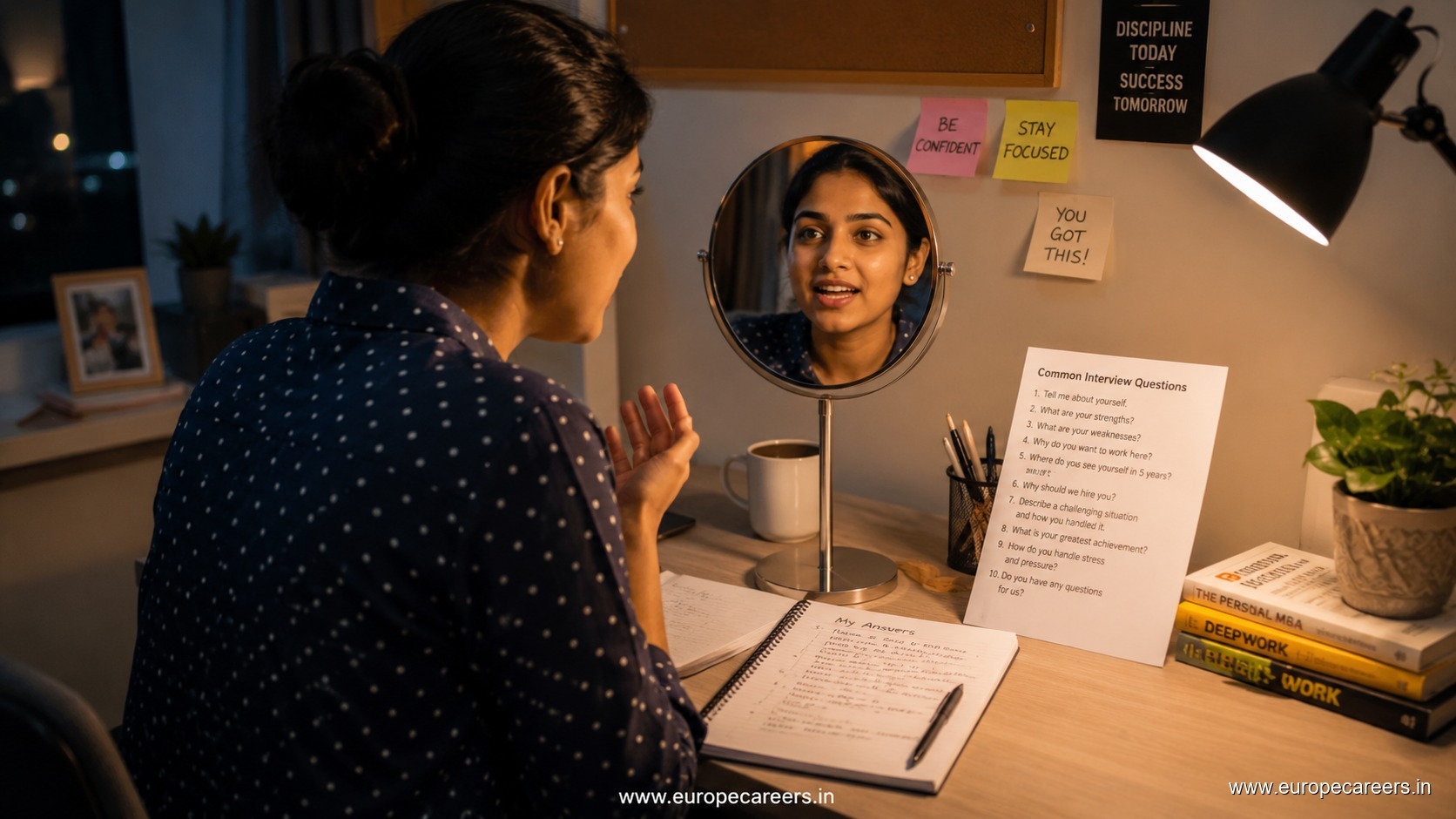
Is Work Experience Just About the Number of Years?
In simple terms: no. A common misconception among Indian applicants is that having seven years on a resume automatically makes them more attractive than a candidate with three years. In Germany, this is not necessarily the case.
German employers prioritize operational depth over chronological duration. A software developer with three years of intensive experience designing cloud-native microservices, conducting automated unit testing, and contributing to open-source systems is often viewed as far more capable than a developer with seven years of routine maintenance on legacy systems. Similarly, an Indian nurse with three years in an acute tertiary care intensive care unit (ICU) often brings more practical clinical competence than someone with six years in a general outpatient consultation desk.
German hiring managers ask themselves: “Can this candidate step into our team and handle their core duties with minimal supervision?” Total years do not answer that question; demonstrated, hands-on tasks do.
What German Employers Actually Look For
When German organizations evaluate your professional background, they assess several distinct dimensions of your work history:
- Nature of Daily Tasks: Did your job involve hands-on technical execution, patient care, equipment calibration, or was it purely theoretical and administrative?
- Degree of Autonomy (Eigenverantwortung): German workplace culture values employees who take ownership of assigned tasks. Employers look for evidence that you worked independently, resolved technical bottlenecks, and communicated progress proactively.
- Methodological Standards: Have you worked under strict quality management frameworks, such as ISO certifications, clinical hygiene standards, or Agile/Scrum sprint frameworks?
- Documentation Discipline: In Germany, thorough documentation is essential. Whether completing shift handovers (Schichtübergabe), writing engineering maintenance logs, or recording software code comments, your ability to document work accurately is highly scrutinized.
- Continuity and Recency: Employers pay close attention to what you have been doing in the last two to three years. Recent, active experience in modern technologies or clinical procedures carries far more weight than experience gained a decade ago.
Why Relevant Experience Matters
German job postings frequently use the term einschlägige Berufserfahrung — which translates directly to relevant, directly applicable professional experience. Understanding the difference between general work experience and relevant experience is critical for your application strategy.
General experience encompasses everything you have done across your career. Relevant experience, by contrast, includes only the skills, procedures, and tools that directly solve the specific challenges outlined in the German job description. If a German mechanical engineering firm is recruiting a specialist for CNC 5-axis milling machine programming, ten years of experience managing general factory inventory is not considered relevant, even if both roles took place in the manufacturing sector.
When tailoring your application for Germany, highlight the specific experiences that match the German employer’s vacancy criteria rather than summarizing your entire career chronologically without focus.
Job Responsibilities Matter More Than Job Titles
In India, job titles can vary widely across companies and are sometimes inflated to reflect seniority rather than actual duties. You might hold the title of “Assistant Manager — Technical Operations,” “Lead Consultant,” or “Clinical In-Charge.”
German employers are generally unimpressed by prestigious sounding titles. They want to see the exact breakdown of your daily responsibilities. Consider these realistic comparisons:
| Job Title | Candidate A (Vague / General) | Candidate B (Specific / Hands-On) |
|---|---|---|
| Senior Software Engineer | Assigned tasks in Jira, attended status meetings, coordinated with international clients. | Architected REST APIs in Python/Django, built PostgreSQL schemas, implemented Docker CI/CD pipelines with 99.8% uptime. |
| Staff Nurse | Assisted senior doctors, maintained ward records, managed routine patient admissions. | Monitored ICU vitals for ventilated patients, administered IV medications via infusion pumps, conducted sterile wound dressing, led shift handovers. |
| Mechanical Engineer | Supervised workshop floor workers, checked daily production counts. | Designed sheet metal components using Siemens NX, performed tolerance analyses according to DIN standards, troubleshot pneumatic equipment. |
In all three examples, German hiring managers will strongly favor Candidate B. Their experience demonstrates concrete technical deliverables, verifiable tools, and practical responsibilities rather than administrative oversight.
Practical Skills German Employers Value
Germany’s economic strength is built on precision, engineering excellence, and specialized craftsmanship — often referred to as the German Fachkraft standard. Across all technical and healthcare sectors, employers look for evidence of specific practical capabilities:
- Direct Tool and Machinery Competence: Can you operate, calibrate, and troubleshoot the physical or software tools standard in your industry?
- Structured Problem Solving: When equipment fails or a software deployment breaks, how do you isolate the root cause? In Germany, logical, step-by-step troubleshooting is valued over ad-hoc improvisation.
- Workplace Safety and Compliance (Arbeitsschutz): German workplaces operate under rigorous statutory safety and environmental guidelines. Familiarity with safety protocols and hygiene regulations is a major plus.
- Direct Communication (Sachlichkeit): Explaining technical issues clearly, factually, and without unnecessary delay. Learn more about 7 German workplace habits Indian professionals should know.
How Different Industries Evaluate Experience
Every industry in Germany defines and assesses valuable experience through its own operational lens. Here is how key sectors evaluate Indian applicants:
1. Healthcare and Nursing (Pflegefachkräfte)
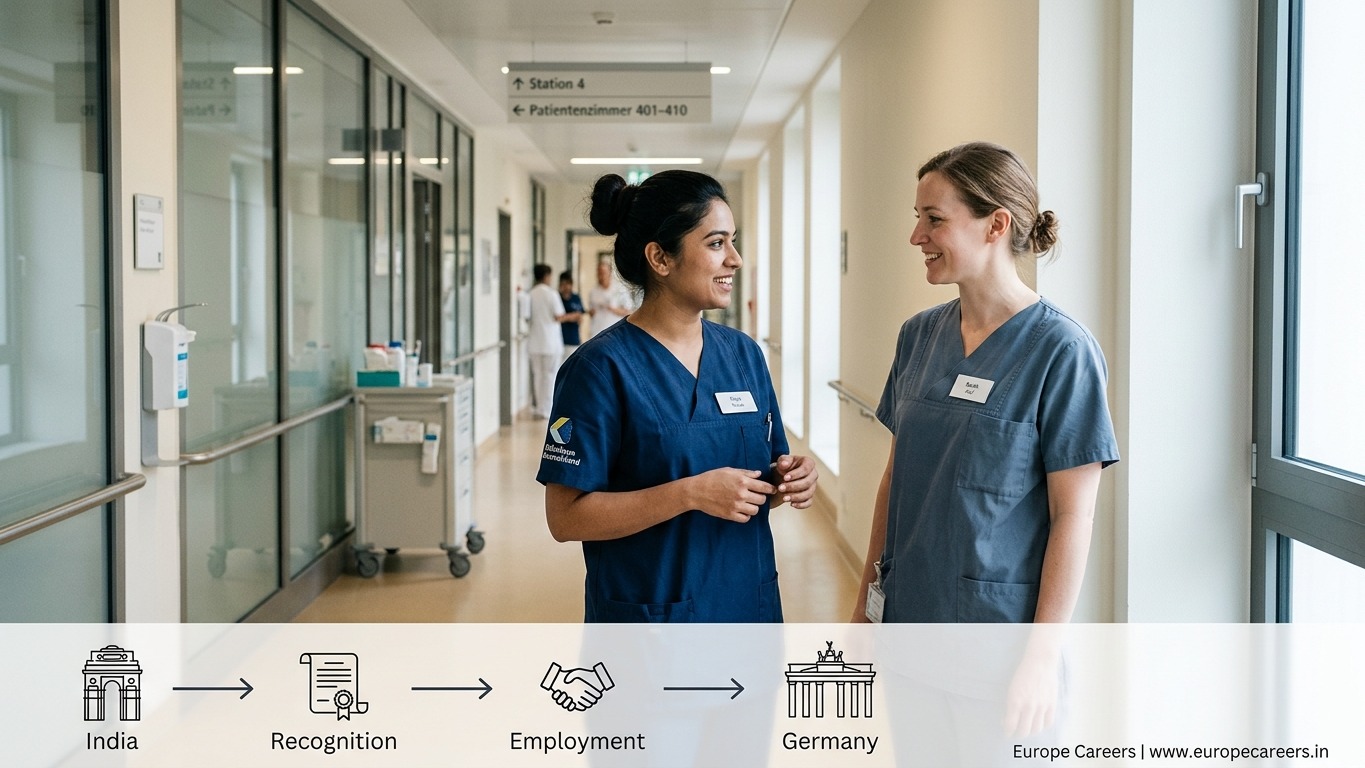
German hospitals and care facilities look for practical nursing competencies: administering complex medications, operating syringe drivers and infusion pumps, monitoring vital signs, sterile catheterization, pre- and post-operative care, and thorough medical charting. Shift work experience (day, night, weekend rotations) and compassionate patient communication are vital. Explore how German language proficiency connects to clinical care in our guide on what B1 and B2 German mean in everyday work life.
2. Information Technology and Software Engineering
German tech employers focus heavily on hands-on coding, architectural decisions, and modern engineering practices. They look for practical exposure to programming languages (Java, Python, C++, TypeScript), cloud infrastructure (AWS, Azure, Google Cloud), database design, automated testing, API development, and CI/CD deployment pipelines. Experience working in distributed, multicultural agile teams is a strong asset.
3. Engineering and Manufacturing
For mechanical, electrical, and civil engineers, German employers look for mastery of CAD/CAM modeling tools (CATIA, Siemens NX, SolidWorks, AutoCAD), production automation (PLC programming, Siemens S7), quality management systems, and compliance with European DIN and ISO standards. Experience handling physical equipment during assembly, maintenance, or commissioning is especially prized.
4. Skilled Trades and Technical Occupations (Handwerk & Industrie)
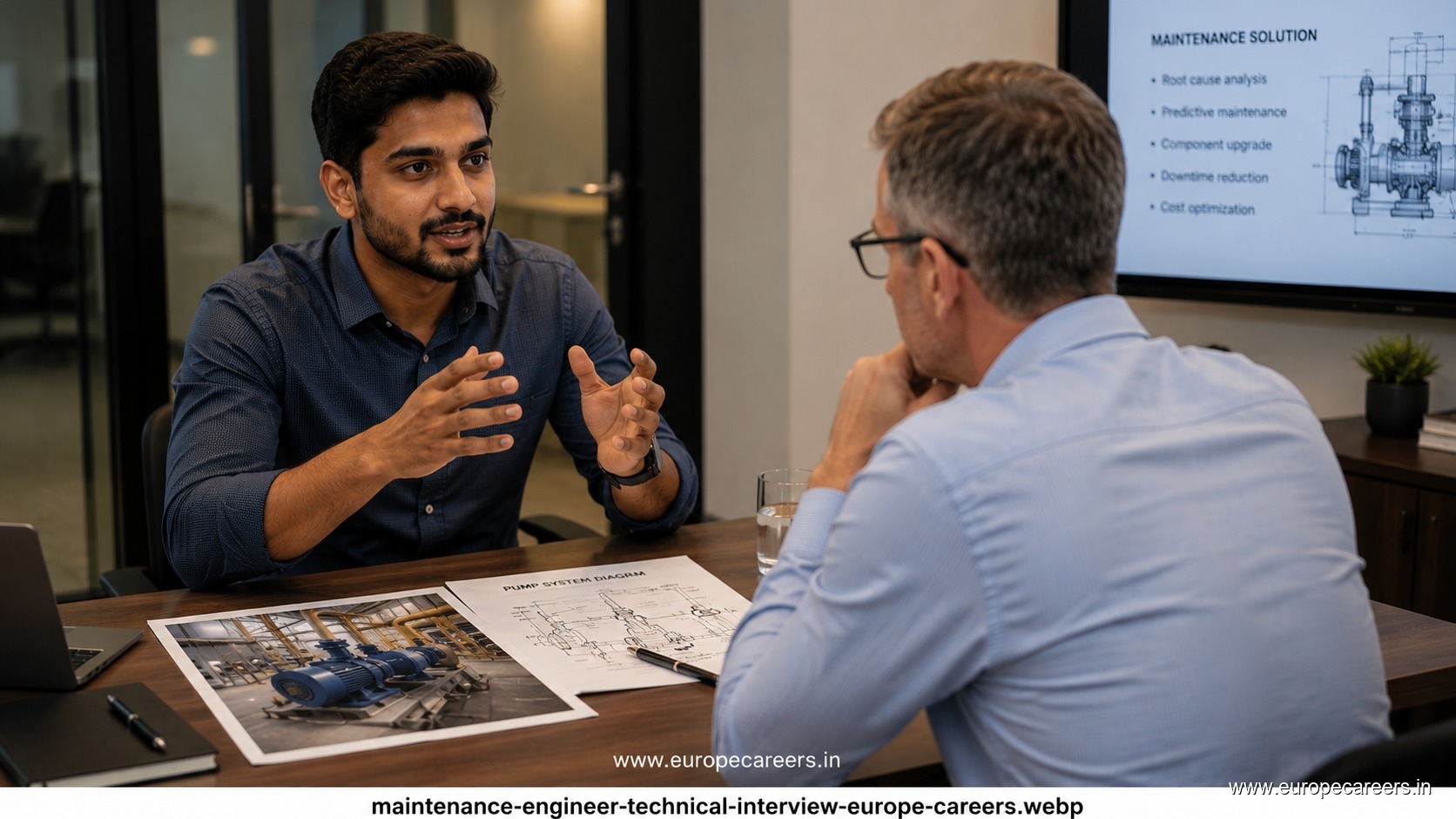
In Germany’s world-renowned dual vocational system, skilled trades workers (electricians, mechatronics technicians, industrial mechanics) possess high technical standing. Employers look for practical experience reading wiring diagrams and technical schematics, repairing industrial machinery, performing preventive maintenance, and following strict occupational safety protocols.
5. Hospitality and Gastronomy
In hotels and culinary establishments, employers evaluate experience in high-volume commercial kitchens, food preparation according to HACCP hygiene regulations, front-desk property management software (PMS), and professional multilingual guest service.
How Indian Professionals Should Present Their Experience
To ensure your Indian work experience resonates with German recruiters, you must format it according to German standards. A traditional Indian resume — often featuring paragraphs of personal bio data, marital status, and vague career objectives — should be replaced with a concise, reverse-chronological Tabellarischer Lebenslauf (tabular CV).
For each professional role on your CV, include the following structured elements:
- Company Name, Location, and Industry: E.g., Apollo Hospitals, Bangalore (500-bed multi-specialty tertiary care hospital). Providing context helps German recruiters evaluate company scale.
- Exact Job Title and Employment Period: List accurate start and end dates in MM/YYYY format.
- Core Responsibilities (4 to 6 concise bullet points): Describe your specific daily tasks and technical workflows using active action verbs.
- Tools, Systems, and Software Used: Explicitly list the tools you handled (e.g., ECG machines, ventilator monitoring, Epic EHR, Python, Docker, Siemens NX).
- Measurable Impact and Achievements: Whenever possible, support your experience with concrete numbers.
The Power of Measurable Results:
Using numbers transforms vague statements into credible evidence. Consider the difference:
- Instead of: “Handled patient care in busy ward.”
Write: “Managed daily clinical care, vitals monitoring, and medication routines for 12 to 15 acute patients per shift in a 30-bed surgical ward.” - Instead of: “Worked on client software projects.”
Write: “Developed 6 core microservices for a banking client using Java Spring Boot, handling over 50,000 daily API requests with zero critical downtime.” - Instead of: “Repaired plant machinery.”
Write: “Performed routine diagnostics and preventive maintenance on 18 hydraulic press systems, reducing unscheduled machine downtime by 14%.”
Work Experience and German Qualification Recognition
One of the most important legal realities for Indian professionals to understand is that practical work experience and formal qualification recognition (Anerkennung) are two completely separate matters.
In Germany, professions are categorized into regulated professions (reglementierte Berufe) and non-regulated professions (nicht reglementierte Berufe):
- Regulated Professions (Nurses, Doctors, Teachers, Consulting Engineers): In these fields, German law requires state licensing (Approbation or Berufserlaubnis). Responsible state recognition offices (Anerkennungsstellen) compare your formal Indian university syllabus, theoretical lecture hours, and clinical training hours against German reference curricula. Having ten years of practical nursing experience in India is valuable for finding an employer, but it does not waive the legal requirement for official recognition. If curriculum hours differ, authorities issue a deficiency notice (Defizitbescheid) requiring an adaptation course or knowledge exam. Learn more in our guide to the Defizitbescheid and recognition process.
- Non-Regulated Professions (IT Developers, Business Analysts, Marketing): In non-regulated fields, employers have broad autonomy to evaluate your skills directly. If your academic degree is accredited on the official Anabin database, employers can hire you based directly on your demonstrated competence and portfolio.
Work Experience and German Immigration Rules (2026 Legal Framework)
Under Germany’s modern Skilled Immigration Act (Fachkräfteeinwanderungsgesetz — FEG), the legal framework recognizes practical professional experience in specific immigration streams:
- Experience-Based Route for Skilled Workers (§ 19c AufenthG / BeschV): Candidates with a state-recognized vocational qualification or university degree in their home country, combined with at least two years of relevant practical experience within the last five years, can access work permits in non-regulated occupations without undergoing full German equivalence recognition, provided their job offer meets statutory wage thresholds.
- Special Provisions for IT Specialists: Experienced IT professionals with at least three years of relevant professional experience within the last seven years, verified technical knowledge, and an qualifying job offer can qualify for residence permits without a formal university degree.
- Opportunity Card (Chancenkarte): Germany’s points-based job search visa awards specific points for documented years of professional experience matching formal qualifications.
Crucial Legal Context: Meeting immigration experience criteria does not automatically guarantee employment. You still need to clear employer selection, secure a binding employment contract (Arbeitsvertrag), and receive consular visa approval. For a complete step-by-step overview, consult the Germany career roadmap from qualification to employment.
Common Mistakes International Candidates Make
Through years of recruiting and evaluating candidates, Europe Careers counsellors frequently encounter these avoidable mistakes:
- Listing Job Titles Without Detailed Duties: Simply stating “Software Developer at Company X” without specifying languages, frameworks, or tools.
- Using Overly Generic Descriptions: Copying generic corporate mission statements or textbook descriptions rather than detailing your own personal contribution.
- Counting Unrelated Experience as Technical Experience: Including non-technical roles or informal internships as senior technical tenure.
- Omitting Standard Tools and Software: Forgetting to mention the specific software (SAP, AutoCAD, EHR systems, JIRA) that German employers use daily.
- Submitting a Multi-Page Narrative Resume: Sending 4 to 5 pages of dense text instead of a clean, structured 2-page tabular CV.
- Inability to Explain Past Work in Interviews: Candidates who write impressive bullet points on their CV but struggle to explain basic technical workflows or clinical steps during a live conversation. Read our guide on how to prepare for your first German job interview.
What German Employers May Ask About Your Experience
During job interviews, German employers focus heavily on practical verification. Prepare concise, factual answers to these realistic questions:
- “What were your core responsibilities on a typical working day in your previous hospital or company?”
- “Which specific diagnostic tools, machinery, or software systems did you operate independently?”
- “Can you describe a challenging technical breakdown or clinical emergency you faced, and the exact steps you took to resolve it?”
- “How did you collaborate with doctors, senior engineers, or cross-functional team members?”
- “How does your hands-on experience in India prepare you to meet the technical standards of our German facility?”
How Europe Careers Helps You Present Your Profile
At Europe Careers, we bridge the gap between Indian qualifications and German workplace standards. We understand what German hiring managers look for and guide candidates through every stage of profile optimization:
- In-Depth Profile Assessment: Evaluating your academic background, university accreditation on Anabin, and the commercial relevance of your work history.
- German Standard CV & Dossier Formatting: Rebuilding your resume into a clean, compelling Tabellarischer Lebenslauf that highlights actionable responsibilities and measurable outcomes.
- Qualification Recognition Strategy: Compiling complete documentation for German recognition offices and advising on adaptation courses where required.
- Workplace-Focused German Training: Intensive language programs from A1 to B2 emphasizing technical and clinical communication.
- Mock Interview Coaching: Preparing you to explain your technical experience clearly, calmly, and professionally in German or English.
- Employer Matching & Relocation Support: Connecting qualified candidates with verified German employers and supporting your post-arrival settlement as outlined in our first 30 days in Germany guide.
Important Transparency Notice: Europe Careers provides career guidance, training, and recruitment support. Official recognition decisions and visa approvals remain under the sole legal jurisdiction of German government authorities and diplomatic missions.
Final Takeaway: Focus on Substance Over Seniority
Moving your career from India to Germany is an achievable and life-changing journey, but it requires aligning with German expectations. German employers do not judge your professional worth by title prestige or mere years on a clock. They value practical competence, technical precision, honest communication, and genuine operational ownership.
When you present your work history with concrete details, measurable achievements, and verifiable tools, you show German employers that your Indian experience is not just a collection of years — it is a solid, reliable foundation for their team.
Frequently Asked Questions
1. Does German work experience have to be gained inside Germany?
No. German employers actively recruit international talent with work experience gained outside Germany. What matters is that your experience reflects verifiable technical standards, modern procedures, and hands-on competence.
2. Can Indian work experience be fully accepted by German employers?
Yes, Indian work experience in healthcare, IT, engineering, and manufacturing is widely respected, provided your resume clearly articulates the specific tools, clinical workflows, and project responsibilities you handled.
3. Does more experience always mean a better job offer in Germany?
Not necessarily. German compensation and hiring align with the specific requirements of the job level. Overqualified candidates who cannot demonstrate directly applicable skills or required German language proficiency may be passed over in favor of candidates with fewer years but closer profile alignment.
4. Can extensive work experience replace formal qualification recognition?
In legally regulated professions (like nursing, medicine, or teaching), no. State authorities must still verify academic curriculum hours against German reference standards. In non-regulated professions (like IT and software development), strong practical experience can often satisfy visa and employer hiring criteria.
5. How should I format my experience on a German CV?
Use a reverse-chronological tabular format (Tabellarischer Lebenslauf). Under each job, list the employer name and location, exact employment dates, 4 to 6 concise bullet points describing specific duties, tools and software used, and measurable results.
6. How many years of work experience are ideal before applying to Germany?
For healthcare roles (nurses), 1 to 2 years of post-qualification clinical ward experience is generally sufficient when combined with B2 German. For IT professionals, 2 to 3 years of hands-on development experience opens broad opportunities. For engineers, 2 to 4 years of specialized technical experience is highly competitive.
Start Your Germany Career Pathway with Europe Careers
Are you ready to showcase your professional experience to leading German employers? At Europe Careers, our experienced career advisors provide end-to-end support — including CV restructuring, German language training, qualification recognition guidance, and employer interview preparation.
Visit: www.europecareers.in
Email: support@europecareers.in