
Why German Apprenticeships Are Different From Indian Vocational Training
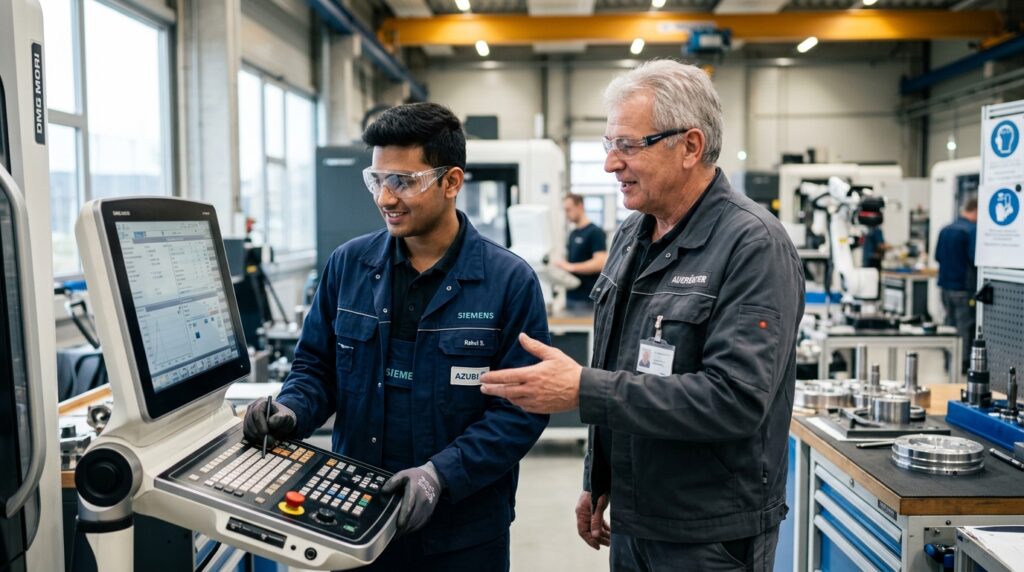
For many Indian students, the word Ausbildung immediately sounds attractive. Learn a profession, work in Germany, receive a training allowance, gain practical experience, and build a career in Europe. On social media, however, Ausbildung is often presented as if it were simply a better version of an Indian ITI course — or as a straightforward route where a student chooses a trade, submits documents, and quickly moves to Germany.
The reality is more structured. German vocational training is built around specific occupations, formal training regulations, companies, vocational schools, practical assessment, workplace responsibilities, and professional standards. Indian vocational education is also broad and practical, with ITIs, apprenticeships, polytechnics, diplomas, skill programmes and industry-linked training. The two systems should therefore not be reduced to a simple “Germany versus India” comparison.
At Europe Careers, we speak with Indian students and professionals who are interested in nursing, IT, hospitality, engineering, mechatronics, electrical work, automotive trades and other career pathways in Europe. One of the most common questions is: “If I already have ITI or vocational training in India, why would I need Ausbildung in Germany?”
The answer depends on the occupation, the qualification, the employer, the training route and the candidate’s long-term goal. An Indian ITI qualification can provide useful technical foundations, but it does not automatically become a German Ausbildung qualification. At the same time, an Ausbildung is not simply an extended classroom course. In a company-based dual programme, the workplace itself becomes a major part of the learning environment.
To make the difference easier to understand, this guide breaks down the most common assumptions Indian students make about German apprenticeships and compares them with the practical reality of vocational education and training in India.
Myth 1: Ausbildung Is Just the German Version of ITI
The Myth: If ITI is vocational training in India, Ausbildung is simply the German name for the same type of course.
The Reality: Both systems are connected to occupational skills, but they are organised differently. ITI is part of India’s large vocational education and skills ecosystem and offers trade-based training in areas such as electrician, fitter, welder, mechanic and many other occupations. India also has apprenticeships, polytechnics, diplomas and short-term skill programmes.
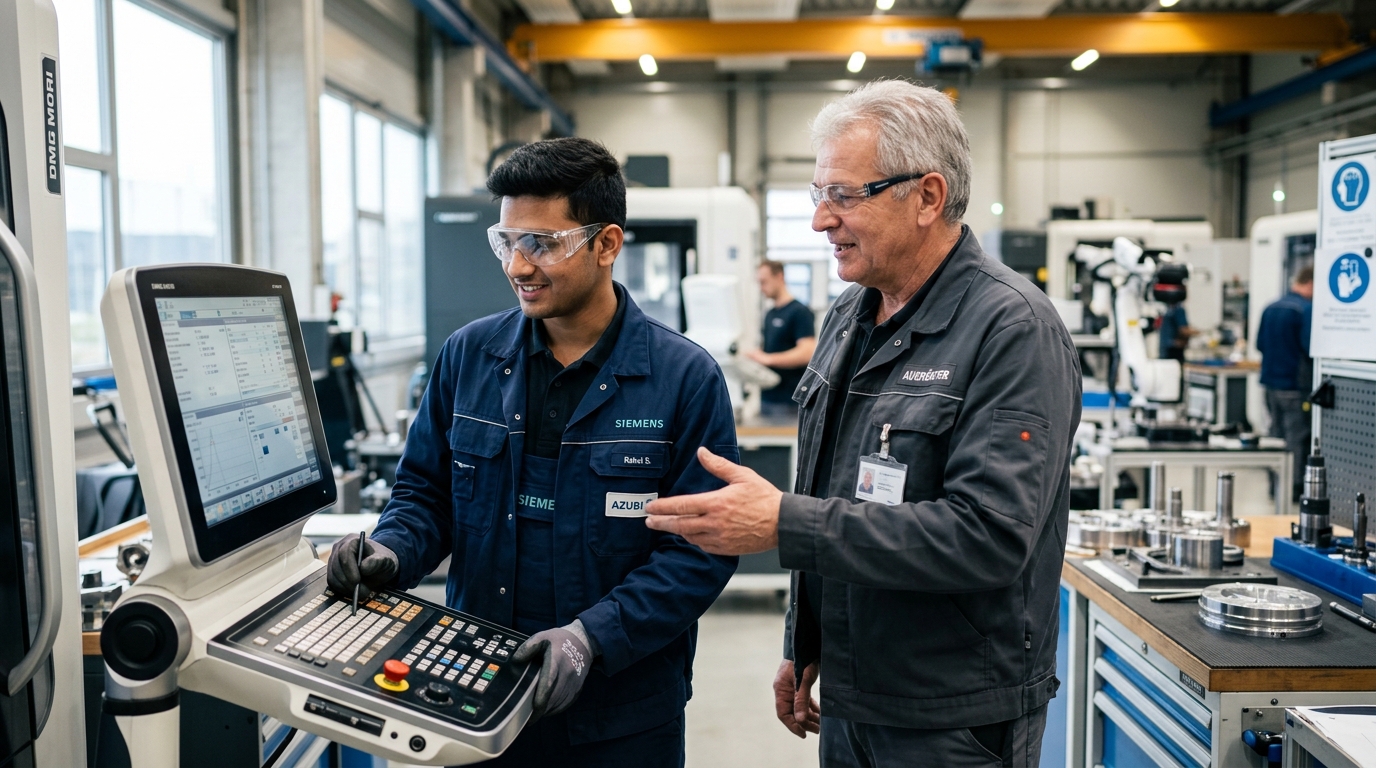
In Germany, Ausbildung is a broad term for vocational training. One important model is the dual system, where training is connected to both a company and a vocational school. The learner works and trains in an Ausbildungsbetrieb while also attending a Berufsschule. The training is organised around a recognised occupation rather than simply a collection of classroom hours.
That difference changes the experience of the learner. A student in an ITI may spend substantial time in workshops and practical classes, while an apprentice in a German dual programme can spend a significant part of the training inside an actual company. The company is not merely providing an optional internship. It is part of the formal training arrangement.
It is also important to remember that there is no single “Indian vocational training model”. An ITI student, a polytechnic diploma holder, an apprentice working in an industrial company and a student completing a short-term skill programme may all have very different experiences.
The useful comparison is therefore not “Which certificate is better?” It is “How is the training organised, who provides the training, how is competence assessed, and what occupational qualification does the programme lead to?”
Myth 2: Ausbildung Means You Are Simply a Student
The Myth: An Azubi is basically a student who attends classes and occasionally goes to a company for practical exposure.
The Reality: In company-based Ausbildung, the learner occupies a different position from a conventional full-time student. The person is learning a profession while participating in the working environment of the training company.
The German term Auszubildende, commonly shortened to Azubi, refers to a person undergoing vocational training. The company has training responsibilities, and the apprentice gradually learns how professional work is carried out. This can include following safety procedures, using equipment, communicating with colleagues, documenting work, following schedules and completing tasks under supervision.
This does not mean the apprentice is expected to perform like an experienced employee from the first week. Training is progressive. A learner may begin by observing, preparing materials, learning workplace procedures and performing basic tasks. As competence develops, responsibilities can increase.
For an Indian student, this can be one of the biggest cultural changes. You are still learning, but the learning takes place inside a real organisation. Your punctuality, communication, behaviour and willingness to follow instructions become part of the professional learning experience.
That is why students considering Ausbildung should not think only about the classroom. They should also ask themselves whether they are comfortable learning in a workplace, receiving feedback, accepting responsibility and communicating in German.
Myth 3: The Company Is Just a Place for Practical Training
The Myth: The important learning happens at vocational school and the company is mainly where students practise what they have already learned.
The Reality: The relationship works in both directions. Classroom learning supports workplace tasks, while workplace experience gives practical meaning to what is taught in vocational school.
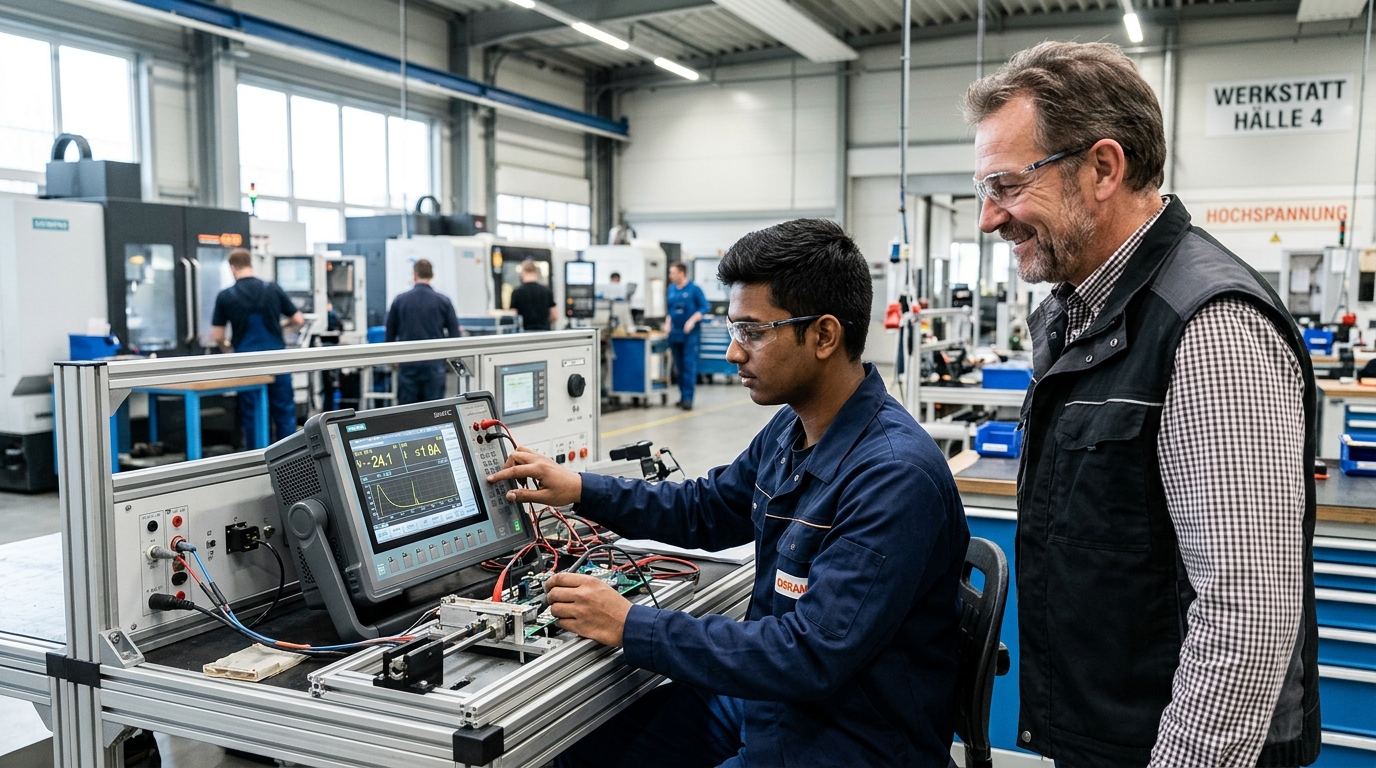
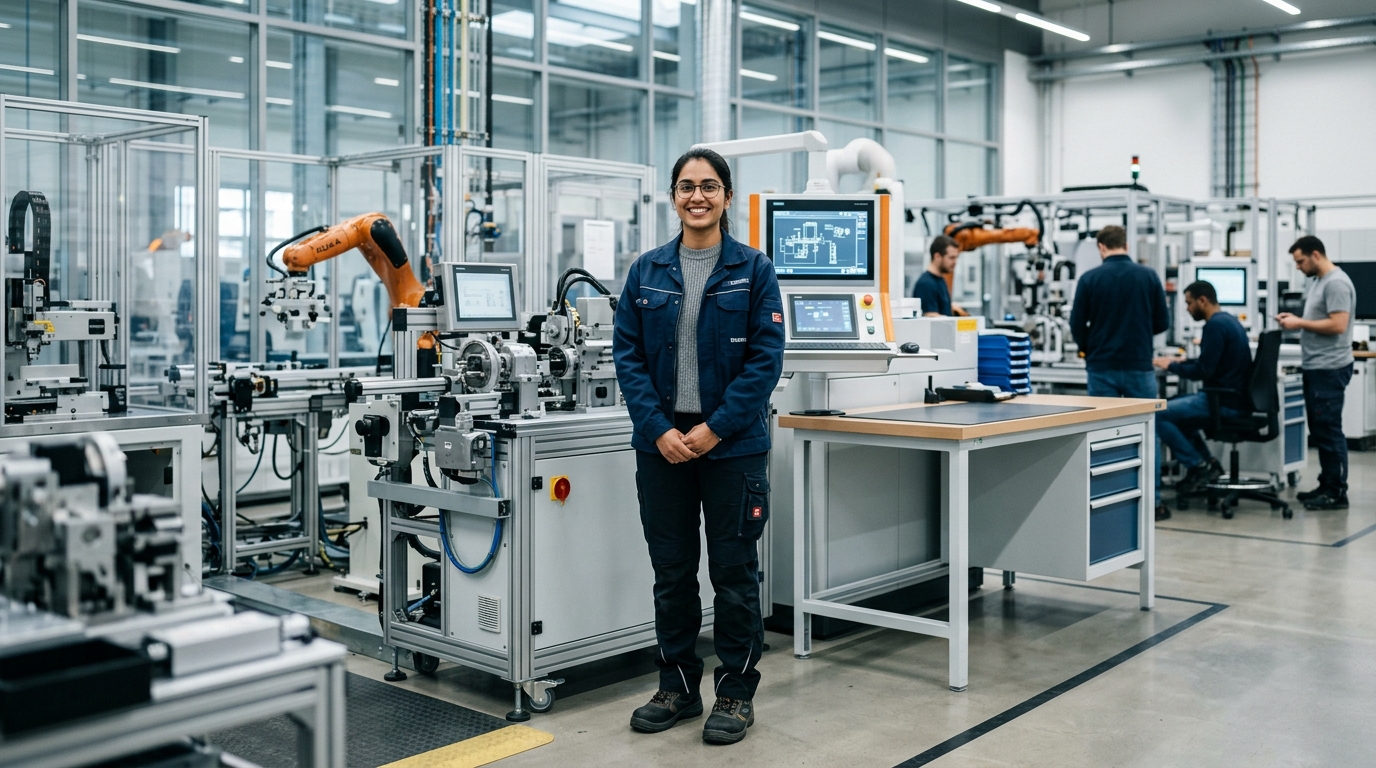
Imagine a student training in mechatronics. At school, the learner may study electrical principles, mechanical systems, technical documentation and control technology. At the company, those concepts can appear through machines, components, maintenance activities, testing and troubleshooting.
An electrical apprentice may study circuits and safety principles and then encounter those principles while working with real installations and equipment. A hospitality trainee may learn service concepts at school and then experience real guests, time pressure, hygiene procedures and teamwork in a hotel or restaurant. An IT apprentice may study systems or software concepts and then apply them to real business processes.
The company therefore becomes a learning environment in its own right. The learner sees how professionals communicate, how tasks are prioritised, how problems are reported and how quality standards are maintained.
Germany’s dual vocational system also places an important responsibility on companies and trained personnel who supervise apprentices. The objective is not simply to obtain free labour. The training arrangement is designed around the development of occupational competence.
Indian apprenticeships can also provide real workplace exposure, so this should not be described as something that exists only in Germany. The key difference is the formal integration of the company into the recognised dual training structure.

Myth 4: Learning While Working Means You Start as a Fully Paid Professional
The Myth: Because you work in a company during Ausbildung, you immediately earn the same type of salary as a qualified employee.
The Reality: Ausbildung is training. Company-based programmes normally involve a training allowance, but the amount is not the same thing as a standard professional salary and can vary according to the occupation, employer and year of training.
This distinction matters when planning a move from India. Candidates sometimes see a monthly figure online and immediately convert it into Indian currency without considering deductions and living costs. A training allowance must be considered alongside rent, food, transport, insurance, personal expenses and other costs.
The financial arrangement can also matter for the visa process. Current German government guidance sets specific livelihood requirements for vocational training routes, and the relevant thresholds depend on the type of training and the applicant’s circumstances. Candidates should always check current official requirements rather than relying on an old social-media post.
The right mindset is therefore simple: Ausbildung combines professional training with a training allowance; it should not be treated as a shortcut to a full professional salary.
Myth 5: An Indian ITI Certificate Automatically Equals a German Ausbildung
The Myth: If you have completed ITI in India, German authorities will automatically treat you as having completed the equivalent German apprenticeship.
The Reality: Previous Indian vocational education can be useful, but qualification comparison and recognition depend on the specific occupation, qualification, purpose and competent authority.
Suppose an Indian student has completed an ITI electrician trade. That training demonstrates previous occupational learning and may provide practical knowledge that is relevant to a German electrical occupation. However, it does not mean that the Indian certificate is automatically identical to a German recognised training qualification.
There is an important difference between having skills, holding a qualification and having that qualification formally recognised for a particular purpose. These are not interchangeable concepts.
For some occupations and immigration routes, previous qualifications can be highly relevant. For other occupations, an employer may be looking specifically for candidates who complete a German training programme. Regulated professions can have additional recognition requirements.
The best approach is to identify the exact German occupation first, understand its training requirements and then assess how your Indian education and experience fit into that pathway.
Myth 6: The Main Difference Is That Germany Has More Practical Training
The Myth: Indian vocational education is mostly theoretical, while German vocational training is practical.
The Reality: India already has extensive practical vocational education. ITIs have workshops, apprenticeships place learners in companies, and many technical institutions have industry partnerships. The deeper difference is how practical learning is connected to the formal training structure.
A useful way to think about the German dual model is that the learner repeatedly moves between knowledge, application, feedback and assessment.
A concept learned in vocational school can appear in the workplace. A workplace problem can make a theoretical concept easier to understand. Feedback from a trainer can identify a weakness. The learner then gets another opportunity to practise and improve.
This creates a continuous connection between theory and occupational performance.
The distinction becomes especially visible in safety-critical occupations. Knowing the theory of electrical safety is one thing. Applying safety procedures correctly around real equipment is another. Knowing the principles of customer service is different from managing an actual customer interaction when the workplace is busy.
So the difference is not simply “practical versus theoretical”. It is about how learning is integrated with real occupational responsibilities.
Myth 7: Vocational School Is Just Another College
The Myth: Once you have a training contract, the school component is secondary and mainly administrative.
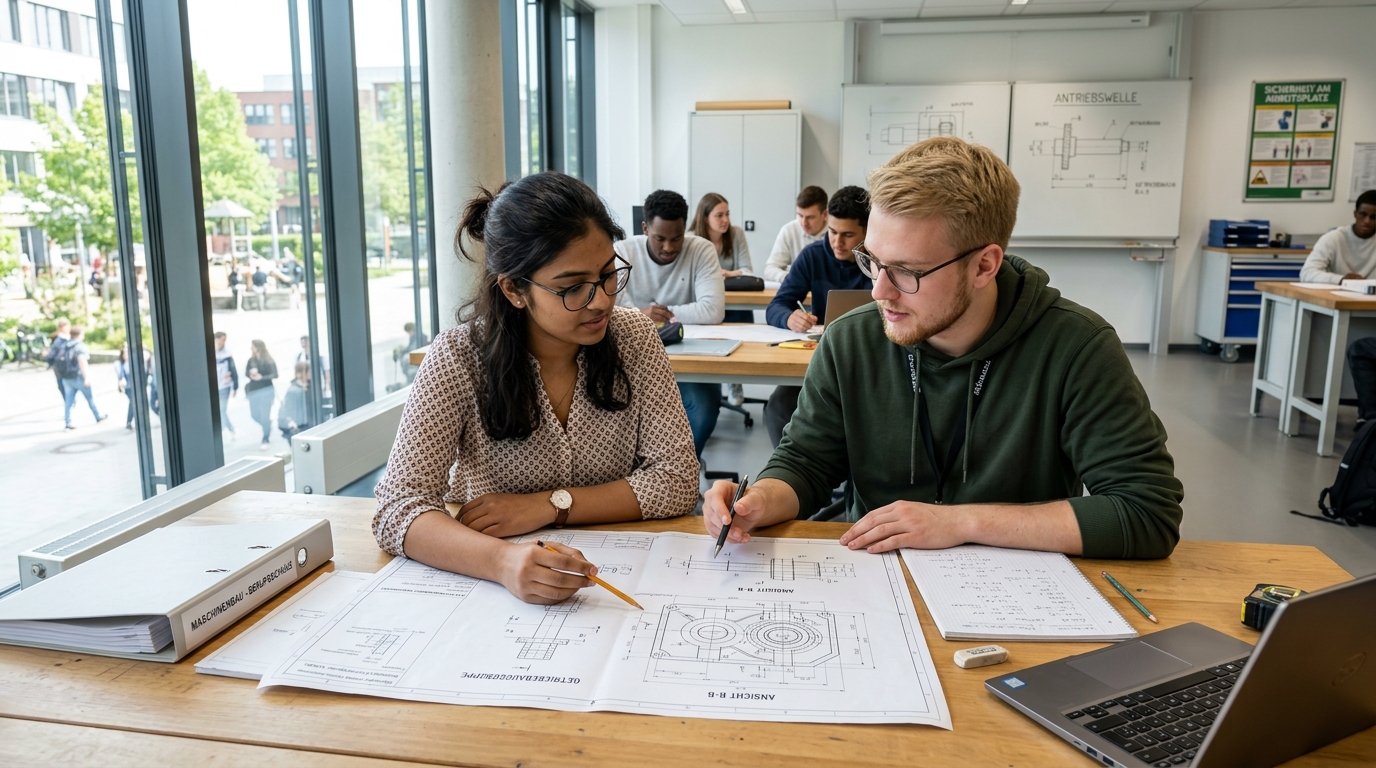
The Reality: Vocational school is an important part of the learning structure. The exact schedule varies by occupation and training arrangement, but school-based learning provides the theoretical and occupation-related foundation that supports workplace competence.
Students may study technical principles, calculations, occupational theory, documentation, regulations, communication and other knowledge relevant to their profession. The objective is not to reproduce a university curriculum. It is to prepare learners to understand and perform their occupation.
For an Indian student, the German school environment can therefore feel different from both a conventional college and an ITI classroom. The learner is studying as part of an occupational pathway that is connected to a real company and a defined profession.
This is also why German language ability matters so much. Understanding a technical task is not enough if you cannot understand the teacher’s explanation, read instructions, communicate with your trainer or complete assessments.
Myth 8: Passing B1 German Is the End of Language Preparation
The Myth: Once you obtain the required German certificate, you can stop worrying about language.
The Reality: A language certificate is an important milestone, but workplace communication is a continuing skill.
A student may know the grammar needed for an examination and still struggle when a trainer speaks quickly, a colleague uses a regional expression, a technical instruction contains unfamiliar vocabulary, or several people are discussing a task at the same time.
This is particularly relevant for Ausbildung because language appears throughout the day. You may hear instructions in the workshop, read safety information, speak with colleagues, attend vocational school, complete written work and communicate with supervisors.
Current official German guidance generally refers to B1 German for vocational training visa purposes, depending on the individual route and circumstances. Employers or specific programmes can have their own expectations. Candidates should therefore distinguish between the minimum formal requirement and the language ability needed to function comfortably in the occupation.
This is why candidates should continue improving their German after reaching B1. Technical vocabulary, workplace phrases and professional communication become increasingly important. Our guide on German language levels explained through real workplace situations covers this difference in more detail.
Myth 9: Ausbildung Is Easy Because You Are Still a Learner
The Myth: Since you are an apprentice, the company will not expect professional behaviour.
The Reality: Training is designed for learning, but learning takes place within a professional environment. Punctuality, attendance, communication, safety, reliability and willingness to accept feedback matter.
An apprentice does not need to know everything. That is the point of training. But an apprentice is expected to take the training seriously.
For an Indian candidate, this can require a change in mindset. In some educational environments, students are accustomed to preparing primarily for examinations. In a workplace, the question is often more practical: Did you understand the instruction? Did you complete the task correctly? Did you follow the safety procedure? Did you communicate the problem early? Did you arrive on time?
Small habits can therefore become part of professional development. Keeping notes, asking questions clearly, checking work before submitting it and informing a trainer when something is unclear can all help a learner progress.
Myth 10: Every Ausbildung Has the Same Structure
The Myth: Once you understand one Ausbildung, you understand all Ausbildung programmes.
The Reality: Ausbildung is a broad category. The exact structure depends on the occupation, training regulation, company, vocational school and type of programme.
A mechatronics trainee should not expect the same daily routine as a hospitality trainee. An IT apprentice will encounter different tools and workplace processes from an automotive technician. Healthcare-related training can have its own regulatory and professional requirements.
Germany also has school-based vocational training in addition to company-based dual training. For international applicants, the admission process, financing, visa requirements and training structure can therefore differ.
This is why students should never choose a programme solely because an advertisement says “Ausbildung in Germany”. The important questions are: Which occupation? Which company or school? What qualification? What training content? What language requirement? What assessment? What financial arrangement?
Myth 11: Ausbildung Is a Shortcut to Germany
The Myth: If university is expensive or competitive, Ausbildung is the easy alternative for entering Germany.
The Reality: Ausbildung is a serious professional pathway with its own selection and preparation requirements.
A candidate may need German language skills, appropriate educational documents, a suitable occupational profile, a training place, a strong application and the correct immigration documentation. Employers make their own selection decisions, and government authorities separately decide visa and residence matters.
The candidate also needs to be comfortable with the actual profession. Choosing hospitality simply because it offers a pathway to Germany is very different from choosing hospitality because you genuinely want to work in hotels, restaurants or guest services.
The same applies to IT, electrical work, mechatronics, automotive technology and other trades. The occupation should come before the destination.
Myth 12: Any German Employer Will Accept Any International Candidate
The Myth: Because Germany needs skilled workers, employers will overlook weak applications or an unsuitable background.
The Reality: German employers recruit for specific roles. They may evaluate educational background, motivation, language ability, practical exposure, technical knowledge and whether the candidate fits the training requirements.
An international applicant is therefore competing for a particular training opportunity, not simply for “a place in Germany”. A well-prepared application should show why the candidate has chosen that occupation and what previous experience is relevant.
For an ITI student, this could mean explaining workshop experience, tools used, practical projects and technical interests. For someone changing fields, it may mean explaining the reason for the career change and demonstrating genuine preparation.
The CV should not simply list certificates. It should help an employer understand what the candidate has actually learned and done.
Myth 13: You Only Need to Prepare Documents After Receiving a Training Contract
The Myth: Documentation can be handled at the end because the application itself is the only important step.
The Reality: Good preparation starts much earlier.
Candidates should organise educational certificates, mark sheets, identity documents, work experience evidence and language certificates in advance. Depending on the pathway, additional translations, authentication, recognition or visa documentation may be required.
Starting late can create unnecessary pressure, especially when an employer expects a candidate to join within a particular period. It is better to understand the document journey before applications become urgent.
Candidates should also keep digital copies organised and ensure that names, dates and qualification details are consistent across documents. A small discrepancy can create avoidable questions during an application.
Myth 14: Completing Ausbildung Automatically Means a Permanent Job
The Myth: Once you finish Ausbildung, the company must keep you permanently and your career is guaranteed.
The Reality: Completing recognised vocational training can provide a valuable qualification and workplace experience, but employment after training depends on the employer, occupation, performance, available positions and labour-market conditions.
Some graduates continue with their training company. Others apply to different employers. Some specialise in a technical area or pursue further vocational qualifications.
For international graduates, career planning should also be separated from immigration planning. Completing vocational training can open routes to qualified employment and further residence options under the applicable rules, but no training programme should be presented as an automatic guarantee of permanent residence.
Current official German guidance states that people who successfully complete vocational training can, subject to the applicable conditions, receive a residence permit for a period of up to 18 months to look for qualified employment. The exact residence route should always be checked against current official rules and the individual situation.
What an Indian ITI Student Can Bring to Ausbildung
The comparison should not make Indian vocational education sound irrelevant. An Indian ITI or diploma background can give a candidate something valuable: familiarity with practical work.
A student who has worked with tools, electrical systems, machines, workshop procedures, technical drawings or maintenance tasks may already understand the basic culture of hands-on learning. That can be useful when approaching a German occupational pathway.
Previous practical experience can also help a candidate explain why a particular occupation has been chosen. An employer can see a logical connection between the applicant’s previous education and the proposed training.
The challenge is to communicate that experience clearly. “I completed ITI” is less informative than explaining the trade, workshop tasks, equipment used, projects completed and practical responsibilities handled.
A Realistic Example: From ITI in India to Ausbildung in Germany
Consider a fictional candidate named Rahul. He completes ITI in India in a technical trade and spends some time working locally. He enjoys practical tasks but wants to develop a longer-term career in a European industrial environment.
Rahul does not begin by assuming that his ITI certificate is identical to a German qualification. Instead, he researches German occupations that match his interests and checks the actual training content.
He then begins German language preparation. At first, his focus is general German. As his level improves, he starts learning technical words related to tools, safety, machines and workplace instructions.
Next, Rahul prepares his application. His CV includes his ITI trade, practical work, tools and equipment he has used, relevant projects and any employment experience. His motivation letter explains why he wants the chosen occupation rather than simply saying that he wants to move to Germany.
After applying, Rahul may receive interviews from some employers and rejections from others. A rejection does not necessarily mean his qualification is useless. It may mean the employer selected another candidate, required different language ability or wanted a different background.
If Rahul receives a training contract, he then moves into the visa and relocation process. The training contract is important, but it does not itself guarantee visa approval. Immigration authorities separately assess the application against the applicable requirements.
After arriving, Rahul begins learning the company’s processes. During the early months, he may perform basic tasks, observe experienced workers and learn safety procedures. Gradually, he receives more responsibility.
At vocational school, he studies the theoretical side of the occupation. The two environments begin to reinforce each other: what he learns at school becomes easier to understand at work, and workplace situations give context to what he learns in class.
The example is fictional, but it illustrates the mindset required. Ausbildung is not simply “getting a German certificate”. It is a period of structured professional development.
What Indian Candidates Should Prepare Before Applying
Replacing assumptions with preparation is the most useful approach. Before applying for an Ausbildung, an international candidate should work through a practical checklist.
- Choose the occupation first: Understand the actual work, not just the name of the programme.
- Review your education: Check how your ITI, diploma, school education or previous training relates to the intended occupation.
- Build German language ability: Prepare beyond examination vocabulary and practise workplace communication.
- Understand the company component: Research what apprentices actually do during training.
- Prepare a professional CV: Describe practical tasks, tools, projects and work experience clearly.
- Prepare for interviews: Be ready to explain your motivation, technical background and understanding of the occupation.
- Organise documents early: Keep certificates, marksheets, identity documents and language records consistent and accessible.
- Plan finances realistically: Consider training allowance, deductions, accommodation, transport, food and emergency savings.
- Check official visa information: Requirements can change, so use current German government sources.
- Understand that selection is competitive: Applying does not mean receiving a training contract.
What Makes the German Workplace Different for an Indian Trainee?
The difference is not limited to training structure. An Indian trainee may also need time to understand workplace communication and expectations.
Punctuality matters. Instructions may be communicated directly and briefly. Safety procedures may be documented in detail. Employees may expect questions to be raised early rather than allowing a mistake to continue silently.
Documentation can also be important. A technical task may involve recording measurements, checking a work order, updating a system or documenting a problem. These activities are part of professional work, not simply paperwork.
Workplace communication is another area where German language becomes practical. Knowing grammar is useful, but knowing how to ask for clarification, report a problem, confirm an instruction and communicate respectfully with a supervisor is equally important.
Candidates can prepare for this before travelling. Our guide on German workplace habits Indian professionals should know explains several of these practical differences.
Ausbildung, Work Experience and Long-Term Career Planning
One reason international candidates consider Ausbildung is that it can connect formal learning with actual work experience. This can be particularly relevant for young people who want to develop a profession rather than spend several additional years in purely academic education.
However, the long-term value of the pathway depends on the occupation chosen and the effort invested during training.
A learner who treats the company as a place to develop skills, asks questions, improves German and takes feedback seriously may finish training with more than a certificate. They may also have practical workplace experience, professional references and a clearer understanding of their occupation.
Career planning should therefore start before the Ausbildung begins. Candidates should ask what the occupation can lead to after training, what additional qualifications are available and which skills are likely to remain relevant as the industry changes. Candidates can also use our Germany career roadmap from qualification to employment when planning the wider pathway.
German vocational occupations are also not frozen in time. Training occupations can be modernised when technologies and workplace requirements change. This means candidates should look at the current training regulation and occupation rather than relying on information from several years ago.
How Europe Careers Supports Candidates Exploring Ausbildung
At Europe Careers, our role is to help Indian candidates understand the pathway before they commit to it. The objective is not simply to send an application. It is to build a preparation process around the candidate’s education, occupation, language level and career goals.
Depending on the programme and service agreement, support can include:
- Profile assessment: Reviewing educational background, practical experience and preferred occupations.
- Career counselling: Explaining suitable vocational pathways and helping candidates understand the nature of the work.
- German language preparation: Structured A1 to B2 training with attention to everyday and workplace communication.
- CV and application support: Presenting technical education and practical experience clearly.
- Interview preparation: Helping candidates practise common questions and explain their motivation professionally.
- Employer opportunity guidance: Supporting candidates in identifying relevant opportunities where available.
- Documentation guidance: Helping candidates organise application and visa-related documents.
- Pre-departure preparation: Preparing candidates for workplace expectations, accommodation, daily life and relocation.
Important note: Europe Careers does not control employer selection, government visa decisions, qualification assessments or residence decisions. Employers and government authorities retain responsibility for their respective decisions. Candidates should therefore view training and recruitment support as guidance and preparation, not as a guarantee of employment or visa approval.
Frequently Asked Questions
1. What is Ausbildung in Germany?
Ausbildung is the German term commonly used for vocational training. In the dual system, company-based practical training is combined with learning at a vocational school. The exact structure depends on the occupation and training arrangement.
2. Is Ausbildung the same as ITI?
No. Both are vocational education pathways, but they belong to different national systems. ITI is part of India’s vocational training ecosystem, while German dual Ausbildung formally connects a recognised occupation with company-based training and vocational-school learning.
3. Can an Indian ITI student apply for Ausbildung?
An Indian ITI student can explore suitable Ausbildung opportunities if the individual meets the requirements of the specific occupation, employer and immigration route. Previous vocational training can be useful but does not automatically guarantee admission.
4. Does Ausbildung combine work and study?
Company-based dual Ausbildung combines workplace training with vocational-school learning. The exact schedule varies by occupation. School-based vocational training follows a different structure.
5. Is Ausbildung paid?
Company-based vocational training generally includes a training allowance, but the amount varies by occupation, employer and year of training. It should not be confused with the salary of a fully qualified professional.
6. Do I need German for Ausbildung?
German is generally essential because vocational-school learning, workplace communication and assessments are conducted in German in the relevant programmes. Current official guidance generally refers to B1 for vocational-training visa purposes, although exact requirements depend on the route and circumstances.
7. Is B1 German enough for the whole Ausbildung?
B1 may satisfy a formal requirement in relevant circumstances, but candidates should continue improving their language. Technical vocabulary, workplace instructions, school lessons and professional communication can require stronger practical German.
8. Does an Indian ITI certificate automatically become a German qualification?
No. Previous education, skills, qualification comparison and formal recognition are separate questions. The answer depends on the occupation, qualification and purpose of the assessment.
9. Is Ausbildung easier than university?
It is different rather than simply easier. Ausbildung combines occupational learning, workplace responsibilities, vocational school and assessment. Candidates need to be comfortable with practical work and professional discipline.
10. Can I work after completing Ausbildung?
Completing vocational training can provide a foundation for qualified employment, subject to available opportunities and the applicable employment and immigration rules. A permanent job is not automatically guaranteed.
11. Can I stay in Germany after Ausbildung?
There are residence routes for eligible graduates, including provisions that can allow successful vocational-training graduates to remain for a period to seek qualified employment. The exact conditions depend on the individual case and current immigration rules.
12. Is there one standard Ausbildung programme?
No. Training content, duration, schedules, assessments and workplace environments vary by occupation. Candidates should research the exact occupation rather than relying on a generic description of Ausbildung.
13. Can I apply for Ausbildung directly from India?
International candidates can apply from abroad for suitable training opportunities. If a visa is required, the applicant must separately satisfy the applicable German immigration requirements.
14. What should I include in my CV for Ausbildung?
Include education, ITI or diploma details, practical experience, relevant projects, tools or equipment used, technical skills, language level and other information relevant to the occupation. Focus on what you can actually do, not only on certificates.
15. Does Europe Careers guarantee an Ausbildung placement?
No responsible organisation can guarantee an employer’s selection decision or government approval. Europe Careers can provide training, application guidance, counselling and preparation, while employers and authorities make their own decisions.
Conclusion: Do Not Compare Certificates — Understand the Training System
The biggest difference between German apprenticeships and Indian vocational training is not that one country has practical education and the other does not. India has a large vocational ecosystem with ITIs, apprenticeships, polytechnics, diplomas and industry-linked programmes.
The more important difference is how the German dual system connects the occupation, the training company, vocational school, workplace learning, occupational standards and formal assessment. For a company-based Ausbildung, the workplace is not simply an optional internship. It is one of the central places where occupational competence develops.
For an Indian student, this can feel very different. You may be learning German while learning technical terminology. You may attend vocational school while working inside a company. You may receive feedback from a trainer and immediately apply it to a practical task. You may be responsible for professional behaviour while still being a learner.
That is why Ausbildung should not be marketed or understood as a shortcut to Germany. It is a professional training pathway. The strongest candidates are usually the ones who understand the occupation, prepare their German, organise their documents, communicate their practical experience clearly and approach the workplace with a willingness to learn.
If you are considering Ausbildung from India, start with the profession, not the destination. Understand the work. Understand the training. Understand the language requirement. Understand your own qualifications. Then review the employer, financial and visa requirements using current official information.
A realistic understanding of the system can make the transition easier because you know what you are actually preparing for. The goal is not simply to reach Germany. The goal is to build the skills, qualification and professional foundation needed for the career you want to develop there.
Explore Your Ausbildung Pathway with Europe Careers
Planning vocational training in Germany? Europe Careers can help you understand suitable occupations, German language preparation, applications, interviews, documentation and relocation planning.
Visit: www.europecareers.in
Email: support@europecareers.in