
From India to Germany: Best Ausbildung Courses & Career Pathways (2026 Guide)
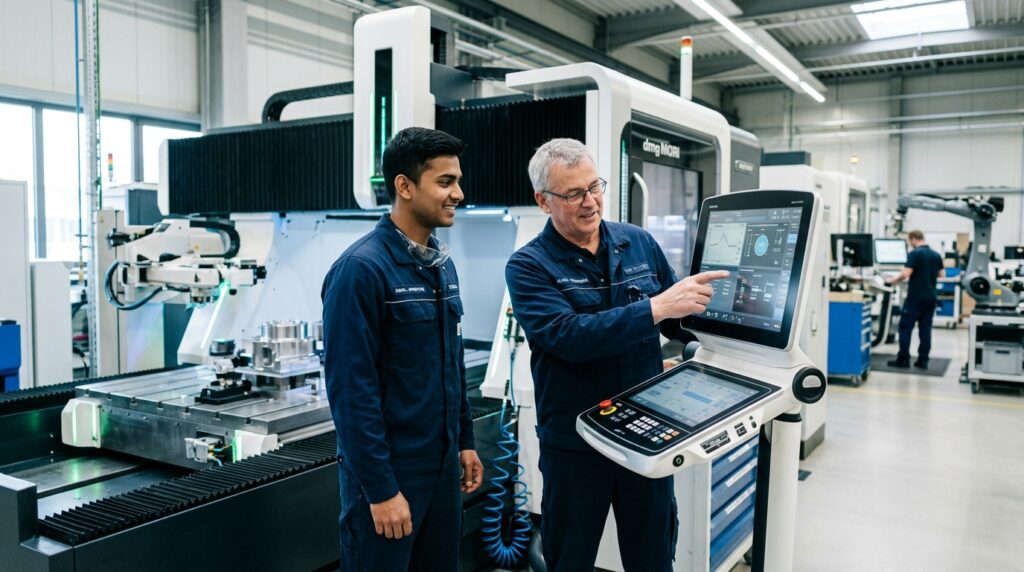
The first time one of our students at EuropeCareers walked into a German manufacturing plant for his Mechatronics training, he wasn’t prepared for the smell. Not the smell of chemicals, but the aroma of fresh coffee mixed with machine oil. He wasn’t staring at a blackboard from a wooden bench. He was holding a real company badge, standing on the production floor, looking at a Mercedes-Benz engine he would eventually learn to diagnose.
For Indian students caught between the sky-high tuition fees of traditional study-abroad destinations and the intense theoretical grind of the Indian education system, Germany’s dual vocational training system feels like a secret passageway.
Here at EuropeCareers, we’ve guided hundreds of Indian students through this very journey. It’s not an unpaid internship. It’s not a low-paying odd job. It’s a salaried career launchpad.
If you’re planning to move to Germany in 2026, this is your human, no-fluff guide—straight from our consultancy desk to your living room.

What Exactly Is an Ausbildung?
Let’s drop the formal jargon. “Ausbildung” translates to “apprenticeship” or “vocational training,” but that doesn’t capture the magic.
It’s a dual system: You sign a contract with a company. For 2 to 3.5 years, you split your life between a state-run vocational school (Berufsschule) and the hands-on reality of your employer’s workplace.
You aren’t a customer; you’re a colleague. You spend 1-2 days a week in the classroom, and the rest of the week applying that theory on the job. And yes, you get a monthly salary that increases every year.
At EuropeCareers, we often explain this to parents as the German answer to the global skill gap. They don’t just want to hire Indians later; they want to mold you now, in their culture, with their precision.
The Indian Parent Pitch
We know the anxious question burning in your living room: “Beta, yeh degree hai ya nahi?”
Relax. It’s a globally recognized, state-certified qualification. In the German hierarchy of respect, a skilled Mechatroniker (Mechatronics Technician) often commands more job security and respect than a generic graduate degree. It’s a direct ticket to a Permanent Residence permit.
Why 2026 is a Golden Window (and Why We’re Busy)
If you’re reading this, preparing for the 2026 intake (which starts mostly in August/September), the timing is poetic.
- The India-Germany Skilled Migration Pact: The paperwork is getting smoother. With our partnerships, EuropeCareers has seen bureaucracy slowly bending towards English-speaking, skilled Indian workers, although German remains the golden key.
- Massive Shortage of Apprentices: German companies are facing a demographic crisis. In 2024, nearly 200,000 training positions remained vacant. Nursing homes, trade businesses, and IT firms are practically rolling out red carpets for international talent.
- The “Canada Fade”: With traditional destinations tightening visa rules, Germany’s affordable, structured path toward migration looks like a lifeboat for Indian students.
Top Ausbildung Courses Handpicked for Indian Students in 2026
At EuropeCareers, we tell our students not to just follow the crowd. Pick a field where the natural Indian “jugaad” problem-solving skill shines.
1. Nursing & Elderly Care (Pflegefachmann/frau)
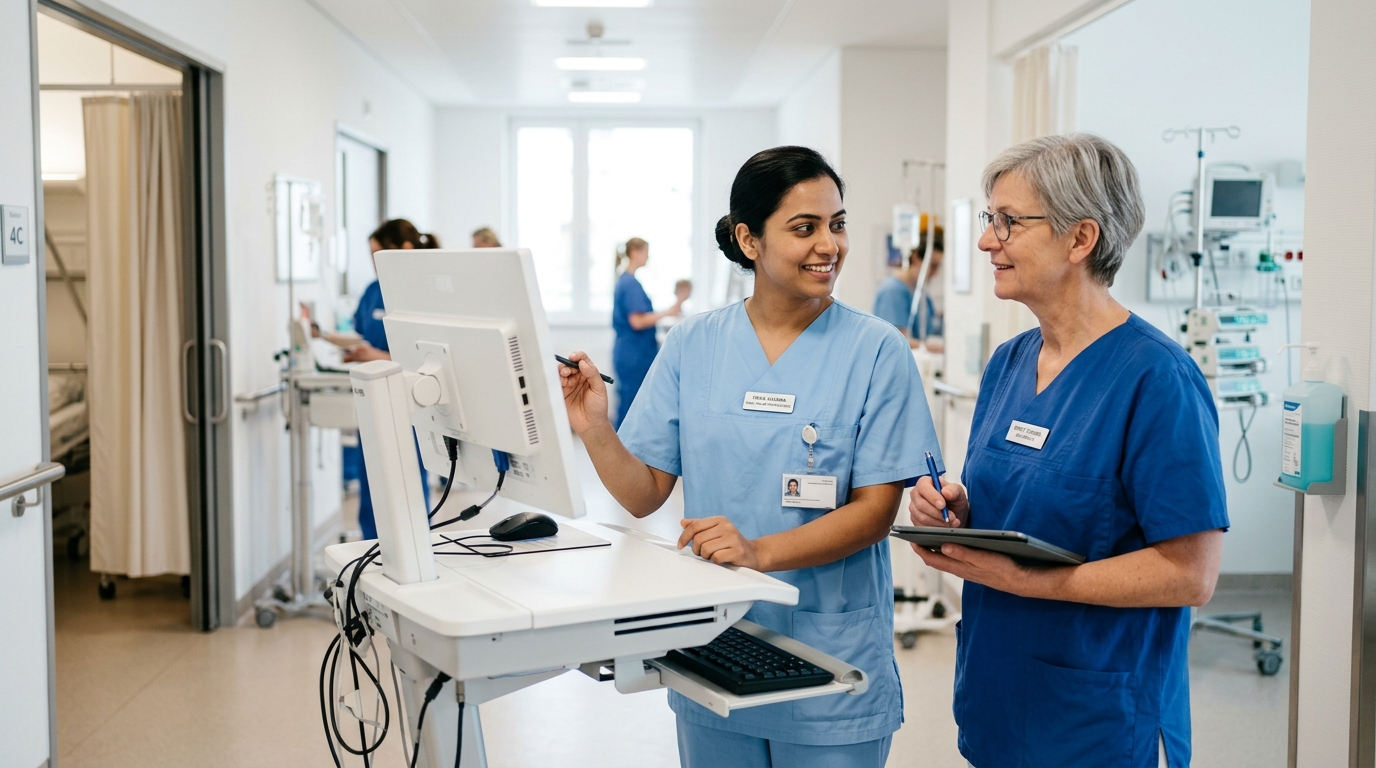
This is the most in-demand profile. The German healthcare system would collapse without foreign nurses.
- The Honest Reality: It’s physically and emotionally demanding. The language barrier with elderly German patients can feel isolating.
- The EuropeCareers Advantage: We have direct tie-ups with hospital chains offering high training stipends (€1,200–€1,450/month gross) and a 100% job guarantee post-training. If you have empathy and resilience, this is the fastest route to German PR.
2. Mechatronics (Mechatroniker/in)
The sweet spot between electrical, mechanical, and IT.
- The Vibe: You’ll be in an industrial plant fixing robotics arms or maintaining automated conveyor belts.
- Indian Angle: Perfect for the engineering-minded student who loves tinkering. Stipends usually average €1,000 – €1,200/month.
3. IT Specialist (Fachinformatiker/in)
There are two paths: System Integration (networking/servers) and Application Development (coding).
- 2026 Outlook: German companies are finally accepting that in IT, perfect B2 German isn’t always needed for the training contract if your Python is clean. However, school lessons remain in German.
- Our Advice: If you already have a BSc in Computer Science, we usually advise you to go for a Master’s. This path is brilliant for those who have genuine coding skills but lack a formal degree.
4. Hospitality Management (Hotelfachmann/frau)
- The Reality Check: You won’t start as a manager. You’ll make beds, serve drinks, and chop onions in the first year.
- The Glamour: You rotate through the kitchen, service, and housekeeping, learning the science of hospitality. It’s for the extrovert who can charm guests in German.
The Burning Question: How Much German Do I Need?
We at EuropeCareers stop being polite and start being real here.
Do not allow anyone to gaslight you into believing A1 is enough “for the visa.” On paper, maybe. In reality?
You need B1 level to get an offer letter.
You need B2 level to survive the classroom and not fail your exams.
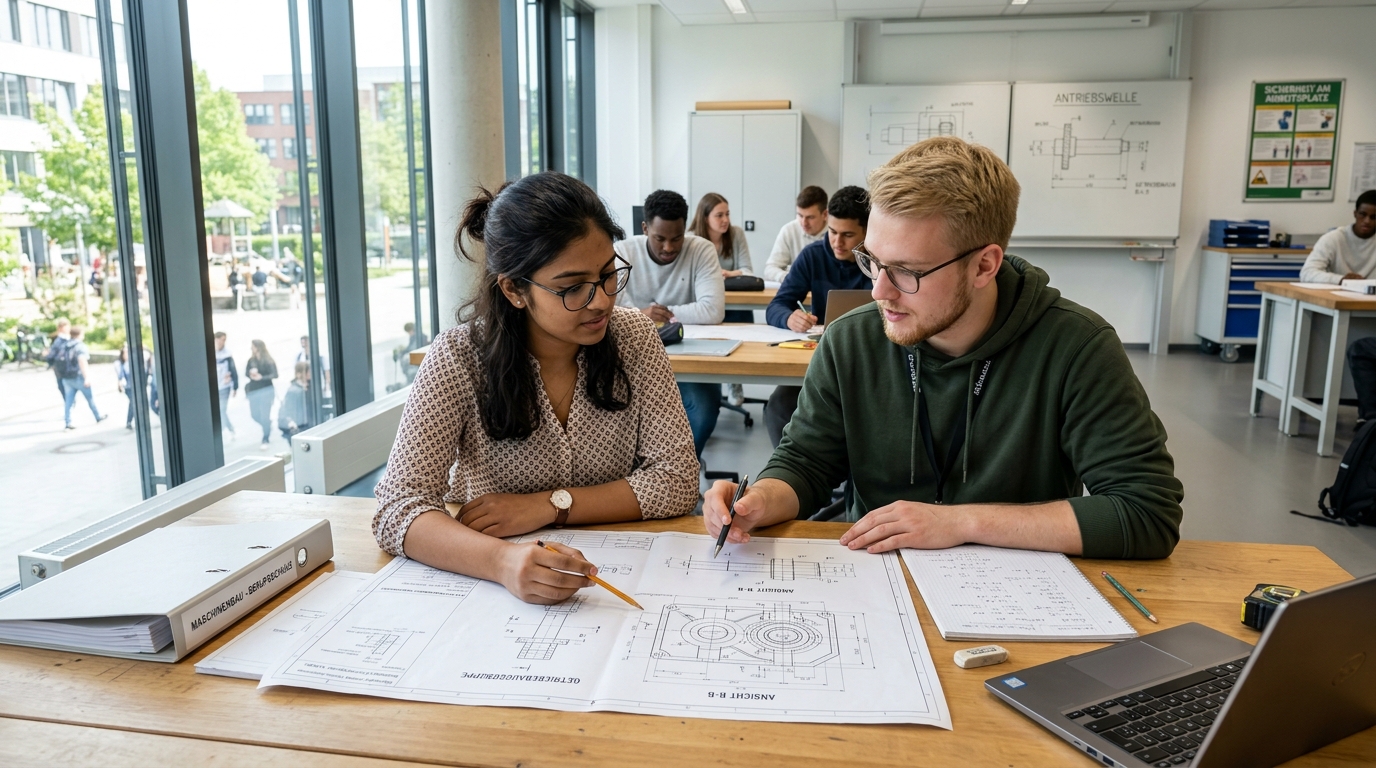
German vocational school is taught by strict teachers who might speak heavy Swabian or Bavarian dialects. The theory exam in Nursing involves complex legal terminology.
The EuropeCareers Action Plan: Start your classes now. We provide in-house German language coaching up to B2 to ensure you don’t just learn textbook grammar, but you understand how to speak to a patient, a hotel guest, or a factory supervisor.
The Money Map: Salary, Savings, and Blocked Accounts
Let’s talk rupees, because your dad is definitely asking.
Your Training Stipend (Monthly Gross)
- Year 1: €950 – €1,150
- Year 2: €1,000 – €1,250
- Year 3: €1,100 – €1,350
(Nursing is usually higher; fields like bakery are lower.)
Can you survive on this?
Barely, in expensive cities like Munich. Comfortably, in Leipzig or smaller towns where we often place our students thanks to lower living costs.
The Hidden Rule: If your training salary covers your living costs, you might be exempt from the massive €11,904 blocked account.
However, at EuropeCareers, we mandate every student keep a safety net of at least €4,000 (approx. ₹3.6 Lakhs). You need to pay a rental deposit and survive the first two months before your salary cycle kicks in. We don’t want you to land and panic.
Step-by-Step Process for the 2026 Intake
When you sign up with EuropeCareers, we don’t let you spray and pray applications. We are surgical.
Phase 1: Now – December 2025 (The Prep)
- Enroll in German classes (aim for B1 by early 2026).
- We help you translate your 10th, 12th, and college documents with certified, German-recognized translators.
- We craft your German-style Lebenslauf (CV) with a professional photo and the correct “Hobbies” section—Germans hire humans, not just robots.
Phase 2: January – April 2026 (The Hunt)
- We tap into our network of German employers looking specifically for Indian talent on portals like the Bundesagentur für Arbeit, Indeed.de, and our internal job board.
- We help you record a 1-minute video introduction in German. This is the secret weapon that humanizes your application.
Phase 3: May – July 2026 (The Contract & Visa)
- You ace the digital interview with our mock interview prep.
- You sign the contract.
- We guide you through the German Consulate visa process (Mumbai, Delhi, Chennai, etc.), ensuring your paperwork is bureaucrat-proof.
The “I’m Scared” Section (A Note from Our Team)
We won’t let you go without acknowledging the hard part.
You will miss Pani Puri. The first month will taste like bread, butter, and loneliness. Your German teacher might correct you bluntly, and it will feel rude (it’s just efficiency).
But on day 100, a patient will smile at your broken German. A senior mechanic will clap your back for fixing a circuit they couldn’t solve. And you’ll get a bank statement showing a salary, not a bank debit for tuition fees.
At EuropeCareers, we believe an Ausbildung isn’t a backup option. It’s a strategic leap toward a life where your skills pay the bills, literally.
Ready to start drafting your German CV for 2026?
Talk to a EuropeCareers counselor today to check your eligibility for the 2026 intake.
Disclaimer: Visa rules and salary levels can fluctuate based on federal government changes. The information in this guide is for general informational purposes. Always consult with a EuropeCareers expert for personalized, updated legal advice regarding your specific case