How to Prepare for Your First German Job Interview

Receiving an invitation to an interview with a German employer is an exciting milestone in your international career journey. It means a hiring manager or human resources specialist reviewed your application dossier, evaluated your Indian degree or diploma, and saw strong potential in your professional background. Now, they want to speak with you directly.
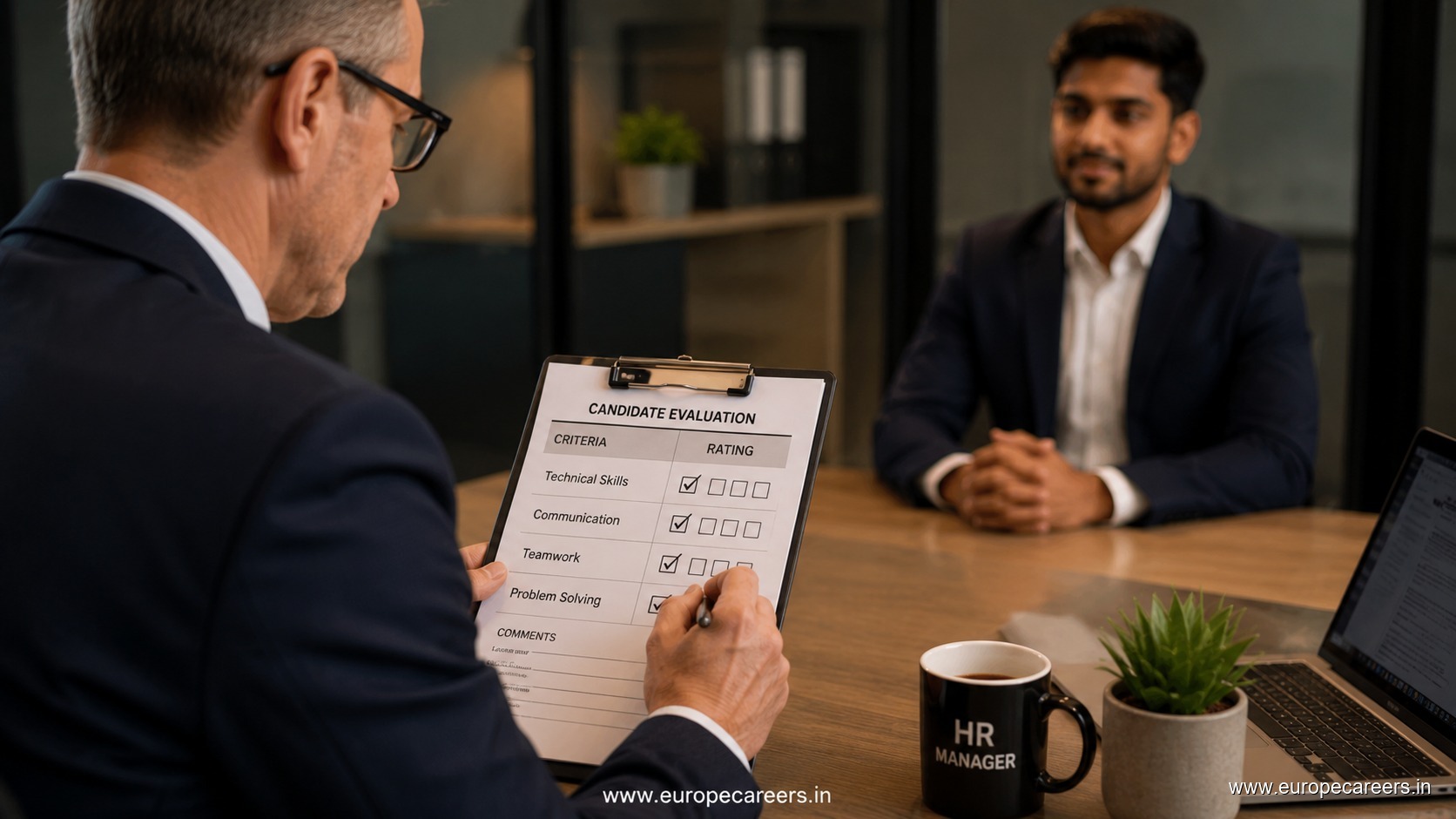
At Europe Careers, we prepare Indian nurses, doctors, software engineers, electrical specialists, and skilled technicians for their first employer conversations in Germany. Many candidates assume a job interview is purely a test of academic knowledge. In reality, German employers use the interview to assess several practical qualities: your hands-on experience, your communication style, your language readiness, your motivation to relocate, and how well you will integrate into their daily workplace environment.
German interview culture is built on punctuality, factual honesty, clear structure, and mutual respect. While every company has its own style, following a proven preparation framework will help you feel calm, present your experience clearly, and leave a positive, professional impression. Here is our practical, step-by-step guide to preparing for your first German job interview.

Research the Company Before the Interview
German employers expect candidates to have a clear understanding of what their organization does. Before your interview, spend time researching the company’s core activities, products, or services. Do not simply memorize the “About Us” page; look for meaningful details that help you understand the organization’s daily operations.
Key areas to research include:
- Company Type and Size: Is the employer a municipal hospital (Städtisches Klinikum), a private care provider, an agile software startup, or a traditional German Mittelstand manufacturing firm?
- Location: In which German city or federal state (Bundesland) is the job located? Understanding the region shows genuine interest in relocating there.
- Core Focus: What products do they manufacture, what software technologies do they build, or which medical departments do they operate?
- Recent Developments: Look for recent project launches, clinic expansions, or industry certifications mentioned on their official website or professional LinkedIn page.
When the interviewer asks what you know about their company, summarize these points in two or three clear sentences and explain why that work appeals to your professional goals. To understand what German companies value, read our guide on why German employers recruit skilled professionals from abroad.
Understand the Job Description in Detail
The German job advert (Stellenanzeige or Stellenbeschreibung) is your most valuable study guide. German job descriptions are usually precise, dividing requirements into essential tasks (Ihre Aufgaben) and expected qualifications (Ihr Profil).
Carefully analyze the description by asking yourself:
- What will my day-to-day responsibilities look like?
- Which specific technical tools, clinical protocols, or machinery are mentioned?
- Which parts of my Indian work experience directly solve their requirements?
- What level of German or English is required for daily reporting?
Prepare two or three concrete examples from your past work that demonstrate these specific skills. For example, if the job description mentions administering IV medications under hospital protocols, think of a specific ward situation where you performed this accurately under high workload.
Prepare Your Self-Introduction (Selbstpräsentation)
Almost every German interview begins with an invitation such as: “Bitte stellen Sie sich kurz vor” (“Please introduce yourself briefly”) or “Tell us a little about your background.” This is your chance to set a positive, structured tone for the entire conversation.
A great self-introduction should last around 60 to 90 seconds. Keep it focused on your professional career rather than your personal life history. A reliable structure includes:
- Name and current professional role.
- Your educational qualification in India.
- Years of relevant work experience and main technical competencies.
- Your current German language level and ongoing learning plan.
- Why this specific role in Germany is the logical next step in your career.
Here is a simple, natural example for an Indian professional:
“My name is Rahul Sharma. I completed my Bachelor of Science in Nursing in India and have worked for four years in an intensive care unit at an accredited hospital. During this time, I gained extensive experience in post-operative patient monitoring, medication administration, and multidisciplinary team coordination. I have completed my B2 German language training and am currently practicing medical vocabulary. I am excited to apply for this staff nurse role because your clinic offers excellent patient care standards and a structured adaptation program where I can contribute my clinical skills and build a long-term career in Germany.”
Common German Job Interview Questions and How to Answer Them
While interviewers adapt their questions to each candidate, several core questions appear frequently in German interviews. Prepare your answers using facts, concise logic, and practical examples:
- 1. Why do you want to work in Germany?
Guidance: Focus on professional development, structured working standards, and long-term career stability. Avoid generic answers like “Germany is a beautiful country.” Explain that you appreciate the high technological or clinical standards and want to settle professionally. - 2. Why did you apply to our organization?
Guidance: Connect your specific skills to their organization. Mention their reputation, their specialization, or their structured onboarding program for international staff. - 3. What are your greatest strengths?
Guidance: Choose two professional strengths backed by examples — such as attention to detail, reliability in documentation, or ability to stay calm under clinical pressure. - 4. Tell me about a difficult situation at work and how you handled it.
Guidance: Use the STAR formula (Situation, Task, Action, Result). Focus on objective problem-solving (Sachlichkeit). Never blame colleagues or managers; emphasize what you did to resolve the issue constructively. - 5. Why should we hire you?
Guidance: Summarize your core qualifications, practical experience, and enthusiasm to learn German workplace standards quickly. - 6. When can you start?
Guidance: Be honest and realistic about notice periods in India and typical German work visa processing timelines. Explain that you are ready to initiate the visa process immediately.
Prepare for Technical and Situational Questions
In Germany, hiring decisions place immense weight on practical competence. German managers often ask situational questions to understand how you think on the job:
- For Nurses and Healthcare Workers: Expect questions regarding patient vitals documentation, emergency response, shift handovers (Schichtübergabe), hygiene compliance, and patient empathy.
- For Engineers and Technicians: Be prepared to explain a past design project, troubleshoot an equipment failure, describe safety protocols (Arbeitsschutz), or discuss CAD tools.
- For IT Professionals: Expect questions on code architecture, database optimization, agile teamwork (Scrum/Kanban), code reviews, and resolving production bugs.
- For Skilled Trades: Be ready to describe electrical schematics, tool handling, preventative maintenance schedules, and industrial safety rules.
If you do not know the answer to a specific technical question, never guess or pretend. In German workplace culture, saying honestly: “I have not worked with that specific tool yet, but based on my experience with similar systems, I would approach it like this…” is respected far more than giving a vague or incorrect answer.
How Important Is German During the Interview?
The language used during your interview depends on the profession and employer. Some software companies and multinational tech hubs conduct interviews entirely in English. However, for healthcare professionals, mechanical engineers, and skilled technicians, interviews are conducted either partly or fully in German.
German employers do not expect grammatical perfection from an international applicant. What they look for is communicative willingness — the ability to understand instructions, explain your thoughts clearly, and ask for repetition when needed. Speaking German during your interview demonstrates dedication and genuine commitment to integrating into your new team. See our practical guide on what B1 German means in everyday work life.
Useful German Interview Phrases
Having a few dependable German phrases ready helps you navigate the conversation politely and professionally:
| German Phrase | English Translation | When to Use It |
|---|---|---|
| Guten Tag! / Guten Morgen! | Good day! / Good morning! | Polite opening greeting. |
| Vielen Dank für die Einladung zum Gespräch. | Thank you very much for inviting me to this interview. | Opening courtesy statement. |
| Ich möchte mich kurz vorstellen. | I would like to briefly introduce myself. | Beginning your self-introduction. |
| Ich habe vier Jahre Berufserfahrung als… | I have four years of professional experience as… | Summarizing your work history. |
| Könnten Sie die Frage bitte wiederholen? | Could you please repeat the question? | When an interviewer speaks too quickly. |
| Habe ich das richtig verstanden? | Did I understand that correctly? | Confirming an assignment or question. |
| Vielen Dank für Ihre Zeit und das angenehme Gespräch. | Thank you very much for your time and the pleasant conversation. | Polite closing remarks. |
What to Wear and How to Behave
Professional etiquette in Germany is centered around respect, focus, and punctuality. Keep these guidelines in mind:
- Dress Professionally: Wear smart business attire (a collared shirt, blouse, or blazer). Even for an online video call from home, dressing professionally demonstrates seriousness and respect.
- Punctuality Is Absolute: Join an online call 3 to 5 minutes early. In Germany, being even two minutes late creates an immediate impression of disorganization. Learn more about 7 German workplace habits Indian professionals should know.
- Listen Actively: Do not interrupt the interviewer while they are speaking. Let them finish their question before you begin your answer.
- Maintain Positive Body Language: Sit upright, maintain steady eye contact with the camera, and smile naturally.
- Address Interviewers Formally: Use the formal German “Sie” and surnames (e.g., Herr Müller or Frau Weber) unless the interviewer explicitly invites you to use first names.
Online Video Interview Preparation
Since most initial interviews for candidates in India take place over video platforms (such as MS Teams, Zoom, or Google Meet), technical readiness is just as critical as your interview answers:
- Check Your Internet Connection: Use a stable broadband Wi-Fi connection. Keep a mobile data hotspot configured as an emergency backup.
- Test Audio and Video Hardware: Use a quality headset or earphones so your voice is crisp and background noise is minimized. Ensure your webcam lens is clean.
- Lighting and Camera Angle: Position your laptop so the camera is at eye level. Ensure light falls on your face from the front rather than from behind you.
- Quiet, Distraction-Free Environment: Choose a private room, close windows, and inform family members so you are not interrupted. Put your mobile phone on silent.
- Keep Key Documents at Hand: Place a printed copy of your CV, the job description, a notebook, and a glass of water on your desk.

Smart Questions You Can Ask the Employer
Towards the end of the conversation, the interviewer will almost certainly ask: “Haben Sie noch Fragen an uns?” (“Do you have any questions for us?”) Always prepare two or three thoughtful questions. Saying you have no questions can suggest a lack of interest.
Excellent questions to ask include:
- “How is the onboarding and mentoring process (Paten-System) structured for international colleagues during the first few months?”
- “What does a typical working day look like for someone in this position?”
- “How is the team organized, and how many colleagues will I be working with directly?”
- “What continuous training (Weiterbildung) opportunities does your hospital or company support?”
- “What are the next steps in your recruitment process, and when might I expect feedback?”
Avoid asking about exact salary figures or vacation days in your very first interview unless the employer brings up the topic first. Focus on the work, team integration, and operational expectations.
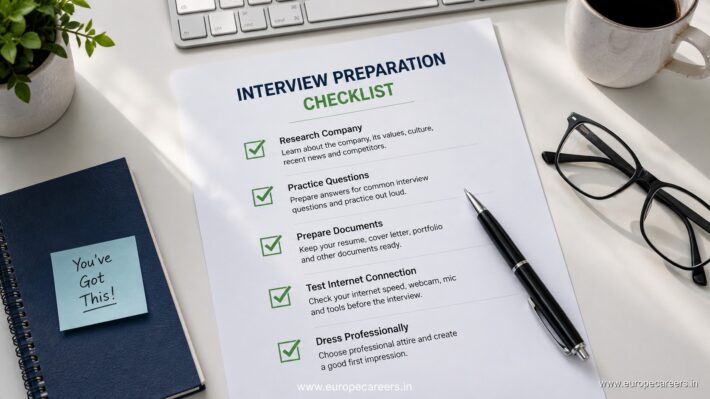
Interview Day Preparation Checklist
Use this quick 10-point checklist before your interview call:
- [ ] Reviewed the exact job description and responsibilities.
- [ ] Researched company background, location, and specialization.
- [ ] Practiced your 90-second self-introduction out loud.
- [ ] Prepared two concrete examples of solving practical challenges.
- [ ] Practiced essential German phrases for greetings and clarification.
- [ ] Tested webcam, microphone, and internet connection.
- [ ] Laptop fully charged with charger plugged in.
- [ ] Quiet room with neutral background and front lighting prepared.
- [ ] Two or three thoughtful questions prepared for the interviewer.
- [ ] Ready at your desk 5 minutes before the meeting link starts.
Common Mistakes to Avoid
Be mindful of these frequent mistakes during German job interviews:
- Arriving Late: Joining even 3 minutes late creates an immediate negative impression. Test your link early.
- Giving Overly Long Answers: German communication values concise clarity. Stick to the question asked.
- Memorizing Answers Word-for-Word: Sounding like a script prevents genuine dialogue. Know your key bullet points instead.
- Speaking Negatively About Past Employers: Maintain professionalism regardless of past workplace experiences.
- Pretending to Know Something You Do Not: Be honest about your current boundaries and your eagerness to learn.
- Neglecting Language Practice: If German is required, practice speaking aloud beforehand to overcome initial hesitation.
How Europe Careers Helps Candidates Prepare
At Europe Careers, we know that an interview is often the defining moment of your relocation journey. We do not simply send resumes; we prepare candidates thoroughly so they feel confident and capable.
Depending on your chosen program and service agreement, Europe Careers supports Indian professionals with:
- Structured Mock Interviews: Simulated video interviews with feedback on technical presentation, pacing, and body language.
- German Language Practice for Interviews: Focused practice delivering your self-introduction and answering situational questions in German.
- CV Optimization: Formatting your qualifications into the German tabular format (Tabellarischer Lebenslauf).
- Employer Communication Guidance: Professional coaching on writing email follow-ups and accepting job offers.
- Comprehensive Journey Roadmap: Guiding you through recognition, visas, and relocation as detailed in our Germany career roadmap.
Important Note: Europe Careers provides expert preparation and recruitment coordination. German employers make all final hiring selections independently.
Frequently Asked Questions
1. How do I prepare for my first German job interview?
Research the company, analyze the job description, prepare a 90-second self-introduction, practice answering common questions with practical examples, test your video call technology, and prepare two thoughtful questions for the employer.
2. What questions are most common in German job interviews?
Common questions include: “Tell us about yourself,” “Why do you want to work in Germany?” “What do you know about our organization?” and situational questions about how you handle difficult tasks or teamwork.
3. Do I need to speak German during the interview?
It depends on the job. Healthcare, mechanical engineering, and skilled trades interviews almost always require German (usually B1 or B2 level). Some software engineering and multinational corporate roles are conducted in English.
4. Can an interview be conducted in English?
Yes, in sectors like IT, international research, and certain multinational corporations, interviews may be conducted partly or entirely in English.
5. What should I wear for a video interview from India?
Dress in clean, professional business attire (a collared shirt, blouse, or blazer). Avoid casual T-shirts or informal home wear.
6. How early should I join an online interview link?
Join 3 to 5 minutes before the scheduled time. This ensures you are ready the moment the employer connects and accounts for any brief software loading times.
7. How long should my self-introduction be?
Keep your self-introduction concise — ideally between 60 and 90 seconds. Focus strictly on your professional education, key work experience, current German skills, and career motivation.
8. What technical questions should I expect?
Expect questions directly related to the tools, software, or clinical procedures listed in the job description. Review specific workflows before your interview.
9. What questions should I ask the employer at the end?
Ask about the daily work routine, team organization, onboarding support (Paten-System), or the next steps in their hiring timeline.
10. Can Europe Careers help me with mock interviews?
Yes. Europe Careers provides mock interview coaching, language drills, and CV review to help candidates build confidence before speaking with German employers.
Conclusion: Confidence Comes from Preparation
Your first job interview with a German employer does not require you to be flawless or recite rehearsed scripts. German employers value genuine technical capability, practical honesty, clear communication, and a sincere enthusiasm to contribute to their team.
By researching the company thoroughly, understanding the job description, practicing your self-introduction, and being punctual and respectful, you can approach your interview with confidence and poise. Treat the conversation as a mutual opportunity to explore how your skills align with their needs.
Prepare for Your Germany Career with Europe Careers
Are you preparing to apply for professional opportunities in Germany? At Europe Careers, our experienced team provides comprehensive support — including German language training, credential evaluation guidance, interview preparation, and relocation support.
Visit: www.europecareers.in
Email: support@europecareers.in