
Why Romania Is Quietly Becoming One of Europe’s Best Kept Career Secrets
Introduction: Why Romania Is Quietly Becoming One of Europe’s Best Kept Career Secrets
 When Indian professionals think about working in Europe, Romania is rarely the first name that comes up.
Germany. Sweden. Netherlands. Ireland.
These are the countries most people talk about. Romania stays quiet in the background — and that is exactly why it deserves your attention right now.
Romania is a full European Union member. It joined the Schengen Area in January 2025 — meaning it is now fully integrated into Europe’s free movement zone. It has one of the fastest growing IT sectors in all of Europe. Its economy has been growing steadily and salaries have been rising by approximately 7 to 10 percent every year for the past several years.
The cost of living is a fraction of Western Europe. Bucharest — the capital — is a beautiful, modern, and affordable European city. The country has digital infrastructure that rivals many Western European nations. High speed internet is widely available even outside major cities.
And Romania needs workers.
Across IT, construction, manufacturing, healthcare, logistics, and hospitality, Romania faces consistent skill shortages and actively recruits international professionals. Indian workers — from software developers and engineers to truck drivers and construction professionals — are increasingly finding Romania an accessible and rewarding European destination.
This guide by EuropeCareers covers everything you need to know about working in Romania in 2026 — salary in rupees, highest paying jobs, how the visa works, cost of living, and what daily life actually looks like.
Romania in 2026 — The Big Picture
 Before diving into salaries and visas, understand what Romania actually is in 2026.
Romania is a country of approximately 19 million people located in southeastern Europe, sharing borders with Hungary, Bulgaria, Serbia, Moldova, and Ukraine. It has been a European Union member since 2007 and joined the Schengen Area fully on January 1, 2025 — a major milestone that made travel and movement within Europe much simpler for residents.
Romania’s economy is driven by manufacturing, IT and technology, agriculture, construction, energy, and services. The country has a strong tradition in engineering, mathematics, and computer science — Romanian software developers and engineers are highly regarded across Europe.
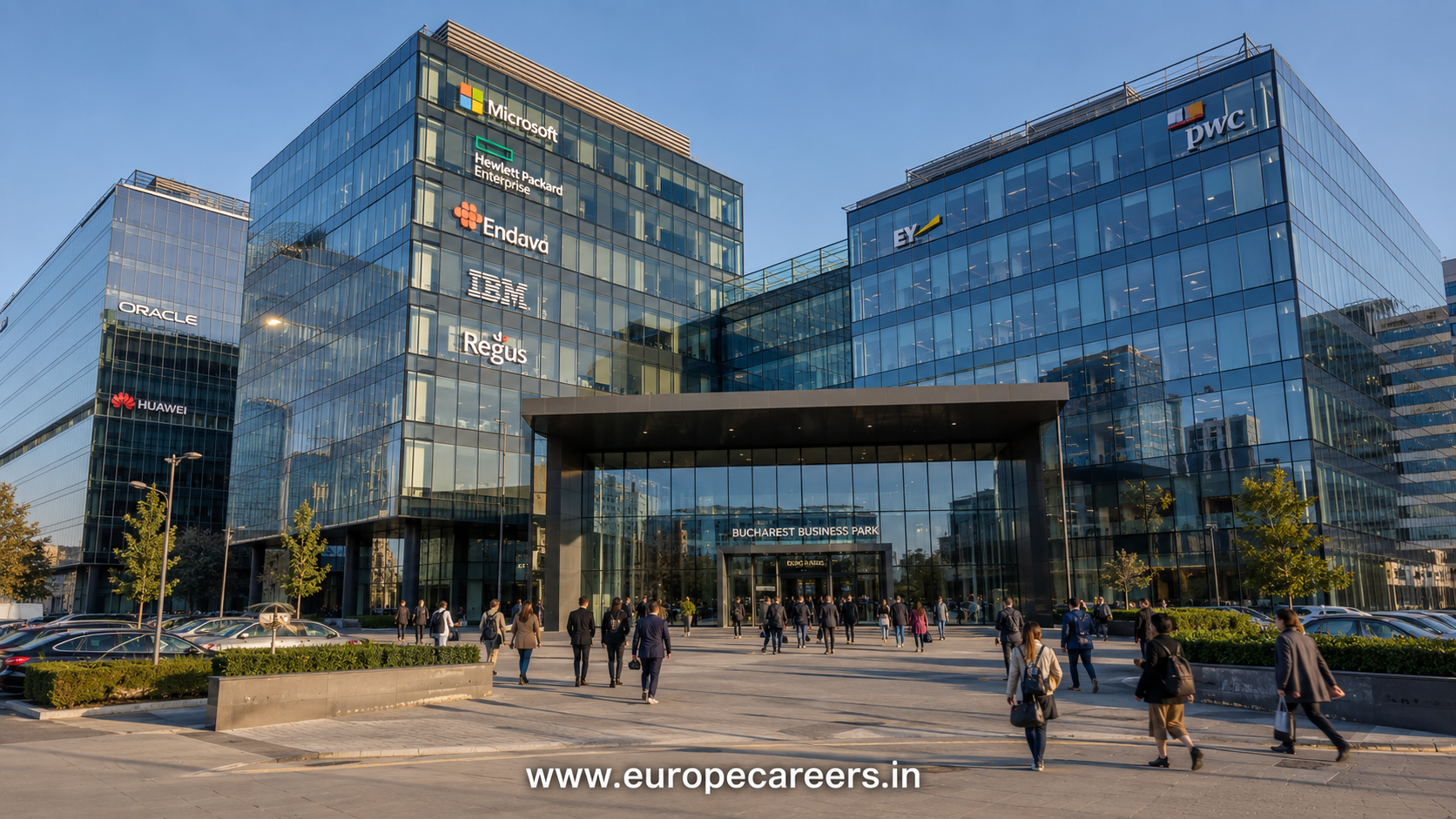
Several major multinational companies have significant operations in Romania — including Renault, Ford, Continental, Bosch, Orange, Vodafone, Amazon, Microsoft, IBM, Oracle, Accenture, and dozens of others. These companies bring international work culture, competitive salaries, and genuine career development opportunities to the Romanian market.
Bucharest is the economic capital and by far the highest paying city. Cluj-Napoca in central Romania is the fastest growing technology hub. Timișoara, Brașov, Iași, and Constanța are other significant economic centres with their own industries and opportunities.
Average Salary in Romania 2026 — What You Can Actually Earn
Let us start with the numbers every Indian professional wants to know.
The average gross monthly salary in Romania in 2026 is approximately RON 9,220 — which is roughly €1,810 or approximately 1.6 lakh rupees per month.
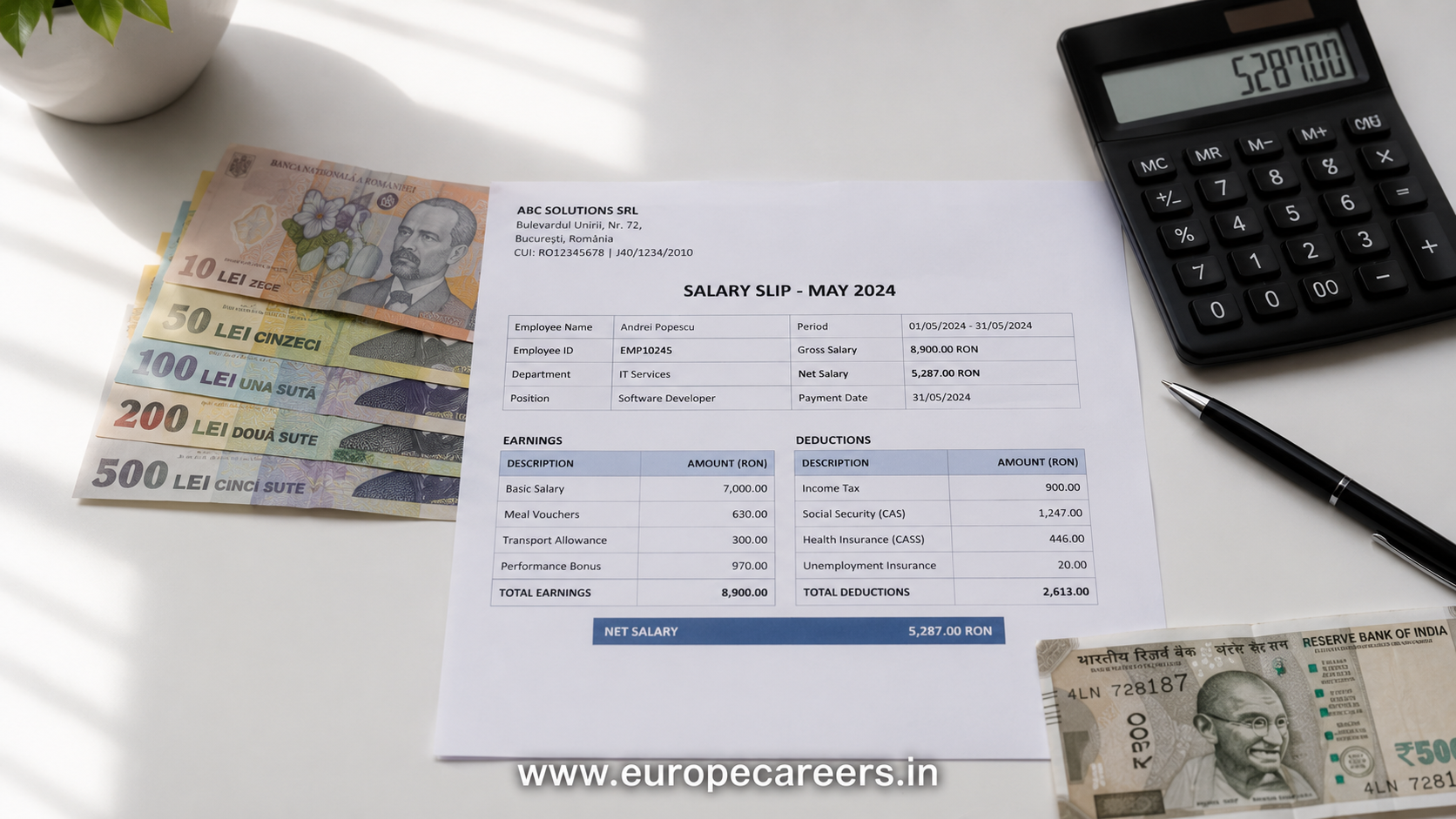
After Romanian income tax of 10 percent and social contributions — which include pension insurance of 25 percent and health insurance of 10 percent, both paid primarily by the employee — the average net take home salary is approximately RON 5,500 to 5,900 per month — roughly €1,100 to €1,170 or approximately 97,000 to 1.03 lakh rupees per month in hand.
The minimum wage in Romania in 2026 is RON 4,325 gross per month — approximately €850 or 75,000 rupees per month. This is one of the lower minimum wages within the EU, but it has been increasing consistently — rising by 6.8 percent from 2025 to 2026 alone.
The important thing to understand about Romanian salaries is that the average number is misleading.
Romania has significant salary variation depending on city, sector, and experience level. A software developer in Bucharest can earn RON 18,000 to 25,000 net per month — approximately €3,600 to €5,000 or 3.2 to 4.4 lakh rupees per month. A construction worker in a smaller city might earn close to the minimum wage. The national average blends these extremes together and tells you very little about what you specifically will earn.
The sector you work in and the city you work in matter enormously.
Highest Paying Jobs in Romania 2026
 Here is a detailed breakdown of the best paying professions in Romania for international professionals.
IT Director and Software Engineering Manager
 Monthly Net Salary: RON 22,000 to RON 35,000
In Indian Rupees: Approximately 1.95 lakh to 3.1 lakh per month
IT directors and senior engineering managers are the highest paid professionals in Romania’s private sector. Romania has positioned itself as one of Europe’s top technology talent destinations — the country ranked second globally in one major developer hiring index in 2026 for hiring value, reflecting its combination of strong skills and competitive costs.
Senior IT leadership roles at multinational companies in Bucharest and Cluj-Napoca command packages that approach Western European mid-market levels — and are rising fast.
Software Developer and Systems Engineer
 Monthly Net Salary: RON 12,000 to RON 25,000
In Indian Rupees: Approximately 1.06 lakh to 2.2 lakh per month
This is where Romania truly shines for Indian IT professionals. Romanian software development salaries have been growing at approximately 15 percent per year. Mid level developers earn between RON 12,000 and RON 18,000 net per month. Senior developers, cloud architects, and specialised engineers in AI, machine learning, cybersecurity, and cloud infrastructure earn RON 18,000 to RON 25,000 net — and sometimes more for highly specialised roles at large international companies.
Romania also has a unique income tax exemption for IT professionals that was introduced to attract and retain technology talent — meaning software developers take home a higher percentage of their salary than workers in most other sectors. Check current eligibility requirements with a Romanian tax advisor as the scheme was restructured in 2025.
Programming languages and skills most in demand include Java, Python, JavaScript, React, Angular, Node.js, C++, cloud platforms including AWS and Azure, cybersecurity, and data engineering. Romanian employers also increasingly seek professionals with AI and machine learning experience.
Data Scientist and Machine Learning Engineer
 Monthly Net Salary: RON 15,000 to RON 22,000
In Indian Rupees: Approximately 1.33 lakh to 1.95 lakh per month
AI and data science roles are the fastest growing category in Romanian technology hiring. International companies operating in Romania are building data science teams locally, taking advantage of Romania’s strong mathematical and engineering talent base combined with lower costs compared to Western Europe.
For Indian data scientists and machine learning engineers — particularly those with Python, TensorFlow, PyTorch, and cloud ML platform experience — Romania represents an excellent entry point into European employment.
Medical Doctor and Surgeon
 Monthly Net Salary: RON 10,000 to RON 20,000
In Indian Rupees: Approximately 88,000 to 1.77 lakh per month
Romania’s healthcare system has faced significant doctor and specialist shortages — partly due to emigration of Romanian medical professionals to Western Europe where salaries are higher. This creates genuine opportunities for international medical professionals.
General practitioners, specialist doctors, surgeons, anaesthesiologists, and dentists are in consistent demand. Romanian medical qualification recognition is required for clinical practice. Romanian language proficiency is essential for patient facing healthcare roles.
Finance and Banking Professional
 Monthly Net Salary: RON 9,000 to RON 18,000
In Indian Rupees: Approximately 80,000 to 1.6 lakh per month
Bucharest has a significant financial services sector. Romanian branches of major European and global banks, investment firms, and insurance companies hire finance professionals including financial analysts, risk managers, compliance specialists, and accounting professionals.
Romania is also growing as a shared services and business process outsourcing destination for financial functions of large multinationals. Finance professionals with international accounting qualifications including ACCA, CFA, or CPA alongside strong English skills are competitive candidates.
Construction Engineer and Project Manager
 Monthly Net Salary: RON 8,000 to RON 14,000
In Indian Rupees: Approximately 71,000 to 1.24 lakh per month
Romania is going through a significant infrastructure construction boom. EU funding is driving major road, rail, and public infrastructure projects across the country. Private construction — residential, commercial, and industrial — is also strong particularly in Bucharest, Cluj-Napoca, and other growing cities.
Civil engineers, structural engineers, construction project managers, and site supervisors are in consistent demand. This is one of the fastest growing employment categories for international professionals in Romania right now.
Skilled Tradesperson
 Monthly Net Salary: RON 5,000 to RON 10,000
In Indian Rupees: Approximately 44,000 to 88,000 per month
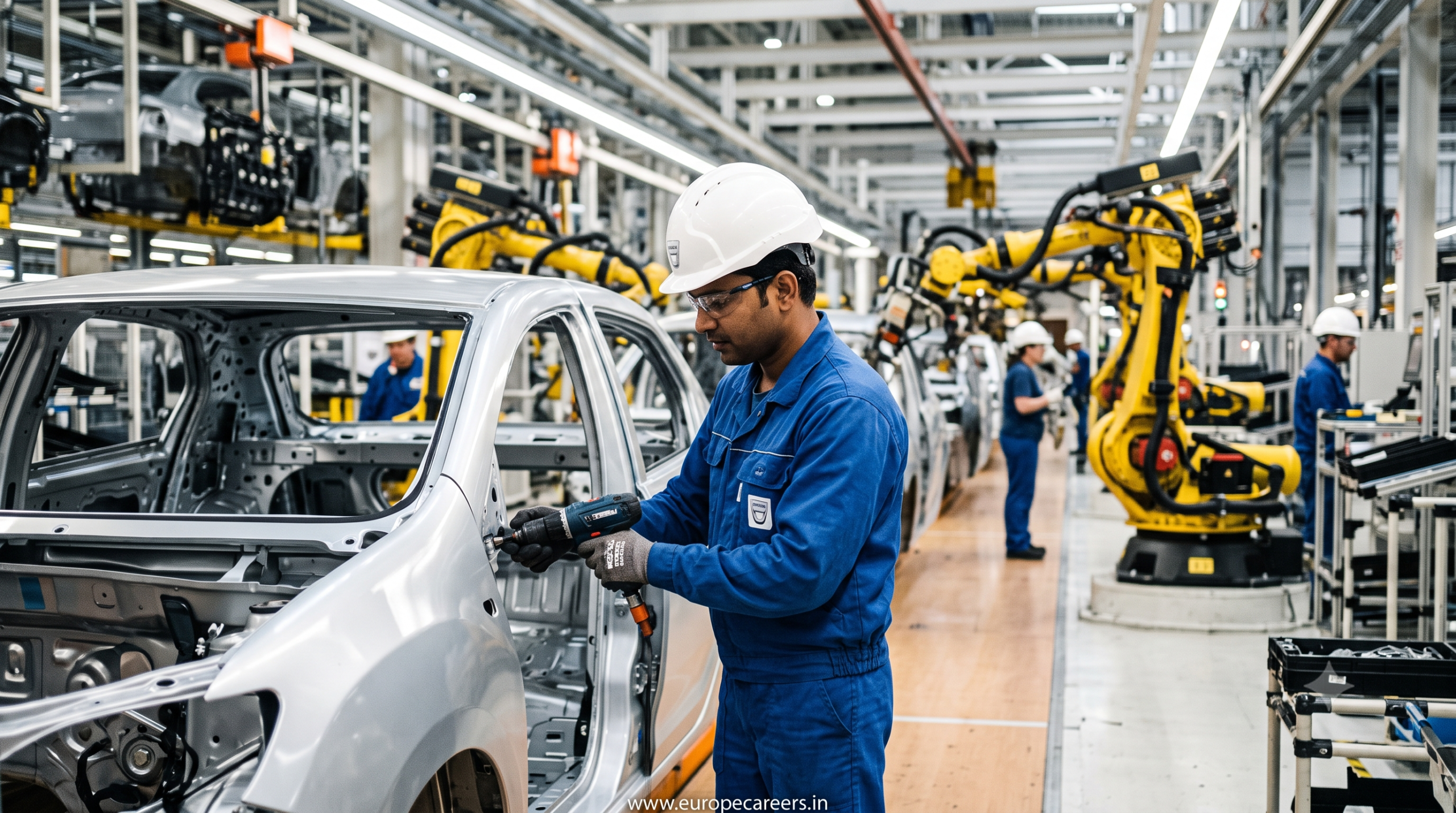
Electricians, welders, plumbers, HVAC technicians, CNC operators, and other skilled tradespeople are in strong demand in Romania — both within Romanian construction and manufacturing, and as a stepping stone to other EU countries.
Romania has become an increasingly common first destination for Indian skilled workers entering Europe. Once in Romania with a legal work permit and EU residency, further movement within the Schengen Area for work purposes becomes more accessible.
Truck Driver and Logistics Professional
 Monthly Net Salary: RON 6,000 to RON 12,000
In Indian Rupees: Approximately 53,000 to 1.06 lakh per month
Romania faces a serious shortage of professional truck drivers and logistics workers. Indian professional drivers have become some of the most sought after employees by Romanian logistics and transport companies in 2025 and 2026. Romanian companies frequently recruit internationally for these roles and provide visa sponsorship.
The logistics and supply chain sector more broadly — including warehouse managers, logistics coordinators, and freight specialists — offers consistent employment opportunities in Romania, given the country’s growing role as a logistics hub between Eastern and Western Europe.
Hospitality and Tourism Professional
Monthly Net Salary: RON 4,500 to RON 8,000
In Indian Rupees: Approximately 40,000 to 71,000 per month
Romania has a growing tourism sector — the Carpathian Mountains, Transylvania, the Black Sea coast, and numerous medieval cities attract significant tourist numbers. Hotel managers, restaurant professionals, chefs, front office staff, and tour operators find consistent employment particularly in Bucharest, Brașov, Constanța, and Sibiu.
English speaking hospitality professionals are particularly valued in international hotels and resorts.
Manufacturing and Industrial Worker
Monthly Net Salary: RON 5,000 to RON 9,000
In Indian Rupees: Approximately 44,000 to 80,000 per month
Romania has a strong manufacturing sector dominated by automotive — Dacia Renault and Ford have major production facilities in the country. Electronics, textiles, furniture, and food processing are also significant manufacturing industries. Production workers, quality control specialists, and factory supervisors find consistent employment particularly in cities like Pitești, Craiova, and Timișoara.
Salary by Sector Summary Table
| Sector | Monthly Net (RON) | Monthly Net (EUR) | Approx INR per month |
|---|---|---|---|
| IT Director / Engineering Manager | 22,000 – 35,000 | 4,400 – 7,000 | 1.95L – 3.1L |
| Software Developer / Systems Engineer | 12,000 – 25,000 | 2,400 – 5,000 | 1.06L – 2.2L |
| Data Scientist / ML Engineer | 15,000 – 22,000 | 3,000 – 4,400 | 1.33L – 1.95L |
| Medical Doctor / Surgeon | 10,000 – 20,000 | 2,000 – 4,000 | 88,000 – 1.77L |
| Finance and Banking | 9,000 – 18,000 | 1,800 – 3,600 | 80,000 – 1.6L |
| Construction Engineer | 8,000 – 14,000 | 1,600 – 2,800 | 71,000 – 1.24L |
| Truck Driver / Logistics | 6,000 – 12,000 | 1,200 – 2,400 | 53,000 – 1.06L |
| Skilled Trades | 5,000 – 10,000 | 1,000 – 2,000 | 44,000 – 88,000 |
| Manufacturing Worker | 5,000 – 9,000 | 1,000 – 1,800 | 44,000 – 80,000 |
| Hospitality and Tourism | 4,500 – 8,000 | 900 – 1,600 | 40,000 – 71,000 |
Salary by City — Where You Work Matters as Much as What You Do
Romania has very significant regional salary differences. Understanding this is essential before accepting any job offer.
Bucharest is in a league of its own. The capital city has an average gross salary of over RON 16,300 per month — more than 85 percent higher than in Moldavia and Wallachia regions, and 52 percent more than Banat and Transylvania. For IT, finance, management, and business services roles, Bucharest is where the highest salaries are concentrated. It is also the most expensive city to live in but the gap between salary and living cost still works very much in your favour compared to Western Europe.
Cluj-Napoca is Romania’s second highest paying city and its fastest growing technology hub. A strong concentration of software development companies, international shared services centres, and tech startups makes Cluj-Napoca the preferred destination for IT professionals after Bucharest. Cluj is a university city with a young, educated population and a more compact and manageable lifestyle than Bucharest.
Timișoara in western Romania is a significant industrial and technology city. Its location near the Hungarian and Serbian borders makes it a natural logistics and manufacturing hub. Western European companies often establish operations here due to its proximity to Western markets.
Brașov is a beautiful city in central Romania with a growing technology and manufacturing sector alongside strong tourism. It offers a high quality of life combined with increasingly competitive salaries.
Iași in northeastern Romania is a major university city with a growing IT outsourcing sector. Salaries are lower than Bucharest or Cluj but so is the cost of living — and for remote or outsourcing roles, Iași offers an excellent quality-adjusted income.
Constanța on the Black Sea coast is Romania’s main port city and has significant logistics, shipping, and hospitality employment.
Romanian Tax System — What Goes Out of Your Salary
 Romania has one of the simplest and most favourable tax systems in Europe. Understanding it helps you calculate your real take home pay.
Income Tax: A flat rate of 10 percent on gross income. This is exceptionally low by European standards — most Western European countries charge 30 to 45 percent income tax.
Pension Insurance (CAS): 25 percent of gross salary, paid by the employee. This is the largest deduction.
Health Insurance (CASS): 10 percent of gross salary, paid by the employee.
Employer Social Contribution (CAM): 2.25 percent paid by the employer — this is notably low compared to most European countries where employers pay much higher social charges.
Total effective deduction from gross to net: Approximately 41.5 percent.
So a gross salary of RON 10,000 becomes approximately RON 5,850 net. Always ask about gross salary and calculate your net before comparing offers.
IT Tax Exemption: Romania introduced an income tax exemption specifically for IT professionals that was designed to attract technology talent. The scheme was restructured in January 2025 — confirm current eligibility with a Romanian tax advisor, as qualifying IT professionals can take home significantly more than other workers at the same gross salary level.
How to Get a Work Permit in Romania as an Indian Professional
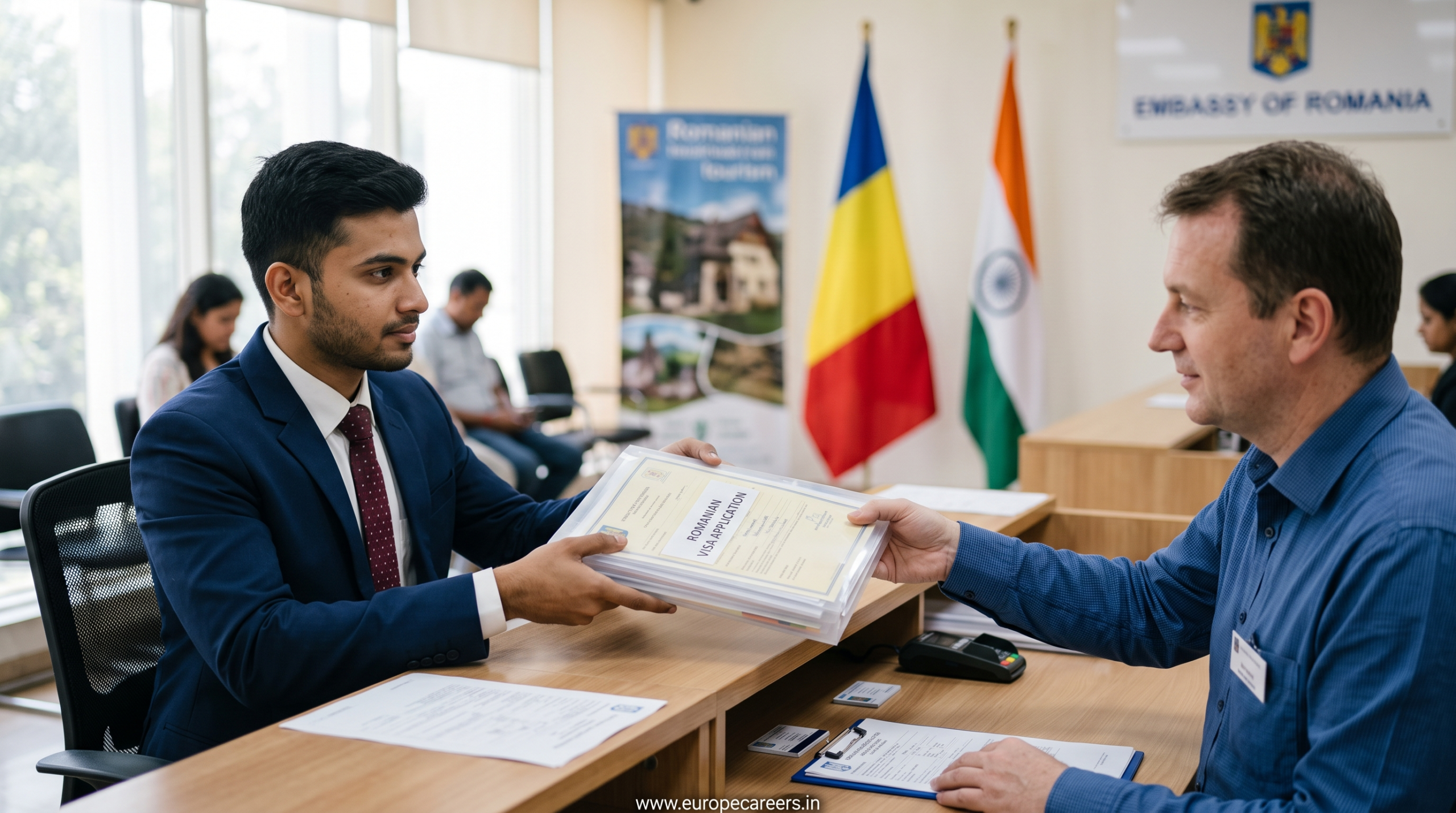 8Romania has an employer-led work permit system for non-EU nationals including Indians. Here is exactly how it works.
Step 1 — Secure a Job Offer
Everything starts with a signed employment contract from a Romanian employer. The work permit process is initiated by your employer — not by you. You cannot apply independently for a Romanian work permit without an employer sponsor.
Step 2 — Employer Applies for Work Permit
Your Romanian employer submits an application to the General Inspectorate for Immigration — IGI — on your behalf. The employer pays the applicable fees and submits the required documentation demonstrating that the position could not be filled by an EU or Romanian citizen, and that you meet the qualifications for the role.
The IGI typically processes work permit applications within 30 days. This can be extended by up to 15 additional days for further verification if needed.
Types of Work Permit Available:
The standard work permit for permanent employment is the most common type for Indian professionals joining Romanian companies.
The Highly Skilled Worker permit — aligned with the EU Blue Card framework — is available for professionals with higher education qualifications and a salary at least twice the average gross national wage. This is well suited for IT, engineering, medical, and senior management roles. The EU Blue Card gives you long term residence rights and easier mobility within the EU in the future.
The Intra-Corporate Transfer permit is for Indian professionals being transferred to a Romanian branch or subsidiary of their existing employer. It requires at least three years of experience in the relevant field.
Seasonal work permits are available for agricultural, construction, and hospitality roles with shorter durations.
Step 3 — Apply for the Romanian Work Visa
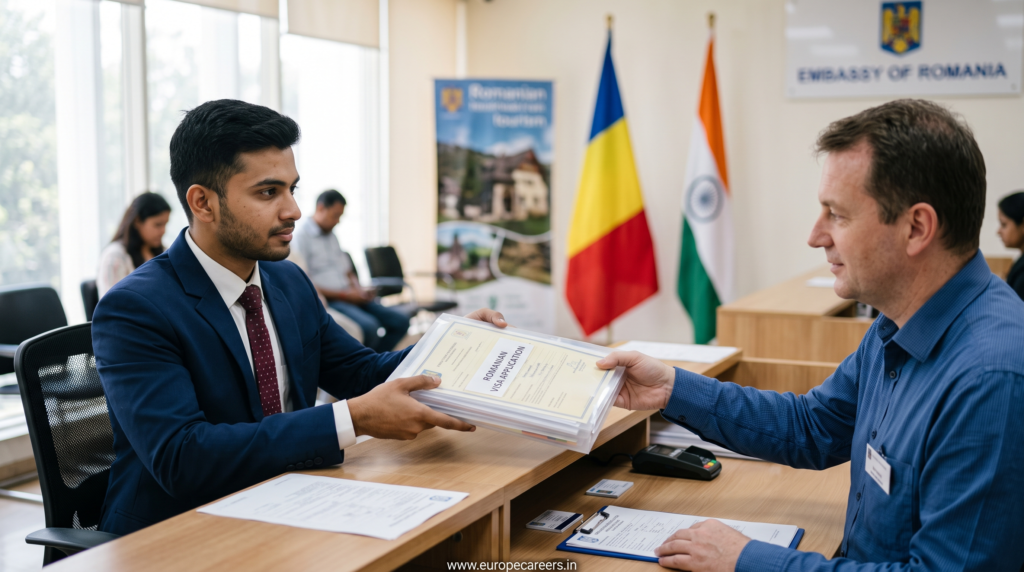
Once your employer has secured the work permit, you apply for a Romanian Long Stay Visa — Type D — at the Romanian Embassy or Consulate in India. The Romanian Embassy in India is located in New Delhi.
Documents required for the work visa:
Valid passport with at least six months of remaining validity. Completed visa application form. Work permit issued by IGI. Signed employment contract. Academic and professional qualification certificates — certified translations required. Affidavit stating no criminal record and medical fitness to work. Medical certificate confirming fitness for employment. Police clearance certificate from India. Proof of accommodation in Romania. Health insurance coverage valid in Romania. Two recent passport photographs. Visa fee of approximately €120 — roughly 10,400 rupees.
Processing Time:
The Romanian work visa typically takes 30 to 60 days to process. Highly skilled worker applications may be processed faster. Apply well in advance of your intended start date.
Step 4 — Arrive and Register in Romania
After arriving in Romania on your work visa, you must register with local authorities and apply for a Temporary Residence Permit — called Permis de Ședere. This converts your visa into a residence permit valid for the duration of your employment contract — typically one year initially, renewable for up to two years for highly skilled workers.
Important since January 2025:
Romania’s full Schengen membership means your residence permit in Romania also gives you the right to travel freely within the entire Schengen Area — 29 countries across Europe — for up to 90 days in any 180 day period. This is a significant benefit compared to the pre-2025 situation.
Permanent Residency in Romania
After five years of continuous legal residence in Romania, you can apply for permanent residency — called Permis de Ședere Permanent. This gives you the right to live and work in Romania indefinitely without needing to renew your permit.
Since Romania is an EU member state, permanent residency in Romania gives you access to the EU long term residence directive rights — which include easier mobility to work in other EU countries.
After eight years of continuous legal residence — including at least five years of permanent residency — you may apply for Romanian citizenship. Romanian citizenship is full EU citizenship, giving you the right to live and work freely across all 27 European Union member states.
What Sectors Are Hiring International Professionals in Romania Right Now
Based on current employer demand in Romania, these are the sectors most actively recruiting international professionals in 2026:
Information Technology is the single most active hiring sector. Software development, data science, AI engineering, cybersecurity, cloud architecture, and IT management roles are in consistent demand at both local Romanian companies and the Romanian offices of major international corporations.
Construction and Infrastructure is booming due to significant EU funded infrastructure projects and strong private sector construction activity. Civil engineers, project managers, site supervisors, and skilled construction tradespeople are all being actively recruited internationally.
Automotive Manufacturing remains strong with Dacia Renault and Ford as anchors and a large network of automotive component suppliers. Production engineers, quality specialists, and manufacturing supervisors find good opportunities particularly in Pitești and Craiova.
Logistics and Transport is a fast growing sector with Romanian companies actively recruiting truck drivers, warehouse managers, and logistics coordinators internationally. Indian professional drivers have become a priority hire category for Romanian logistics companies.
Healthcare faces persistent shortages of doctors, nurses, pharmacists, and allied health professionals. Medical qualification recognition and Romanian language proficiency are required for clinical roles.
Hospitality and Tourism offers seasonal and permanent positions across hotels, resorts, and restaurants — particularly in Bucharest, Brașov, Constanța, and Transylvania tourist destinations.
Manufacturing and Industrial Production across electronics, food processing, textiles, and chemicals provides consistent employment for production workers and technical staff.
Customer Support and Shared Services — Romania’s multilingual workforce — many Romanians speak English, French, Italian, German, and Spanish — makes it a prime location for European companies to establish multilingual customer support and shared services operations.
Cost of Living in Romania — Your Money Goes Much Further
One of Romania’s biggest advantages for international workers is the cost of living. Even though salaries are lower than Western Europe in absolute terms, the purchasing power of a Romanian salary is significantly stronger than the raw numbers suggest.
| Expense | Monthly Cost (RON) | Monthly Cost (EUR) | Approximate INR |
|---|---|---|---|
| Rent — 1 bedroom Bucharest city centre | 3,500 – 5,500 | 700 – 1,100 | 62,000 – 97,000 |
| Rent — 1 bedroom smaller city | 1,800 – 3,000 | 360 – 600 | 32,000 – 53,000 |
| Food and groceries | 1,000 – 1,800 | 200 – 360 | 17,700 – 32,000 |
| Public transport monthly pass | 100 – 150 | 20 – 30 | 1,770 – 2,660 |
| Health insurance | Covered by salary deduction | — | — |
| Mobile phone | 50 – 100 | 10 – 20 | 885 – 1,770 |
| Entertainment and dining | 500 – 1,000 | 100 – 200 | 8,850 – 17,700 |
| Total monthly | 5,150 – 8,550 | 1,030 – 1,710 | 91,000 – 1.51L |
An IT professional earning RON 15,000 net per month in Bucharest, spending RON 7,000 on living costs, can save RON 8,000 per month — approximately €1,600 or 1.42 lakh rupees every month. Over one year that is over 17 lakh rupees in savings.
In smaller cities like Cluj-Napoca, Timișoara, or Iași, the same salary goes even further because rent and daily costs are lower while salaries in the IT sector remain competitive.
Romania is not a cheap country in the way India is. But compared to Germany, the Netherlands, or Sweden, your salary buys a genuinely comfortable European lifestyle at a fraction of the cost.
Romania Since Joining Schengen — What Changed for Indian Professionals
Romania became a full Schengen Area member on January 1, 2025. This is a significant development that directly benefits Indian professionals working in Romania.
Before January 2025, Romania was an EU member but not part of Schengen. This meant separate visa requirements and border controls.
After January 2025, Romania issues standard Schengen visas. A Romanian work visa and residence permit now allow you to travel freely across all 29 Schengen countries — France, Germany, Spain, Italy, Netherlands, Sweden, and all others — for up to 90 days in any 180 day period without a separate visa.
For Indian professionals, this means working in Romania effectively gives you the experience of living in Europe broadly — you can visit other European countries easily on weekends, attend conferences and industry events across Europe, and explore the continent — all on a single Romanian residence permit.
Romanian Language — Do You Need It?
The answer depends entirely on your sector and role.
IT and Technology: English is the working language at most multinational companies and tech firms in Romania. You can work effectively without Romanian in technology roles — particularly in Bucharest and Cluj-Napoca where international companies dominate.
Engineering and Manufacturing: English is commonly used at management level. Some Romanian is helpful for daily workplace communication with local colleagues.
Healthcare: Romanian is essentially mandatory for clinical patient facing roles. Communication with Romanian speaking patients requires language proficiency.
Construction and Skilled Trades: Basic Romanian is very helpful for day to day site communication. Most employers provide some basic language support.
Logistics and Transport: Basic Romanian is useful. Many logistics companies operating internationally use English for management.
Customer Support: Specific language requirements depend on the clients you are supporting.
Daily Life: Romanian is a Romance language with similarities to Italian, Spanish, and French. Most Romanians under 40 speak at least some English, particularly in cities. Getting around Bucharest and other major cities in English is manageable. Learning basic Romanian is recommended for a more comfortable daily life and faster integration.
Romanian language courses are widely available online and in person. Basic conversational Romanian at A2 level takes approximately three to six months of regular study.
Romania vs Other European Countries for Indian Professionals
| Factor | Romania | Germany | Sweden | Poland |
|---|---|---|---|---|
| Average IT Net Salary | €2,400 – €5,000/month | €3,500 – €5,500/month | €3,500 – €5,000/month | €2,000 – €4,000/month |
| Approx INR per month | 2.1L – 4.4L | 3.1L – 4.9L | 3.1L – 4.4L | 1.8L – 3.5L |
| Minimum Wage | €850/month | €2,054/month | No national minimum | €900/month |
| Income Tax Rate | 10% flat | 14–45% progressive | 30% average | 12–32% |
| Rent 1BR city centre | €700 – €1,100 | €1,200 – €2,000 | €1,000 – €1,500 | €600 – €1,000 |
| Permanent Residency | 5 years | 21–33 months | 4 years | 5 years |
| EU Citizenship | Yes — 8 years | Yes — 5 years | Yes — 5 years | Yes — 8 years |
| Schengen Access | Yes since Jan 2025 | Yes | Yes | Yes |
| Language at Work | English OK in IT | German required | English OK in IT | English OK in IT |
Romania’s headline salary numbers are lower than Germany or Sweden. But when you factor in Romania’s flat 10 percent income tax — one of the lowest in Europe — and a cost of living that is 40 to 60 percent lower than Germany, the actual quality of life and savings potential in Romania is very competitive.
For Indian IT professionals in particular, Romania offers one of the strongest total packages in Europe when you compare after-tax salary against cost of living.
Practical Tips for Indian Professionals Moving to Romania
Sort Your Documentation Early
The Romanian work permit process is employer-led but requires careful documentation. Get your academic certificates attested and translated by a certified translator — Romanian authorities require certified translations of all foreign documents. Allow at least 30 to 60 days for the full visa process.
Open a Bank Account Immediately
Open a Romanian bank account as soon as you arrive. Major Romanian banks include Banca Transilvania, BCR, BRD, and Raiffeisen Bank. Most have English language services and online banking. Your employer will need your Romanian bank account details to process payroll.
Register Your Address
Register at the local Evidența Populației office within 30 days of arrival. This address registration is required for your Temporary Residence Permit application and for accessing public services.
Get Health Insurance for the First Period
Until you are registered with the Romanian social insurance system through your employer, arrange private health insurance. Your employer will register you with the national health system — CNAS — once your employment begins, after which you access the public healthcare system through your salary contributions.
Use Bucharest or Cluj’s Strong Indian Community
Both Bucharest and Cluj-Napoca have active Indian communities — community groups, WhatsApp groups, cultural events, and restaurants serving Indian food. Connecting with these communities before you arrive gives you practical advice, local contacts, and a social network that makes the initial months much easier.
Plan for Weather
Romania has a continental climate — hot summers and cold winters with significant snowfall. Bucharest winters are genuinely cold — temperatures regularly drop below minus 10 degrees Celsius. Pack appropriately and factor in heating costs in winter months.
Frequently Asked Questions
Can Indian professionals work in Romania?
Yes. Indian nationals can legally work in Romania by obtaining a work permit — which is applied for by the Romanian employer — followed by a Long Stay Work Visa applied for at the Romanian Embassy in New Delhi. The process is clear and structured.
What is the average salary in Romania in Indian rupees in 2026?
The average net salary in Romania in 2026 is approximately RON 5,500 to 5,900 per month — roughly €1,100 to €1,170 or approximately 97,000 to 1.03 lakh rupees per month. IT professionals in Bucharest and Cluj-Napoca earn significantly more — RON 12,000 to RON 25,000 net per month — approximately 1.06 to 2.2 lakh rupees per month.
Is English sufficient to work in Romania?
For IT, technology, finance, and international business roles — particularly in Bucharest and Cluj-Napoca — English is widely used and sufficient to work professionally. For healthcare, construction, and manufacturing roles, some Romanian is helpful and in clinical healthcare it is essential.
How long does the Romania work visa process take for Indians?
The employer work permit application takes up to 30 days at the IGI. After the permit is issued, the visa application at the Romanian Embassy typically takes 30 to 60 days. Plan for a total process of two to three months from job offer to visa in hand.
Does Romania offer permanent residency for Indian workers?
Yes. After five years of continuous legal residence in Romania, Indian professionals can apply for permanent residency. Romanian citizenship is possible after eight years of continuous residence.
What is the income tax rate in Romania?
Romania has a flat income tax rate of 10 percent — one of the lowest in the European Union. Social contributions — pension and health insurance — are additional. Total deduction from gross to net salary is approximately 41.5 percent.
Is Romania part of Schengen now?
Yes. Romania became a full Schengen Area member on January 1, 2025. Romanian work visas and residence permits allow travel across all 29 Schengen countries for up to 90 days within any 180 day period.
What jobs are most in demand in Romania for Indians?
Software developers, AI and data science professionals, construction engineers, truck drivers, skilled tradespeople, manufacturing workers, and healthcare professionals are among the most actively recruited international workers in Romania in 2026.
Conclusion: Romania Is Europe’s Most Underrated Career Destination for Indians in 2026
Romania does not get the attention it deserves among Indian professionals planning to work in Europe.
It should.
A flat 10 percent income tax. A booming IT sector paying competitive European salaries. A cost of living dramatically lower than Western Europe. Full Schengen Area membership since 2025 giving you free travel across 29 European countries. A clear path to EU permanent residency and eventually EU citizenship. Strong demand across IT, construction, logistics, healthcare, and manufacturing. And a beautiful country with a rich culture, good food, warm people, and an affordable, comfortable European lifestyle.
Romania is not Germany or Sweden in terms of salary ceiling. But for Indian professionals who value the combination of European quality of life, genuine savings potential, accessible visa pathways, and a stepping stone into the broader EU career market — Romania in 2026 is one of the most compelling opportunities available.
At EuropeCareers, we help Indian professionals explore, plan, and execute their Romanian and European career journeys — from identifying the right role and city to navigating the work permit process and settling in successfully.
Your European career can start in Romania. And for many Indian professionals, it has already.