What Are the Differences Between Nursing Employment Opportunities in German Public Hospitals, Private Hospitals and Elderly Care Facilities?
What are the differences between nursing employment opportunities in German public hospitals, private hospitals and elderly care facilities? For Indian nurses planning a career in Germany, all three settings offer genuine professional opportunities—but they can feel very different once you start working. Public hospitals often have structured pay systems and broad clinical departments. Private hospitals may offer specialised services, different management structures and employer-specific benefits. Elderly care facilities focus more on long-term support, relationships with residents and ongoing nursing care.
The best choice depends on your nursing qualification, German language level, recognition status, preferred working environment and long-term career goals. A nurse who enjoys emergency care may prefer an acute hospital, while someone who values continuity with the same residents may find elderly care rewarding. This comparison is designed specifically for Indian GNM and BSc Nursing graduates considering nursing jobs in Germany and looking beyond salary alone.
Public Hospitals vs Private Hospitals vs Elderly Care in Germany
| Factor | Public hospitals | Private hospitals | Elderly care facilities |
|---|---|---|---|
| Main focus | Acute treatment, specialist wards and emergency care | Acute or planned treatment, often with specific service priorities | Long-term nursing, mobility, chronic conditions and daily living support |
| Typical patients | Children, adults and older patients depending on department | Depends on hospital and specialty | Mostly older residents with ongoing care needs |
| Pay structure | Often collective agreements such as TVöD or TV-L, depending on employer | Company, hospital or collective agreement; varies | Collective, church-related or regionally aligned pay rules may apply |
| Working hours | Rotating shifts, weekends and nights in many wards | Shifts depend on service and hospital | Morning, evening, night and weekend shifts are common |
| Career development | Ward specialisation, ICU, operating theatre and leadership | Specialisation, quality management and supervisory roles | Geriatric expertise, dementia care, palliative care and facility leadership |
| Ideal candidate | Nurses interested in varied clinical cases | Nurses seeking a specific hospital or specialty | Nurses who enjoy ongoing relationships and long-term care |
Nursing Jobs in German Public Hospitals
Public hospitals can be operated by municipalities, federal states or other public bodies. Large university hospitals may offer complex specialist care, teaching and research activities. A municipal hospital might provide general medicine, surgery, emergency services, intensive care and other departments for its region.
Clinical exposure and specialisation
For Indian nurses with hospital experience, public hospitals may provide a familiar clinical structure with organised departments and professional development pathways. Depending on the institution, opportunities can include internal medicine, surgery, intensive care, cardiology, oncology and emergency nursing. However, not every public hospital offers every specialty.
Salary, benefits and job security
Many public-sector hospitals follow collective agreements. These can specify salary grades, progression steps, working hours, allowances and leave. The applicable agreement depends on the employer and legal structure; public ownership alone does not guarantee one identical contract. Ask the recruiter which agreement applies and how your previous nursing experience will be assessed.
Challenges to consider
Acute hospital nursing can be physically demanding and fast-paced. Documentation, shift handovers, infection control, medication safety and multidisciplinary communication all require strong professional German. Staffing and workload differ significantly between hospitals and wards.
Nursing Jobs in German Private Hospitals
Private hospitals are operated by commercial organisations rather than public bodies. They can include large hospital groups, general hospitals and specialist facilities. It is a mistake to assume that every private hospital is a luxury clinic or that all private employers offer higher salaries than public hospitals.
Specialist services and workplace structure
Some private hospitals focus on orthopaedics, rehabilitation, surgery or particular medical services. Others provide broad acute care similar to public hospitals. Indian nurses interested in a particular specialty should review the actual department, patient mix, clinical equipment and training programme rather than judging the employer by ownership type.
Pay and contract differences
Private employers may use a company collective agreement, a hospital-level agreement or individual contractual terms. Some offer attractive relocation or development packages, while others may have less favourable conditions than a public-sector alternative. Compare annual gross pay, guaranteed allowances, working hours, leave, probation, overtime rules and pension arrangements.
Career growth and management
Depending on the hospital, career routes may include team leadership, specialist nursing, education, quality assurance and hospital management. Ask whether the employer supports recognised further training and whether training time is paid.
Nursing Careers in German Elderly Care Facilities
Elderly care facilities, often called Pflegeheime or Seniorenheime, provide residential long-term care. They may be operated by private companies, municipalities, charitable organisations or church-related providers. That means elderly care is a type of work setting, not a single ownership category. A privately owned nursing home and a private hospital are not the same workplace.
What nurses do in elderly care
Registered nurses monitor residents’ health, administer medication within their professional responsibilities, manage wound care, support mobility and nutrition, document care and communicate with physicians and families. Dementia care, chronic disease management and palliative support can be important parts of the role.
Basic personal care is also part of professional nursing practice in Germany. Indian nurses should not assume that supporting washing, eating or mobility is automatically beneath a registered nurse’s responsibilities. The exact division of tasks depends on professional standards, staffing and the individual care plan.
Long-term relationships and emotional demands
Unlike acute hospital patients who may stay for days, elderly care residents often remain for months or years. Nurses may develop meaningful relationships with residents and families. At the same time, caring for people with dementia, frailty or end-of-life needs can be emotionally challenging.
Salary protections in elderly care
German long-term care facilities face specific remuneration requirements. Employers covered by relevant collective or church-related pay rules follow those provisions, while other eligible providers must meet applicable regional pay standards. This does not mean all facilities pay exactly the same amount, so reviewing the actual contract remains essential.
How Much Do Nurses Earn in German Hospitals and Elderly Care?
Salary comparisons should be based on gross monthly pay, pay grade, experience step, allowances and working hours. A nurse in a public hospital can earn more or less than a nurse in a private facility depending on these factors. Shift supplements can also change actual monthly income.
For illustration, the municipal TVöD nursing pay table effective from May 2026 lists P7 at approximately €3,510–€4,305 gross monthly across the relevant progression steps, before shift-related extras. That is an example of one collective-agreement grade, not a salary promise for every nurse or a universal elderly-care rate. Actual classification depends on the role and employer.
| What to compare | Why it matters for Indian nurses |
|---|---|
| Gross monthly base salary | Shows guaranteed pay before taxes and social insurance |
| Collective agreement and grade | Explains how the pay scale and future increases are determined |
| Recognition of prior experience | May affect the salary step or initial classification |
| Night, weekend and holiday allowances | Can materially change earnings but depend on shifts |
| Working hours and overtime | Affects the real value of the salary |
| Relocation and accommodation support | Can reduce costs during the first months in Germany |
Before accepting an offer, ask for a written explanation of your salary grade. Read our guide to negotiating salary with German employers for practical questions to raise.
German Language and Nursing Recognition Requirements for Indian Nurses
Nursing is a regulated profession in Germany. Indian GNM and BSc Nursing qualifications must be assessed through the applicable recognition process before the applicant can work independently under the protected professional nursing title. For full professional recognition, German at approximately B2 is generally required, together with other professional and personal conditions.
A nurse who has not completed recognition may sometimes work in a suitable assistant or supervised capacity under the appropriate legal arrangements while completing required steps. Such roles are not equivalent to full registered-nurse authorisation. An employer’s willingness to hire does not replace professional recognition.
Public hospitals, private hospitals and elderly care facilities may all employ international nursing professionals, but the precise duties before recognition and the support available for adaptation programmes differ. Ask who will coordinate recognition, whether language training is available and what position you will hold before and after authorisation.
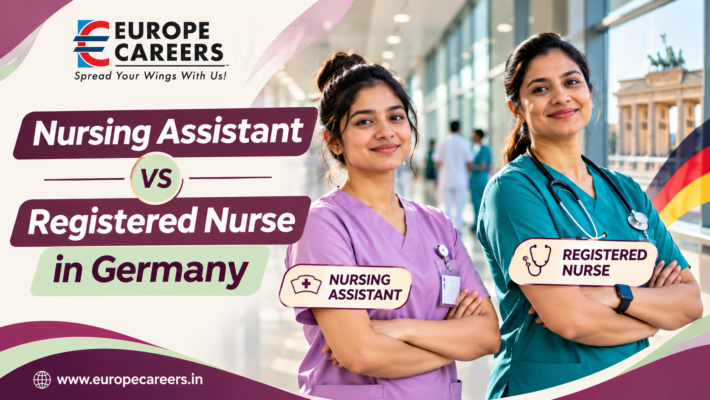
Explore working toward German B2 as an Indian nurse and the difference between nursing assistants and registered nurses in Germany.
Which German Nursing Workplace Is Best for Indian Nurses?
| Your preference | Workplace worth exploring | What to verify |
|---|---|---|
| Emergency care and specialist procedures | Public or private acute hospitals | Ward, clinical training and shift demands |
| A particular clinical specialty | Hospital with that department | Actual caseload, supervision and advancement |
| Long-term resident relationships | Elderly care facilities | Resident care needs, staffing and dementia-care support |
| Predictable pay progression | Employer with a clear collective agreement | Grade, step, allowances and experience recognition |
| Structured adaptation programme | Any employer offering credible recognition support | Training plan, supervision and examination preparation |
Questions Indian Nurses Should Ask German Employers
- Will I work as a registered nurse immediately, or initially in an assistant role while recognition is pending?
- Which collective agreement or salary structure applies?
- Will my previous Indian nursing experience affect my salary step?
- What are the normal weekly hours and night-shift requirements?
- How many patients or residents does a nurse typically support on the relevant shift?
- Is there an induction programme for international nurses?
- Does the employer support B2 language preparation or professional recognition?
- What training and promotion opportunities are available after recognition?
- Is relocation assistance offered, and does it include repayment conditions?
How Europe Careers Supports Indian Nurses Planning Careers in Germany
Europe Careers helps Indian healthcare professionals understand German career pathways, language preparation, qualification recognition and important questions to ask prospective employers. A good job choice starts with knowing what the workplace expects and whether it matches your skills and goals.
Whether you are interested in public hospitals, private clinics or long-term elderly care, preparation should include realistic language development, a clear understanding of your professional status and careful review of the offer. Our Germany-focused guidance helps Indian nurses make informed career decisions.
Frequently Asked Questions About Nursing Jobs in Germany
Are public hospitals better than private hospitals for Indian nurses?
Not automatically. Public hospitals may offer structured collective pay and broad departments, while private hospitals can provide attractive specialist opportunities. Compare actual offers.
Do German private hospitals pay more than public hospitals?
Not necessarily. Salary depends on the employer, collective agreement, role, experience, shifts and other benefits.
Can Indian BSc Nursing graduates work in German elderly care?
Yes, subject to the applicable recognition, language, immigration and employment requirements for the intended role.
Is elderly care work the same as nursing assistant work?
No. Registered nurses in elderly care have professional nursing responsibilities. Nursing assistants have a different qualification and scope of work.
Is B2 German required for nursing recognition in Germany?
B2 is generally required for full professional nursing recognition. The precise evidence is assessed by the competent authority.
Can I work before my Indian nursing qualification is fully recognised?
Some applicants may qualify for an appropriate assistant or supervised role while completing recognition, depending on their legal status and employer arrangements.
Which workplace has better career growth?
All three can offer progression. Hospitals may provide more acute-care specialties, while elderly care offers geriatric, dementia, palliative and management pathways.
Are elderly care facilities always privately owned?
No. They can be private, public, charitable or church-related. Facility type and ownership are different classifications.
What salary should an Indian nurse expect in Germany?
It depends on the position and contract. Compare gross base pay, collective-agreement grade, experience step, working hours and allowances.
How can Europe Careers help Indian nurses?
Europe Careers provides guidance on Germany nursing career planning, language preparation, recognition pathways and employment-readiness considerations.
Find Your Germany Nursing Career Path with Europe Careers
Public hospitals, private hospitals and elderly care facilities each offer meaningful nursing careers in Germany. The right decision depends on the care environment, professional recognition, language level, salary structure and long-term goals—not the employer label alone. Connect with Europe Careers to explore your nursing career options and prepare for opportunities in Germany.