
B1 German Job in Germany: Myth vs Reality (What You Really Need to Know in 2026)

Introduction: The Big Question Everyone Asks
If you are planning to move to Germany for work, you have likely come across the idea that B1 German is enough to get a job. It is one of the most common beliefs among international job seekers. At first glance, it sounds encouraging. After all, reaching B1 is achievable within a few months of focused study.
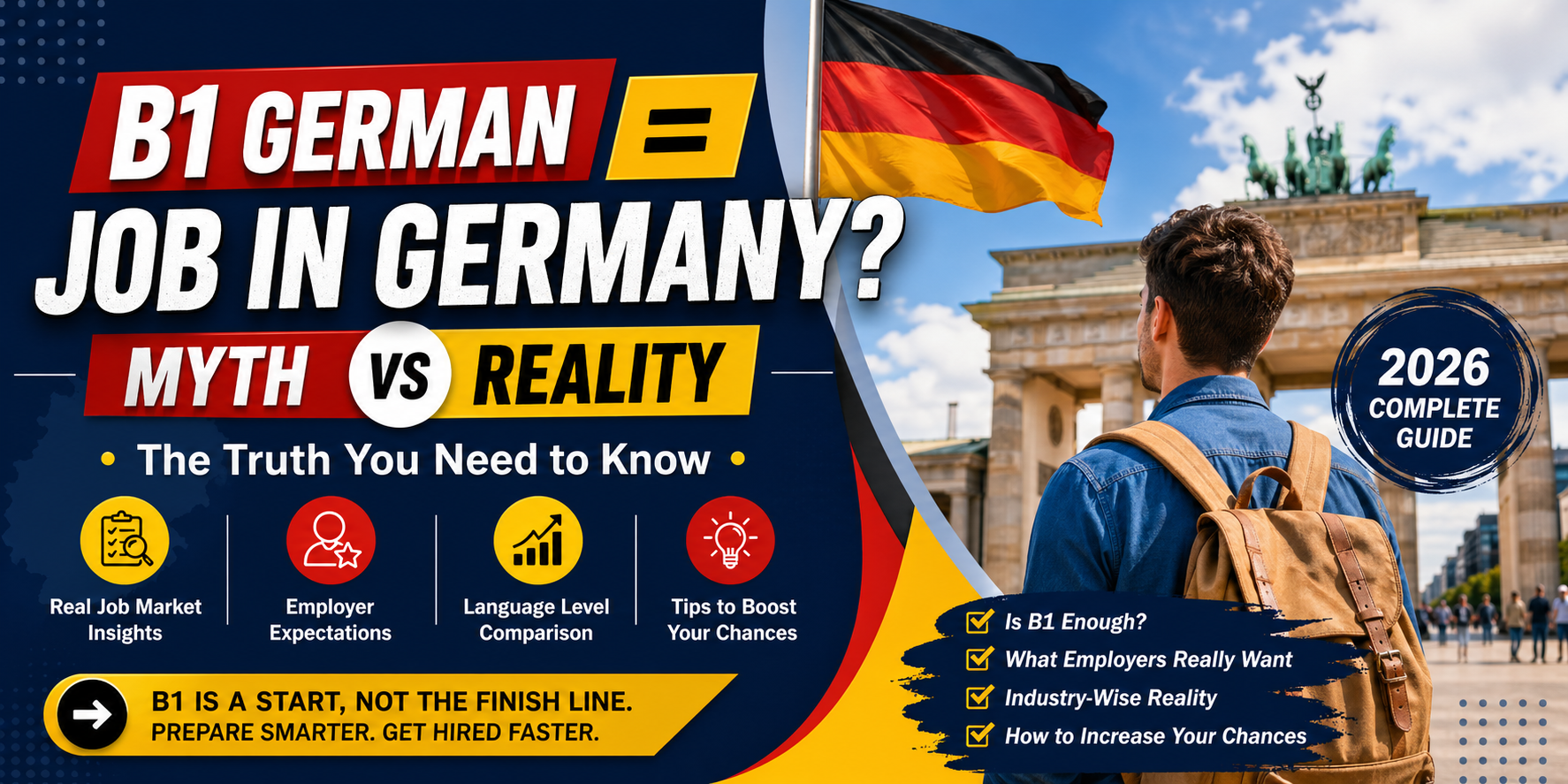
However, the reality is more complex. The idea behind “B1 German = Job in Germany: Myth vs Reality” needs careful examination. While B1 can help you start your journey, it does not automatically guarantee employment, especially in skilled professions.
Germany offers many opportunities, but it also has high expectations when it comes to communication and workplace integration. Understanding these expectations early can save you time, effort, and disappointment.
 Why the Myth About B1 German Exists
One of the main reasons this belief exists is due to confusion between visa requirements and job requirements. Some German visas require a B1 level of language proficiency, especially for integration purposes. This leads many people to assume that employers follow the same standard.
In reality, these are two completely different systems. The government may allow you to enter or stay in the country with B1 German, but employers are focused on whether you can perform effectively in a professional environment.
Another reason is the influence of online content. Many articles and videos simplify the process to make it seem easier than it actually is. They often highlight success stories but leave out important details such as prior experience, industry type, or the level of competition.
What B1 German Actually Means
B1 is considered an intermediate level according to the Common European Framework of Reference for Languages. At this stage, you can handle everyday situations, understand general conversations, and express basic ideas.
In a work context, this means you may be able to follow simple instructions, communicate with colleagues at a basic level, and manage routine tasks. However, problems arise when communication becomes more complex.
Professional environments often require:
- Understanding detailed instructions
- Participating in meetings
- Writing formal emails
- Handling unexpected situations
These tasks usually go beyond what B1 level comfortably supports. This is why many employers expect a higher level of fluency.
The Reality of the German Job Market
The German job market values precision and clarity. Employers want employees who can communicate without confusion, especially in roles that involve teamwork, clients, or technical responsibilities.
There are some jobs where B1 German may be enough. These are typically entry-level or manual roles such as warehouse work, delivery services, or basic hospitality positions. In such roles, communication needs are limited, and tasks are often repetitive.
However, these jobs often come with lower salaries and fewer opportunities for growth. If your goal is to build a long-term career, relying on B1 alone may not be sufficient.
For most professional roles, employers expect at least B2 German. In fields such as healthcare, law, or education, even higher levels like C1 are often required.
Industry-Specific Expectations
Different industries have different language expectations.
In the IT sector, English is widely used, and it is sometimes possible to find jobs without strong German skills. Even so, knowing German improves your chances of integration and long-term success.
In healthcare, strong language skills are essential. Doctors and nurses must communicate clearly with patients, which makes B2 or C1 German mandatory.
Engineering roles also usually require at least B2 German. While technical work may involve English, workplace communication and safety instructions are often in German.
In the hospitality sector, B1 may be enough for entry-level roles, but advancing to better positions typically requires stronger language skills.
What Employers Expect Beyond Language
Language skills are only one part of the equation. Employers in Germany also look at how well you fit into the work culture.
German workplaces value punctuality, efficiency, and clear communication. Being able to express your ideas confidently and understand instructions accurately is essential.
Your qualifications also play an important role. Many professions require your degree or certification to be officially recognized in Germany. Without this recognition, even strong language skills may not be enough to secure a job.
Soft skills such as adaptability, willingness to learn, and professionalism are equally important. Employers want individuals who can integrate smoothly into their teams.
Common Mistakes Job Seekers Make
Many people overestimate what B1 German can do for them. They apply for jobs that require higher language proficiency and face repeated rejections. This can be discouraging and lead to unnecessary stress.
Another common mistake is relying entirely on English. While there are English-speaking jobs, they are limited and highly competitive. Not having German skills can make daily life and workplace integration more difficult.
Ignoring job descriptions is also a frequent issue. Employers often clearly state the required language level, and failing to meet these requirements reduces your chances significantly.
How to Improve Your Chances
If you currently have B1 German, the best step forward is to continue improving. Reaching B2 can make a significant difference in your job prospects.
Consistent practice is key. This includes speaking regularly, listening to German content, and engaging in real-life conversations whenever possible.
It is also important to apply strategically. Focus on roles that match your current level rather than aiming too high too soon. This approach increases your chances of success and helps you gain valuable experience.
Networking can also play a major role. Connecting with professionals, attending events, and building relationships can open doors that traditional applications may not.
Another effective option is vocational training programs, known as Ausbildung. These programs combine learning and working and can be a strong pathway into the German job market.
B1 vs B2 vs C1: A Clear Comparison
| Level | Opportunities | Salary Potential | Career Growth |
|---|---|---|---|
| B1 | Limited | Low | Slow |
| B2 | Good | Moderate | Strong |
| C1 | Excellent | High | Fast |
This comparison clearly shows how language level impacts your career opportunities in Germany.
Is B1 German Enough or Not?
The answer depends on your situation.
B1 German may be enough if you are looking for entry-level work or temporary employment. It can help you get started and adjust to life in Germany.
However, if your goal is a stable, well-paying career with long-term growth, B1 is not enough. In most cases, you will need at least B2 German to meet employer expectations.
Frequently Asked Questions
Is B1 German enough to get a job in Germany?
It can be enough for some entry-level jobs, but most professional roles require higher language skills.
Which jobs can I get with B1 German?
You may find opportunities in warehouse work, delivery services, or basic hospitality roles.
Do employers require B2 German?
Yes, many employers expect at least B2, especially for skilled positions.
Can I work in Germany with only English?
It is possible in certain industries like IT, but competition is high and opportunities are limited.
How long does it take to move from B1 to B2?
With consistent effort, it usually takes a few months.
Is B1 enough for long-term career growth?
No, higher language proficiency is necessary for better opportunities and career advancement.
Conclusion
The belief that B1 German automatically leads to a job in Germany is a myth that needs to be understood carefully. While B1 can help you take your first steps, it is not a guarantee of employment or career success.
If you are serious about building a future in Germany, improving your language skills should be a priority. Reaching B2 or higher will open more doors, increase your confidence, and help you integrate more effectively into the workplace.
In the end, B1 is not the destination. It is just the beginning of your journey.